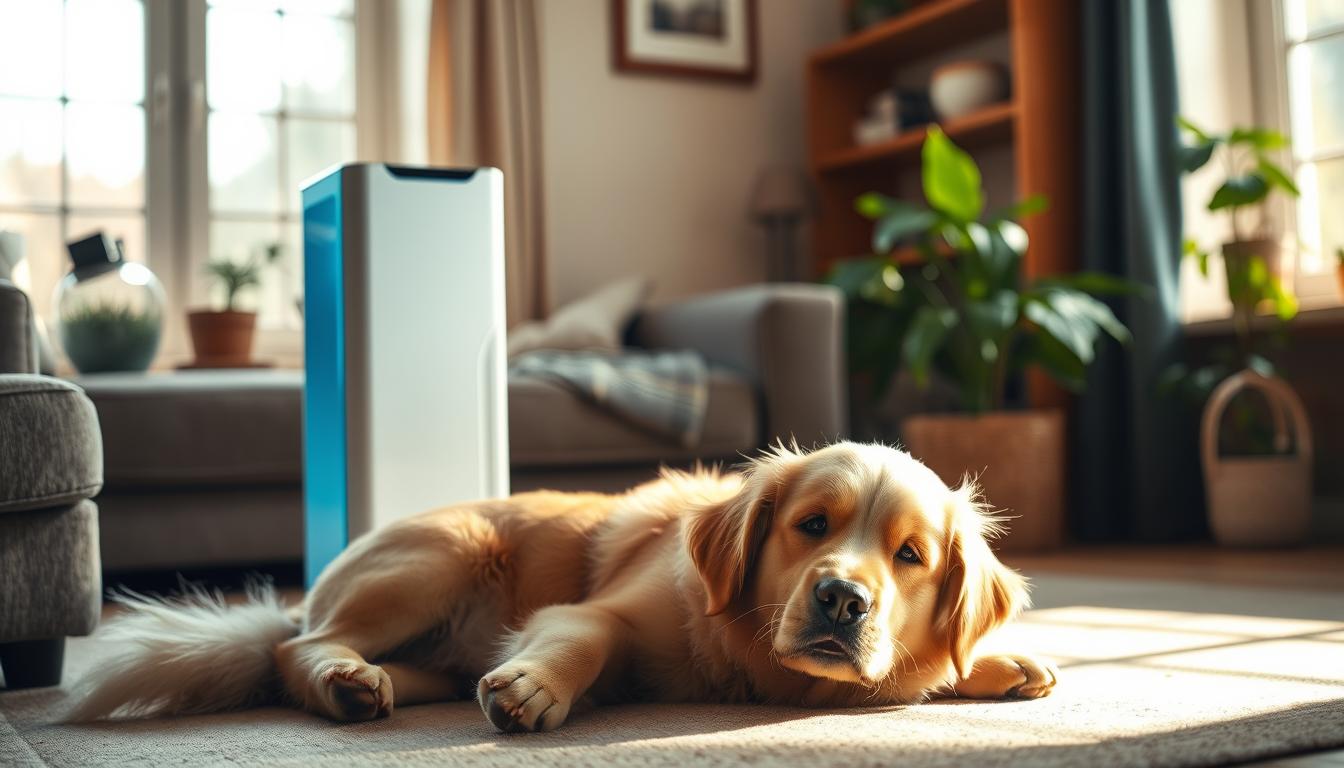
As a pet owner, you love your furry friends. But they can bring unwanted allergens and odors into your home. Clean air is essential for their health and wellbeing, just like it is for yours.
Hypoallergenic air purifiers, especially those with pet-friendly HEPA technology, play a crucial role. They purify the air, remove pet dander, and reduce odors.
By using these advanced air purifiers, you can create a healthier environment. This is good for both you and your pets to thrive.
Key Takeaways
- Pet-friendly HEPA filters help remove allergens and odors from the air.
- Hypoallergenic air purifiers improve indoor air quality.
- Clean air is crucial for the health of both pets and their owners.
- Advanced air purifiers can reduce pet dander and odors.
- Creating a healthier home environment is possible with the right air purification technology.
The Hidden Air Quality Challenges in Pet Households
Pets add joy to our lives but also bring air quality challenges. Dogs, cats, and other pets can harm indoor air quality. This affects the health of both pets and their owners.
Common Airborne Pollutants from Dogs, Cats, and Other Pets
Pet homes face many airborne pollutants. These include pet dander, hair, and dust from their bedding and litter boxes. Pets also bring in outside pollutants like pollen and dirt, making air quality worse.
How Poor Air Quality Affects Your Pet’s Health
Poor air quality can harm pets’ health. They often face respiratory issues and allergies. Long-term exposure can cause chronic health problems.
The Link Between Pet Dander and Human Allergies
Pet dander is a main cause of human allergies in homes with pets. When pets groom, they release dander into the air. Humans can inhale this, leading to allergic reactions and respiratory problems.
| Pollutant | Source | Health Impact |
|---|---|---|
| Pet Dander | Pet skin | Allergic reactions, respiratory issues |
| Pet Hair | Pet shedding | Respiratory issues, aggravates allergies |
| Dust | Pet bedding, litter boxes | Respiratory issues, allergic reactions |
Pet-Friendly HEPA Filters: The Ultimate Solution for Clean Air
HEPA filters are a big help for homes with pets. They catch many airborne pollutants like pet dander and hair. This makes them key for keeping the air clean in pet homes.
What Makes HEPA Filters Effective for Pet Owners
HEPA filters for pet owners work well because they trap 99.97% of particles as small as 0.3 microns. This includes pet dander, pollen, and dust. By removing these, HEPA filters make the air healthier for pets and their owners.
The Difference Between Standard and Pet-Specific Filtration
Standard HEPA filters are great, but pet-specific ones offer more. They have pre-filters for big pet hair and activated carbon to get rid of pet smells. Pet-specific HEPA filters tackle the special challenges of pet owners, offering a better air cleaning solution.
HEPA Standards and Certifications to Look For
When picking a HEPA filter, look for certain standards and certifications. True HEPA filters capture 99.97% of particles at 0.3 microns. Certifications like AHAM (Association of Home Appliance Manufacturers) show the product meets high standards. Choosing a certified filter means you get effective pet-friendly indoor air purification.
- Look for True HEPA certification
- Check for AHAM verification
- Consider pet-specific features like pre-filters and activated carbon
How HEPA Technology Captures Pet Hair, Dander, and Allergens
HEPA filters are great at catching pet hair, dander, and allergens. This is thanks to their advanced mechanical filtration technology. It’s a big help for pet owners who deal with poor air quality.
The Science of Mechanical Filtration
Mechanical filtration is how HEPA filters work. Air goes through the filter and catches particles as small as 0.3 microns. This includes pet dander, hair, and other allergens. It’s key for cutting down on airborne particles that can make allergies and breathing problems worse.
Micron Ratings and Their Importance for Pet Households
The micron rating of a HEPA filter shows how well it catches particles. For pet owners, a high micron rating is crucial. It helps catch the smallest particles, like dander and allergens. A true HEPA filter should have a micron rating of 0.3 microns or less.
Multi-Stage Filtration Processes Explained
Many air purifiers, especially for pet owners, use multi-stage filtration. This includes a pre-filter for big particles, a HEPA filter for small ones, and sometimes an activated carbon layer for smells. This multi-stage method makes sure the air is thoroughly cleaned, removing many pollutants and allergens.
| Filtration Stage | Captures | Benefit |
|---|---|---|
| Pre-filter | Larger particles, pet hair | Reduces strain on HEPA filter |
| HEPA Filter | Small particles, dander, allergens | Improves air quality, reduces allergy symptoms |
| Activated Carbon | Odors, gases | Neutralizes pet odors, improves indoor air quality |
Transforming Your Home’s Air Quality with HEPA Filtration
For households with pets, HEPA filtration is a strong solution to better air quality. It catches 99.97% of particles as small as 0.3 microns. This means it can greatly reduce pet dander, hair, and other allergens in the air.
Measurable Improvements in Indoor Air Quality
Studies show that HEPA filtration can make indoor air quality better. It removes pet allergens and pollutants. This creates a cleaner, healthier space for pets and their owners.
Reducing Pet-Related Respiratory Issues
For those with pet-related respiratory problems, HEPA filtration is a big help. It cuts down on airborne irritants. This makes it easier for pet owners to breathe at home.
Creating a Healthier Environment for Sensitive Pets
Sensitive pets also benefit from better air quality with HEPA filtration. It reduces their exposure to airborne irritants. This helps create a healthier environment for pets, lowering the risk of respiratory issues and other health problems.
Using pet-friendly HVAC filtration or hypoallergenic air purifiers with HEPA technology is a big step. It improves your home’s air quality. This makes your living space more comfortable for everyone.
Essential Features of Effective Pet-Friendly Air Purifiers
The air quality in your home affects your pet’s health. So, getting a good air purifier is key. Look for certain features to make sure it’s right for your pet.
Pre-Filters for Pet Hair and Larger Particles
A pre-filter is vital for pet-friendly air purifiers. It catches big particles like pet hair. This keeps the main filter working better.
A washable pre-filter is great because you can clean and reuse it. This saves money on new filters.
Activated Carbon Layers for Odor Neutralization
Activated carbon layers are also crucial. They get rid of pet smells, making your home smell fresh. Choose air purifiers with high-quality activated carbon for best results.
Coverage Area and Air Exchange Rates
Think about the air purifier’s coverage area and air exchange rates. The coverage area is how big a room it can clean. Air exchange rates show how often it cleans the air in an hour.
Choose an air purifier that fits your room size and has a high air exchange rate. This ensures your air stays clean.
Noise Considerations for Anxious Pets
Some pets get stressed by air purifier noise. If your pet is sensitive, find an air purifier that’s quiet or has a silent mode. This can help reduce stress.
| Feature | Importance | Benefits |
|---|---|---|
| Pre-Filter | High | Captures pet hair and larger particles, reducing clogging of main filter |
| Activated Carbon Layer | High | Neutralizes pet odors and VOCs, leaving air smelling fresh |
| Coverage Area | Medium | Ensures air purifier can handle room size |
| Air Exchange Rate | Medium | Measures how often air is cleaned per hour |
| Noise Level | Low-Medium | Important for anxious pets, look for low or silent mode |
By looking at these key features, you can find a good air purifier. It will improve your home’s air quality, making it healthier for you and your pets.
Choosing the Right HEPA System for Different Pet Types
The type of pet you have affects the HEPA air purifier you need. Each pet brings its own allergens and pollutants. So, you need a solution that fits your pet’s needs.
Solutions for Heavy-Shedding Dogs
Heavy-shedding dogs need a HEPA system with a pre-filter. This captures big pet hair particles. It also keeps surfaces clean.
“A good air purifier can make a big difference for dog owners,” says a pet care expert. Choosing the right system is key.
Options for Cat Litter Dust and Odor
Cats can be a challenge because of litter dust and odor. A HEPA system with an activated carbon layer works well. It neutralizes odors and captures dust.
Considerations for Birds, Rodents, and Exotic Pets
Birds, rodents, and exotic pets have unique air quality needs. Birds produce feather dust that HEPA filters can catch. Rodents and small pets need systems that remove dander and odor well.
Multi-Pet Household Requirements
For homes with many pets, air purification needs are higher. You need a strong HEPA system that can handle more allergens and pollutants. Look for systems with high CADR and those made for multi-pet homes.
By picking a HEPA system that meets your pet’s needs, you can improve indoor air quality. This makes your home healthier for you and your pets.
Standalone vs. Whole-Home HEPA Filtration Systems
Choosing between standalone and whole-home HEPA filtration systems is key for pet owners. Each has its own benefits, fitting different needs and home setups.
Portable Air Purifiers: Placement and Effectiveness
Portable air purifiers are great for specific areas where pets hang out. Placement is key; put them near pet beds or in favorite rooms. This cuts down on pet dander and smells.
When picking a portable air purifier, think about the coverage area. Make sure it fits the room size.
HVAC-Integrated HEPA Solutions
Whole-home HEPA systems work with your HVAC, purifying air everywhere. They’re perfect for big homes or those wanting a single solution. No need to clean each room.
Combining Approaches for Optimal Results
Some pet owners use both standalone and whole-home HEPA systems. This mix offers the best of both worlds. It purifies high-priority areas and keeps the whole home clean.
- Enhanced air quality in pet areas
- Comprehensive coverage throughout the home
- Flexibility to adjust purification levels based on need
Knowing the strengths of each system helps pet owners create a healthier home.
Installation, Maintenance, and Replacement Schedules
HEPA filters are key in keeping pet-friendly homes clean. Knowing how to install, maintain, and replace them is crucial. This knowledge helps keep your air clean and healthy.
Strategic Placement for Maximum Effectiveness
Where you put your HEPA filters matters a lot. Place them in spots where your pets hang out, like bedrooms or living rooms. This way, the air in those areas gets really clean, cutting down on pet allergens.
Filter Replacement Frequency for Pet Owners
Pet owners might need to change their HEPA filters more often. Check the maker’s advice, but usually, it’s every 6 to 12 months. If you have lots of pets or they shed a lot, you might need to change them even sooner.
Cleaning Protocols to Maintain Efficiency
Cleaning the outside of your HEPA filter and the area around it helps it work better. But, always follow the maker’s cleaning or replacement tips. Some filters can be washed, but others can’t.
Signs Your HEPA Filter Needs Attention
Watch for signs your HEPA filter needs a check-up. Look for less airflow, more noise, or a lot of dust and pet hair. If you see these, it’s time to clean or replace it to keep the air quality high.
By sticking to these tips for installation, upkeep, and replacement, your HEPA system will keep your air clean and safe for you and your pets.
Debunking Common Myths About HEPA Filters and Pets
Many myths surround HEPA filters in homes with pets. These filters are great for cleaner air, but some think they can do more than they can. It’s important to know what they can and can’t do.
Do HEPA Filters Remove All Pet Odors?
Some think HEPA filters get rid of all pet smells. HEPA filters catch pet dander well, but might not get rid of all smells. But, with an activated carbon layer, they can cut down pet odors a lot. Remember, HEPA filters work best with other filters.
Are HEPA Filters Safe for Pets with Respiratory Issues?
Many believe HEPA filters can make pet breathing problems worse. But, pet-safe HEPA filtration systems actually help pets breathe better. They remove allergens and irritants. It’s key to pick a system made for pet homes and meets hypoallergenic air purifier standards.
The Truth About HEPA Filters and Pet Allergies
Some think HEPA filters can get rid of all pet allergies. While they do lower allergen levels, they might not stop all allergy symptoms. Still, HEPA filtration can help a lot by reducing pet dander and allergens.
Cost Analysis: Investment vs. Long-Term Benefits
When looking at pet-friendly air quality solutions, it’s key to compare costs and benefits. HEPA filters for pet owners are a big investment in their health and their pets’ well-being.
Initial Purchase Considerations
The cost of HEPA filtration systems varies a lot. It depends on the area covered, how many stages of filtration, and the brand. Even basic HEPA filters can make a big difference in air quality.
Ongoing Operational and Replacement Costs
There are ongoing costs like electricity and replacing filters. Energy-efficient models can cut down on these costs. Replacing filters can cost between $20 and $100 or more, depending on the system and type.
Health and Cleaning Cost Savings
HEPA filters cut down on airborne allergens and pet dander. This can save a lot on health costs by reducing respiratory problems and allergies. Cleaner air also means less cleaning and less wear on surfaces.
| Cost Category | Initial Cost | Ongoing Annual Cost |
|---|---|---|
| HEPA Filter System | $100-$500 | $50-$150 |
| Replacement Filters | – | $20-$100 |
| Energy Consumption | – | $10-$50 |
Investing in HEPA filters for pet owners improves air quality and can save money in the long run. Understanding the total cost and benefits helps pet owners make smart choices about their air quality solutions.
Real-World Success Stories from Pet Owners
Many pet owners have seen big improvements in their home air after getting pet-friendly HEPA air purifiers. These systems are a big help for homes with pets. They cut down on allergens and make the air healthier for pets and their owners.
Allergy Sufferers Living Comfortably with Pets
For people with allergies, having pets can be tough. But, HEPA filtration has changed things. A family in Ohio said they felt much better after getting a pet-friendly HEPA air purifier.
Improvements in Pet Health and Behavior
Cleaner air is good for pets too. Many pet owners have seen their pets get healthier and act better after using HEPA air purifiers. A cat owner in California said her cat’s breathing problems got much better with a pet-friendly HVAC filtration system.
Before and After Air Quality Measurements
Studies show clear air quality boosts after HEPA filtration systems are installed. For example, a California homeowner saw a 90% drop in pet dander after three months with a pet-friendly HEPA air purifier. These results are real and backed by science.
The stories of success show how well pet-friendly HEPA air purifiers and pet-friendly HVAC filtration systems work. They make homes healthier for pets and their owners by cutting down on allergens and improving air quality.
- Significant reduction in allergy symptoms
- Improved health and behavior in pets
- Measurable improvements in air quality
By picking the right HEPA filtration system, pet owners can have a cleaner, healthier home.
Conclusion
Keeping the air in your home clean is key, especially if you have pets. Pet-friendly HEPA filters are great at catching pet dander, hair, and other bad stuff in the air. This makes your home healthier for both pets and people.
Getting a pet-safe HEPA filter can help a lot. It can cut down on breathing problems and allergies. No matter if you have dogs, cats, birds, or other pets, the right HEPA system can really improve your home’s air.
When picking a pet-friendly HEPA filter, think about a few things. Look at how big the area it covers, how often you need to change the filter, and if it has extra features like pre-filters or carbon layers. Choosing the right one and keeping it up can make your indoor air much cleaner and healthier.
Start making your indoor air better today. Look at the different pet-friendly HEPA filters out there. Begin making your home a safer, more comfy place for your pets and family.
Leave a Reply