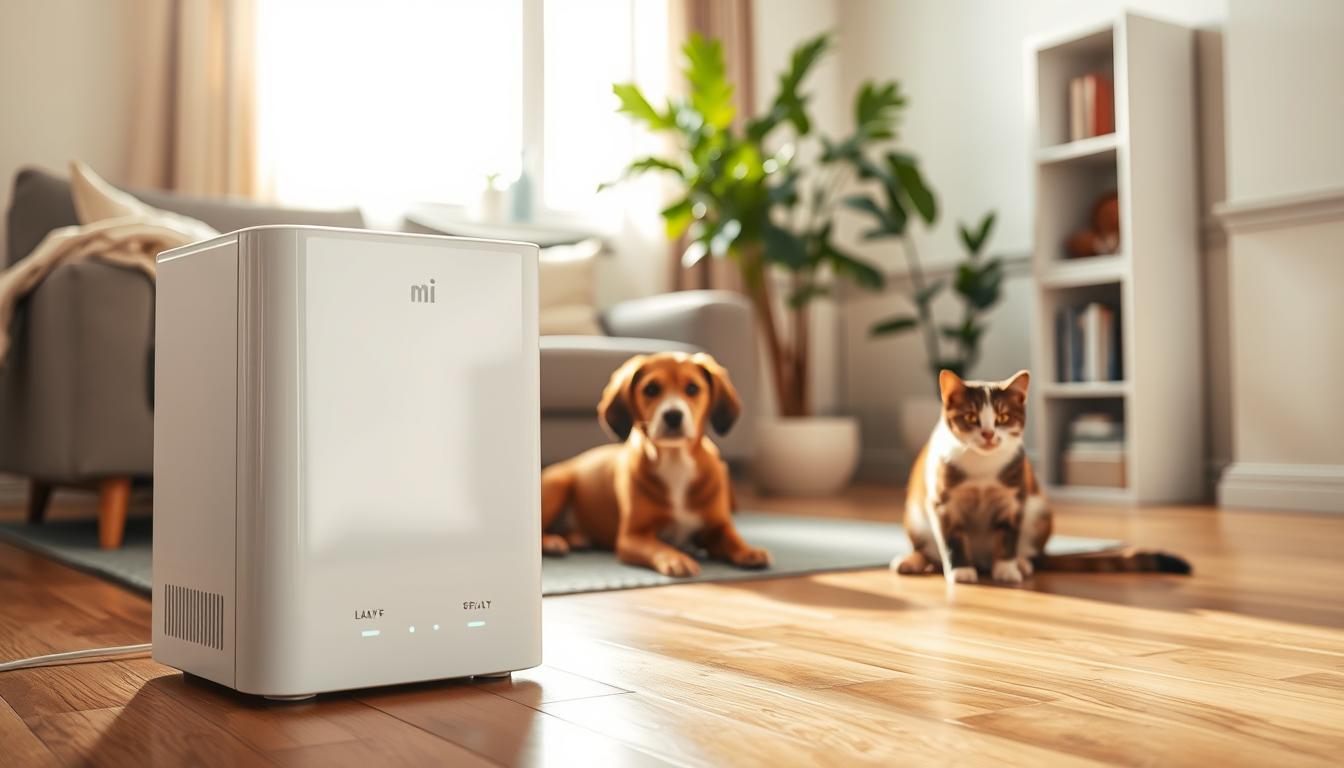
As a pet owner, you want the best for your furry friends. One way to ensure their health and happiness is by improving the quality of the air they breathe.
A pet air purifier can be a valuable addition to your home. It removes allergens and odors that can aggravate respiratory issues.
The latest advancements in pet air purification technology have made it possible to create a healthier environment for your pets.
Key Takeaways
- Improved air quality benefits both pets and their owners.
- A pet air purifier can reduce allergens and odors.
- Advanced technology makes pet air purifiers more effective.
- Creating a healthier environment is crucial for pet well-being.
- Pet owners should consider investing in a pet air purifier.
The Growing Need for Pet Air Purification
Pets bring joy to our homes but also introduce airborne allergens. These allergens can harm indoor air quality. Pets, especially those with fur, shed dander. This dander becomes airborne and can be inhaled by humans, leading to allergic reactions or worsening respiratory conditions like asthma.
Pet Allergens and Their Impact on Indoor Air Quality
Pet allergens include dander, proteins in saliva, urine, and feces. When airborne, these allergens can spread throughout a home. They settle on surfaces and are inhaled by occupants, causing health issues. Effective pet-friendly air filtration systems are key to solving these problems.
Common Challenges Pet Owners Face with Air Quality
Pet owners struggle to keep indoor air quality good due to pet allergens. Regular cleaning and vacuuming help but are not enough. Innovative pet dander removal technologies offer a better solution to these challenges.
| Challenge | Impact on Air Quality | Solution |
|---|---|---|
| Pet Dander | Airborne allergens causing allergic reactions | HEPA Filtration Systems |
| Pet Odors | Unpleasant smells affecting indoor air quality | Activated Carbon Filters |
| Bacteria and Germs | Potential health risks from pet-borne pathogens | UV-C Light Sanitization |
Cutting-Edge Pet Air Purification Technology Explained
Pet air purification technology has changed a lot over time. It meets the needs of pet owners better now. This change comes from better filters, more accurate sensors, and using less energy.
Evolution of Air Purification for Pet Homes
The start of pet air purification was simple. Now, we have advanced systems that catch many allergens and smells. State-of-the-art pet air sanitization uses HEPA filters and activated carbon for deep cleaning.
How Modern Pet Air Purifiers Work
Today’s pet air purifiers are very good at cleaning the air. They pull in air, clean it by removing dander, hair, and smells, and then send it back out. Advanced sensors help them work better by adjusting to air quality changes.
Key Technological Innovations for Pet-Specific Purification
A big step forward is advanced pet odor control technology. This includes better filters and UV-C light to kill germs. These improvements help keep the air in pet homes clean and healthy.
HEPA Filtration Systems for Pet Homes
HEPA filtration is key for pet homes, catching 99.97% of airborne particles. It’s a must-have in a top-rated pet air cleaner. Knowing how HEPA works helps pet owners choose the right air purifier.
The Science of HEPA Filtration for Pet Dander
HEPA filters trap pet dander, hair, and allergens that can hurt breathing. They use a dense mesh to catch particles as small as 0.3 microns. This keeps the air clean, helping those with allergies breathe easier.
Latest Advancements in HEPA Technology for Pet Owners
New HEPA tech is more efficient and quiet. Modern filters catch smaller particles and last longer. Some even have antimicrobial coatings to fight bacteria and mold. These updates make HEPA systems better for pets, offering cleaner air and a healthier home.
Activated Carbon Technology for Pet Odor Elimination
Activated carbon is a key part of premium pet-friendly air purifiers. It fights pet odors well. This tech is great at removing smells caused by gases and other harmful compounds.
How Activated Carbon Targets Pet-Related Odors
The power of activated carbon technology comes from its special structure. It traps and gets rid of odor-causing molecules. This makes the air smell clean and fresh.
This is great for pet owners. It helps get rid of smells from accidents, litter boxes, and dander.
Innovations in Carbon Filter Design for Pet Households
New designs in carbon filters have made them even better at removing odors. Modern filters use activated carbon with other materials to work better.
These updates mean filters now last longer and work more efficiently. This makes it easier for pet owners to keep their homes smelling good.
UV-C Light Sanitization for Pet Germs and Bacteria
We all want our homes to be germ-free, especially for our pets. UV-C light sanitization is a modern way to do this. It uses ultraviolet light to kill harmful germs.
The Role of UV-C Technology in Eliminating Pet-Borne Pathogens
UV-C technology is great at killing germs that pets can carry. It works by using ultraviolet light to damage the DNA of germs. This makes them unable to harm us or our pets.
UV-C light sanitization has many benefits:
- Effective Pathogen Elimination: It kills many types of germs, making the air cleaner.
- Reduced Risk of Infection: It helps keep pets and their owners from getting sick.
- Complementary to Filtration: It works well with other air cleaning technologies for better air.
Safety Considerations for UV-C Technology Around Pets
UV-C technology is safe when used right, but we must be careful around pets. Pets and people can get hurt if they get too much UV-C light. So, it’s important to make sure the UV-C light is safe inside air purifiers.
Here are some safety tips:
- Safe Design: Choose air purifiers with UV-C light that’s safely inside the unit.
- Certification and Compliance: Make sure the air purifier is safe and meets standards.
- Manufacturer Guidelines: Always follow the maker’s instructions for using and caring for the air purifier.
Smart Features in Modern Pet Air Purifiers
Modern pet air purifiers now come with smart features. These features make pet care easier and healthier for pets and owners. They are designed to improve functionality and user experience.
Air Quality Sensors and Automated Operation
Air quality sensors are a key feature in these purifiers. They watch the air quality and adjust the purifier as needed. This ensures clean air without wasting energy.
Mobile App Integration and Remote Monitoring
Many air purifiers now have mobile app integration. This lets owners check air quality and control the purifier from anywhere. It makes keeping the air clean easy and convenient.
Voice Control and Smart Home Compatibility
The newest air purifiers support voice control and smart home compatibility. Users can control them with voice commands or through smart home systems. This makes managing air quality seamless and connected.
A leading expert says, “The future of pet air purifiers is in smart home integration and real-time monitoring.” Today’s smart pet air purifiers are making this vision a reality.
“The integration of smart features in pet air purifiers is revolutionizing the way we care for our pets and our indoor environments.”
Pet-Specific Air Purification vs. Standard Air Purifiers
Pet owners often ask if a standard air purifier is enough or if they need a pet-specific one. The answer depends on understanding the differences between these air purifiers. This includes their filtration abilities and how well they work in homes with pets.
Key Differences in Filtration Capabilities
Pet-specific air purifiers have special filters to deal with pet challenges like dander, hair, and smells. They often have HEPA filters that work better and extra filters like activated carbon to catch pet pollutants.
Standard air purifiers might not handle pet dander and smells well. This could mean pet owners don’t get the clean air they need.
Performance Comparison for Pet Households
Pet-specific air purifiers and standard ones work differently in homes with pets. Here’s a comparison to show why:
| Feature | Pet-Specific Air Purifiers | Standard Air Purifiers |
|---|---|---|
| Filtration Efficiency | High-efficiency HEPA filters | Standard HEPA filters |
| Odor Removal | Activated carbon filters for pet odors | Limited odor removal capabilities |
| Pet Hair Capture | Pre-filters for pet hair | No specific pet hair capture |
The table shows pet-specific air purifiers are better for homes with pets. They offer top-notch filtration and performance. This makes them a great choice for pet owners who want cleaner indoor air.
Specialized Solutions for Different Types of Pets
Pet owners face unique air quality challenges. Different pets bring various allergens and odors into our homes. We need specialized air purification solutions to tackle these issues.
Knowing your pet’s specific needs is key to a healthier home. Dogs and cats shed differently, releasing unique allergens and odors. Birds and rodents also introduce their own airborne contaminants.
Dog-Specific Air Purification Needs
Dogs, especially those with thick coats, shed a lot. This releases a lot of dander into the air. An air purifier for dog owners should have a strong HEPA filter to catch pet dander and allergens. An activated carbon filter can also help get rid of dog odors.
Cat Dander and Litter Box Odor Solutions
Cats are known for their dander and litter box smells. An air purifier for cat owners should have a HEPA filter for dander and a strong activated carbon filter for smells. Some models even have specific filters for cat hair.
Bird, Rodent, and Exotic Pet Considerations
Birds shed feather dust, and rodents release dander and urine particles into the air. Exotic pets, like reptiles or ferrets, also pose unique air quality challenges. For these pets, an air purifier with a multi-stage filtration system and UV-C light for sanitization is best.
| Pet Type | Primary Concerns | Recommended Features |
|---|---|---|
| Dogs | Dander, Odors | HEPA, Activated Carbon |
| Cats | Dander, Litter Box Odors | HEPA, Activated Carbon |
| Birds/Rodents | Feather Dust, Dander, Urine Particles | Multi-stage Filtration, UV-C |
Choosing an air purifier that meets your pet’s needs can greatly improve your home’s air quality. This creates a healthier environment for you and your pets.
Top Pet-Specific Air Purification Systems on the Market
People want cleaner air in their homes, especially if they have pets. This has led to the creation of special air purifiers. These systems help remove pet dander, odors, and allergens. We’ll look at the best air purifiers for pets, including high-end and affordable options.
Premium Models for Multi-Pet Households
For homes with many pets, there are top-notch air purifiers. These purifiers are made to handle more pet dander and smells. They make homes cleaner and healthier for everyone.
Features and Performance
Premium air purifiers, like the Levoit LV-H132, have advanced filters. They include True HEPA and activated carbon. These filters catch 99.97% of particles, like pet dander and allergens.
Some models also have smart sensors. These sensors check the air quality and adjust the purifier as needed.
People who use these purifiers say their air is much better. For example, the Dyson Pure Cool is great at removing pet allergens. It’s also stylish. Reviews show these purifiers are a good choice for homes with many pets.
Budget-Friendly Options That Don’t Sacrifice Quality
Not everyone needs to spend a lot on air purifiers. There are cheaper options that work well. These are great for those on a budget or with fewer pets.
Best Value Picks
The GermGuardian AC4825 is a top pick for its price. It has a 3-in-1 filtration system, including a True HEPA filter. It’s good at getting rid of pet dander and smells.
Another good choice is the Levoit LV-PUR131. It’s small but powerful. It’s a great option for those who want a good air purifier without spending a lot.
Performance in Real-World Pet Environments
Even the cheaper air purifiers do well in real homes. They help cut down on pet dander and smells. They’re not as fancy as the expensive ones, but they’re a good choice for those who want to clean their air without spending a lot.
Maintenance Requirements for Pet Air Purification Systems
Keeping your pet air purification system in good shape is key for a clean indoor air. Regular upkeep makes sure it keeps pet dander, allergens, and smells out of the air.
Filter Replacement Schedules for Pet Households
How often you need to change filters depends on a few things. This includes the filter type, how many pets you have, and what the maker says. Usually, HEPA filters should be swapped out every 6 to 12 months. But, if you have lots of pets or they shed a lot, you might need to change them more often.
Cleaning and Upkeep to Maintain Performance
Changing filters isn’t the only thing you need to do. Cleaning the air purifier’s outside and pre-filter regularly is also important. Use a soft cloth and mild cleaners to avoid harming the unit. Some models even have washable pre-filters that you can clean and use again. Keeping it clean not only keeps it working well but also makes it last longer.
Health Benefits of Advanced Air Purification for Pets and Owners
Clean air is vital for pets and their owners. Advanced air purification systems remove allergens, pollutants, and pathogens. This makes the air healthier for everyone in the home.
Reducing Pet Allergies and Respiratory Issues
Advanced air purification helps a lot with pet allergies and breathing problems. Pet dander and hair can make breathing hard, especially for those with asthma. Air purifiers take these allergens out of the air. This can make breathing easier and improve health.
The American Lung Association says cleaner air is key for people with breathing issues. It can greatly improve their quality of life.
“Improving indoor air quality is crucial for the health and well-being of both pets and their owners.”
Improving Overall Pet Health and Wellness
Advanced air purification is good for pets too. It cuts down on airborne germs and pollutants. This means pets are less likely to get sick or have breathing problems.
Clean air also makes pets less stressed. A study in the Journal of Veterinary Internal Medicine showed that air quality affects pets’ health a lot.
| Health Benefit | Pet Owners | Pets |
|---|---|---|
| Reduced Allergies | Yes | Yes |
| Improved Respiratory Health | Yes | Yes |
| Reduced Stress | Yes | Yes |
Getting an advanced air purification system is a smart move. It makes your home healthier for you and your pets. With the right technology, you can greatly reduce air quality risks. This leads to a happier, healthier home for everyone.
Conclusion: Breathing Easier with Your Furry Friends
As a pet owner, making your home healthy for your pets is key. New pet air purification technology has changed how we keep air clean indoors. This makes it easier to breathe well around pets.
Getting a pet air purifier improves air quality and boosts your pets’ health. These systems get rid of pet dander, allergens, and smells. This makes your home cleaner and healthier for all.
There are many choices, like HEPA filters and UV-C light sanitizers. You can pick the best pet air purifier for your home. By controlling air quality, you can enjoy time with your pets without air worries.
Leave a Reply