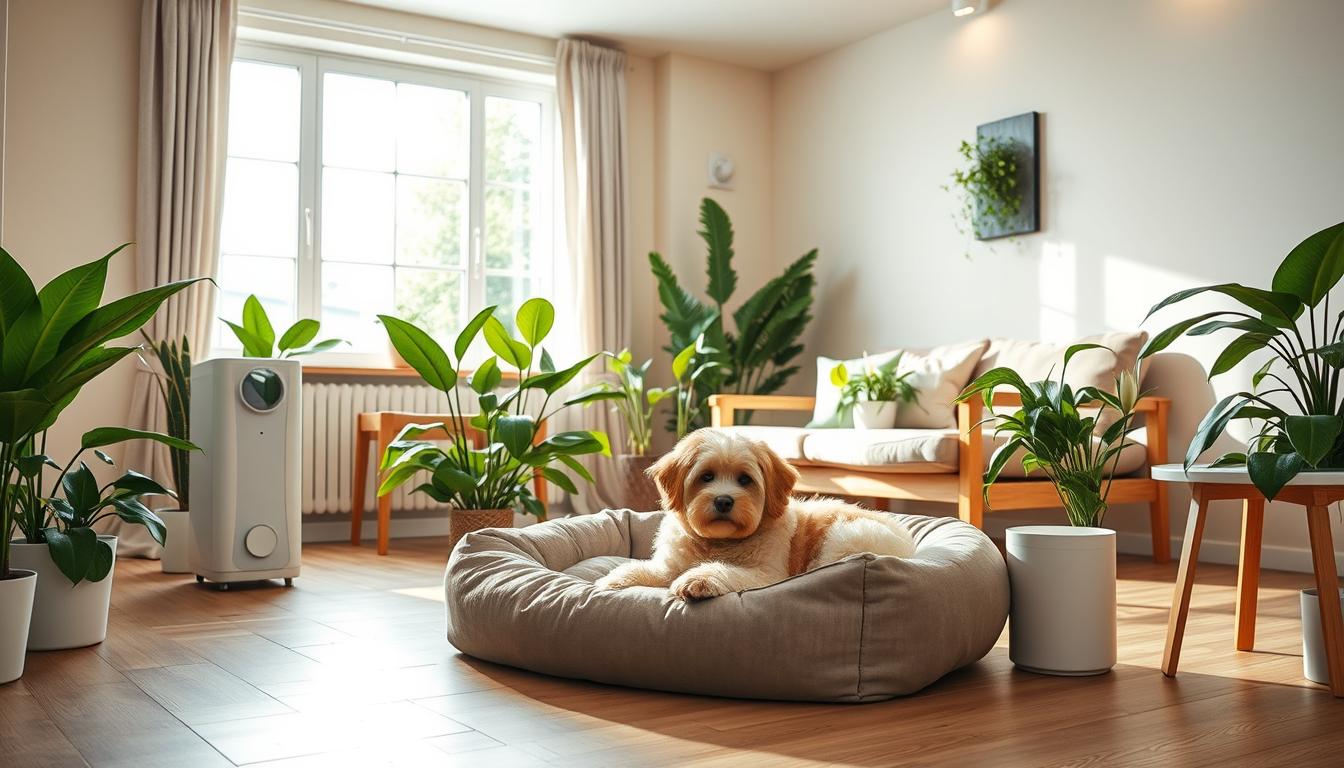
As a pet owner, you want your home to be safe and healthy for your furry friends. But, indoor air quality can be a big worry. Pets shed dander and bring in dirt and allergens.
Pets are especially sensitive to bad indoor air conditions. This can make breathing problems like asthma worse. By making your home’s air quality better in a pet-friendly way, you can make a healthier space for everyone.
Key Takeaways
- Poor indoor air quality can affect pets’ health.
- Enhancing air quality is crucial for pet owners.
- Simple changes can make a significant difference in indoor air quality.
- Pet-friendly air quality enhancement is essential for a healthy home.
- Creating a healthier indoor environment benefits both pets and their owners.
Understanding the Impact of Poor Air Quality on Pets
The air we breathe is crucial for our pets, who face more risks from pollutants. As pet owners, we must know the dangers of bad air and act to protect them.
How Pets Experience Air Pollution Differently Than Humans
Pets, especially those with fur or feathers, are more at risk from air pollutants. Their grooming habits and being closer to the ground make them more exposed. Using pet-friendly air purifiers can greatly lower pollutant levels, making a safer space for pets.
- Pets breathe more than humans, making them more vulnerable to airborne contaminants.
- Their smaller size means even small amounts of pollutants can harm them a lot.
- Pets often stay indoors more, where air can be more polluted because of less ventilation.
Common Health Issues in Pets Related to Air Quality
Poor air quality can cause many health problems in pets, from mild to severe. These include respiratory issues like asthma and chronic bronchitis, skin irritations, and allergies. Keeping pet-safe indoor air quality is key to avoiding these issues and keeping pets healthy.
Some specific health concerns from air quality include:
- Respiratory problems like coughing, sneezing, and trouble breathing.
- Skin conditions and allergies made worse by airborne irritants.
- Eye irritations and infections from particulate matter.
By understanding these risks and improving indoor air quality, pet owners can make a safer, healthier home for their pets.
Common Indoor Air Pollutants Affecting Your Pets
It’s important to know about indoor air pollutants to keep your pets healthy. These pollutants can make your pets sick.
Pet Dander and Hair: The Circular Problem
Pet dander and hair pollute the air inside. When pets shed, their dander and hair float in the air. This can make pets have breathing problems. Grooming your pets often can help keep the air cleaner.
Household Chemicals and Their Effects on Animals
Household chemicals, like cleaners and pesticides, release harmful fumes. These fumes can make pets very sick. Using pet-safe cleaners is a good way to avoid this.
Dust, Pollen, and Microbial Contaminants
Dust, pollen, and harmful germs like mold and bacteria also pollute the air. These can make pets’ allergies and breathing problems worse. Cleaning often and using air purifiers can help.
To understand more about these pollutants, let’s look at a comparison:
| Pollutant | Source | Health Effects on Pets |
|---|---|---|
| Pet Dander/Hair | Pet Shedding | Respiratory Issues, Allergies |
| Household Chemicals | Cleaning Products, Pesticides | Irritation, Respiratory Distress |
| Dust, Pollen, Microbial Contaminants | Various (Outdoor/Indoor Sources) | Allergies, Respiratory Conditions |
The table shows how different pollutants can harm pets. It’s key to use pet-friendly air quality solutions to keep the air clean.
Signs Your Pet is Suffering from Poor Air Quality
Pets can be very sensitive to air quality. It’s important to spot symptoms early to keep them healthy. Knowing the signs that your pet is not doing well in the air is key.
Respiratory Symptoms to Watch For
Respiratory problems are common in pets with poor air quality. Look for coughing, sneezing, and wheezing. If your pet has trouble breathing or seems to be working hard to breathe, you need to check your home’s air.
Behavioral Changes Indicating Air Quality Issues
Behavior changes can also show that your pet is not happy with the air. Watch for more sleepiness, less appetite, or being restless. Paying attention to how your pet acts can help you catch air quality problems early.
Long-term Health Consequences of Prolonged Exposure
Long-term bad air can harm your pet’s health. It can cause long-term breathing problems and make them more likely to get sick. Knowing these risks can push you to make your home’s air better.
| Symptom | Description | Action |
|---|---|---|
| Coughing/Sneezing | Respiratory reaction to poor air quality | Improve ventilation, use air purifiers |
| Behavioral Changes | Lethargy, loss of appetite, restlessness | Monitor behavior, consult a vet if persistent |
| Long-term Health Issues | Chronic diseases, increased infection susceptibility | Regular veterinary check-ups, maintain good air quality |
Knowing these signs and acting fast can make a big difference for your pet. Think about using pet-friendly air quality products to make your home better for them.
Pet-Friendly Air Quality Enhancement: Essential Solutions
Pet owners want to make their homes better for air quality. It’s not just about getting rid of bad stuff. It’s about making a space where pets and people can both do well.
Balancing Pet Comfort with Air Purification Needs
When picking air purifiers, it’s important to think about both effectiveness and pet comfort. Some pets might not like the noise or how air purifiers work. It’s best to find a system that works well but doesn’t bother your pets.
Creating a Comprehensive Air Quality Strategy
A good air quality plan is more than just air purifiers. It also means regular cleaning, good ventilation, and cutting down on pollutants. With a plan that covers all these, pet owners can really make their air better.
| Strategy | Description | Benefit |
|---|---|---|
| Regular Cleaning | Frequent vacuuming and dusting | Reduces pet dander and dust |
| Proper Ventilation | Ensuring good airflow | Removes stale air and pollutants |
| Reducing Pollutant Sources | Limiting use of chemicals | Decreases indoor pollutants |
Setting Realistic Air Quality Goals in Pet Households
It’s key to set achievable goals for a healthy home. Pet owners should first figure out what needs work and then make a plan. Keeping an eye on things and making changes as needed will help keep the air good.
Selecting the Right Air Purifier for Pet Owners
Choosing an air purifier as a pet owner can be tough. But it’s key for a healthier home. The right one can cut down on pet dander, hair, and smells, making the air better.
HEPA Filtration Technology for Pet Households
HEPA filters catch 99.97% of tiny particles, like pet dander and dust. This is great for pet owners because it cuts down on allergens and improves air quality.
Activated Carbon Filters for Odor Control
Activated carbon filters grab gases, odors, and chemicals. They’re perfect for pet owners because they get rid of pet smells and other household odors.
UV-C Light Purifiers: Benefits and Limitations
UV-C light purifiers kill bacteria, viruses, and other tiny bugs with ultraviolet light. They offer extra protection, but their power can be less in big rooms or with poor airflow.
Noise Levels and Pet Sensitivity Considerations
Some pets might not like the noise from air purifiers. Look for models that are quiet or don’t make any sound to keep your pets calm.
| Filter Type | Benefits | Limitations |
|---|---|---|
| HEPA | Captures 99.97% of particles as small as 0.3 microns | May not capture gases or odors |
| Activated Carbon | Captures gases, odors, and chemicals | May need frequent replacement |
| UV-C Light | Kills bacteria, viruses, and microorganisms | Effectiveness limited by room size and airflow |
Pet-Friendly Air Filter Systems for Your Home
Pet-friendly air filter systems are key for pet owners wanting better indoor air. They remove pet dander, hair, and allergens. This helps prevent respiratory problems and bad smells.
Whole-Home Filtration Options
Whole-home filtration systems work with your HVAC. They clean the air all over your home. They catch dust, pollen, pet dander, and smoke.
Choosing a whole-home system makes your home air cleaner and healthier.
HVAC Filters Designed for Pet Households
Pet owners should use HVAC filters with a high MERV rating. These filters grab pet dander and hair, making the air better. It’s important to pick filters that filter well but still let air flow.
Filter Replacement Schedules for Pet Owners
Changing your air filters often is key. Pet owners should replace them every 30-60 days. This depends on how many pets you have and how much they shed.
Sticking to a regular replacement schedule keeps your air filters working well. This makes your home a healthier place for your pets.
Natural Air Quality Solutions Safe for Pets
Pet owners can make their homes healthier by using natural air solutions. These methods are safe for pets and improve air quality. They work well alongside traditional air purifiers.
Pet-Safe Air-Purifying Plants
Some indoor plants clean the air naturally. Spider plants, peace lilies, and snake plants are good choices. They look nice and clean the air. But, make sure they’re safe for pets.
Natural Cleaning Products That Protect Air Quality
Natural cleaning products help keep the air clean. Choose products without harsh chemicals or fragrances. They won’t hurt your pets’ sensitive noses.
Make your own cleaners with baking soda and vinegar. It’s safe and works well.
Ventilation Strategies That Benefit Pets
Good ventilation is essential for clean air. Open windows, use fans, and keep your vents clean. These steps help remove pollutants.
They make your home a healthier place for your pets.
Grooming Practices That Improve Indoor Air Quality
Grooming your pets regularly is key to reducing airborne dander and better indoor air. It keeps your pets clean and healthy. It also cuts down on pet dander and hair in the air.
Effective Brushing Routines to Reduce Airborne Dander
Brushing your pets often is a simple yet effective way to cut down on airborne dander. Daily brushing is best for pets with long hair to prevent matting and reduce shedding. Using the right brush for your pet’s coat helps remove loose hair and keeps skin healthy, reducing dander.
Bathing Frequency Recommendations by Pet Type
The bathing frequency varies by pet type. Dogs with skin allergies might need to be bathed more often. Cats usually need less frequent baths. Table 1 shows a general guide for bathing based on pet type.
| Pet Type | Bathing Frequency |
|---|---|
| Dogs with skin allergies | Every 2-3 weeks |
| Healthy dogs | Every 1-2 months |
| Cats | Every 2-3 months |
Professional Grooming Services and Their Air Quality Benefits
Professional grooming services offer extra benefits for air quality. They can handle pets with special grooming needs. This helps reduce shedding and dander. Regular grooming also spots skin issues early, preventing more dander.
Creating Pet-Specific Clean Air Zones in Your Home
To make sure your pets can breathe well, you need to set up clean air zones in your home. This means using a few different methods. You should pick out special areas for them, choose the right bedding and furniture, and keep the air clean, especially if you have more than one pet.
Designating and Maintaining Low-Allergen Areas
Start by finding out where your pets like to hang out. Use HEPA filters and air purifiers in these spots to cut down on allergens and bad air. It’s also important to clean and dust regularly to keep dander and allergens away.
Bedding and Furniture Considerations
What you choose for bedding and furniture matters a lot for the air in your home. Go for hypoallergenic materials and fabrics you can wash. Washing your pet’s bedding and vacuuming furniture often helps keep the air cleaner.
Air Quality Management in Multi-Pet Households
Dealing with air quality when you have many pets is a big job. Make sure there’s good air flow where pets hang out. You might also need to use more than one air purifier to cover bigger areas or spots where pets are more active.
By following these steps, you can make your home a healthier place for your pets. This will help improve the air quality and lower the chance of breathing problems.
Smart Technology for Monitoring Pet-Friendly Air Quality
Pet owners now focus more on indoor air quality. Smart technology is key in keeping a healthy home for pets. It lets us monitor and manage air quality in real-time, making homes safer for pets.
Air Quality Sensors and Monitoring Devices
Air quality sensors and monitoring devices are essential for smart air management. They spot pollutants like pet dander, dust, and VOCs. They give us data to act fast and clean the air.
Automated Purification Systems
Automated systems work with air sensors for a full air management solution. They adjust purification levels based on air quality data. This is great for pet owners who want a clean home without always having to do it themselves.
Mobile Apps for Tracking Indoor Air Quality
Many devices come with mobile apps for tracking air quality. These apps give tips to improve air quality and alert us to high pollutant levels. This is handy for pet owners who are away for a while.
Smart tech helps make homes healthier and more comfy for pets. With real-time monitoring, automated systems, and apps, we can manage air quality better than ever.
Seasonal Considerations for Pet Air Quality Management
To keep the air clean for pets, owners must think about seasonal factors. Each season has its own challenges for indoor air quality.
Managing Pollen and Outdoor Allergens in Spring and Summer
In spring and summer, pollen counts are high. Pets can carry these allergens into your home. Regular grooming and wiping their paws can help. Using air purifiers with HEPA filters can also capture pollen and improve air quality.
Addressing Closed-Window Challenges in Fall and Winter
In fall and winter, windows are closed, leading to indoor air pollution. Proper ventilation is key. Air purifiers help by continuously cleaning the air.
Holiday-Specific Air Quality Concerns for Pet Owners
Holidays bring extra air quality worries, like candles, fireplaces, and decorations. These can pollute the air. Being aware and taking steps to reduce these hazards is important for your pets’ health.
Understanding and tackling these seasonal issues can greatly improve your home’s air quality. This ensures a healthier space for your pets.
Conclusion: Creating a Healthier Breathing Environment for You and Your Pets
By using pet-friendly air quality methods, you can make your home air cleaner. This makes it healthier for you and your pets to breathe. It also makes your home more comfortable.
A mix of air purifiers, grooming, and smart tech can cut down on bad air. The right air purifiers and filters can get rid of pet dander and dust. This helps prevent breathing problems for both people and pets.
Keeping the air clean is a big job, but it’s worth it. With regular effort and updates, you can keep the air in your home clean. This makes your home a healthier and happier place for everyone.
Leave a Reply