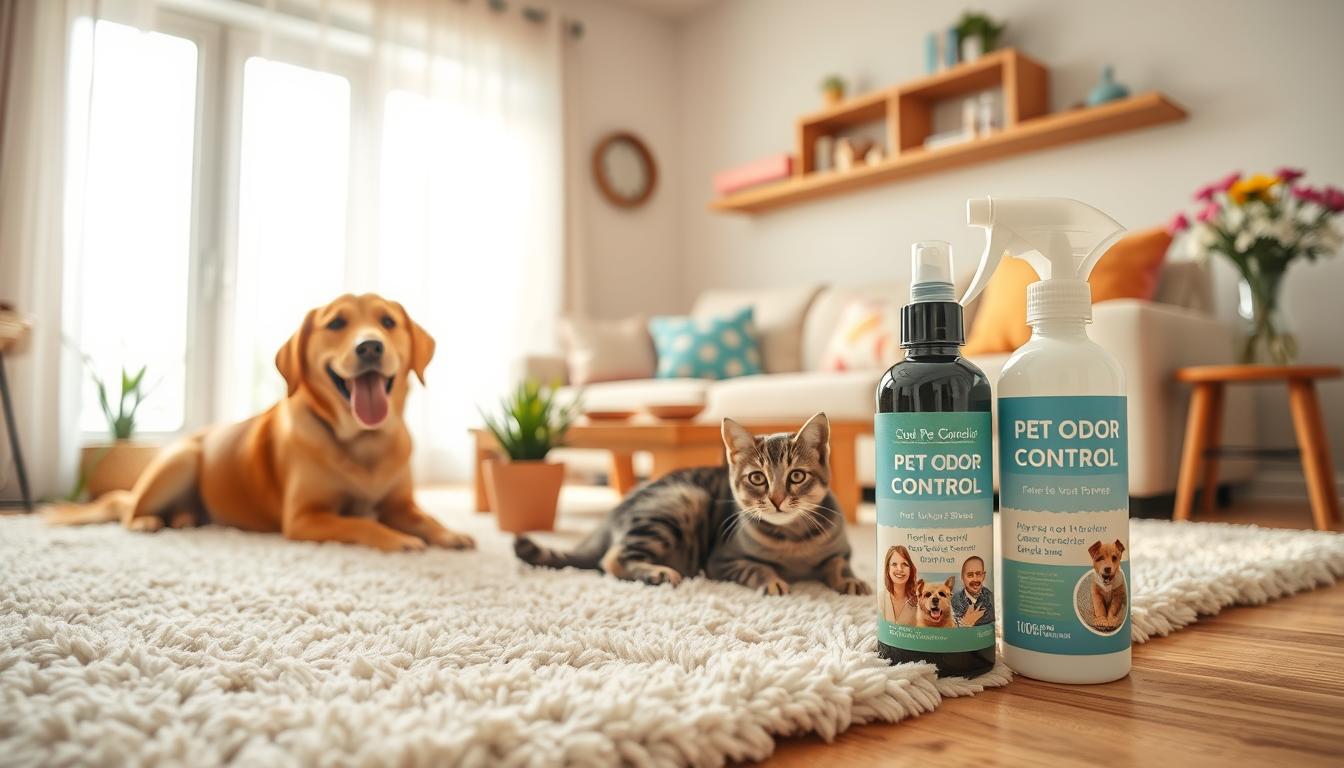
If you’re a pet owner, you know the smell challenges that come with it. Accidents on the carpet and stinky litter boxes are common. Pet odors can be tough to get rid of.
Bad smells can be embarrassing when you have guests over. They can also make your life less enjoyable. It’s key to find effective solutions to keep your home smelling good. Using pet-friendly odor control methods can make your home more comfortable for everyone.
Key Takeaways
- Understand the sources of pet odors in your home
- Discover effective methods for eliminating pet odors
- Learn how to maintain a fresh and clean home
- Explore pet-friendly odor control products and strategies
- Create a healthier living environment for you and your pets
Understanding the Source of Pet Odors
It’s important to know where pet odors come from to control them well. These odors can spread to many parts of our homes, like furniture and carpets. They can even affect the air we breathe. So, finding out where these odors come from is key.
Common Causes of Pet Odors in the Home
Pet odors mainly come from two things: bacteria in pet waste and fur and dander buildup.
Bacterial Growth in Pet Waste
When pet waste isn’t thrown away right, it can grow bacteria. These bacteria make bad smells as they break down the waste.
Fur and Dander Accumulation
Pets shed fur and dander, which can pile up on surfaces and in the air. This not only makes allergies worse but also causes pet smells.
How Different Pets Create Different Odor Challenges
Each pet has its own way of causing odors, based on their habits, biology, and living conditions.
Dog-Specific Odor Issues
Dogs can bring dirt and moisture into our homes, perfect for bacteria that cause smells. Their fur and dander also add to household odors.
Cat-Related Odor Problems
Cats are clean animals, but their litter boxes can still cause bad smells if not cleaned often. Their dander and fur also add to household odors.
Small Pets and Cage Odors
Small pets like rabbits, guinea pigs, and hamsters can make their cages smell bad if not cleaned often. Bedding, waste, and leftover food can all make for unpleasant smells.
The Science Behind Pet Odors
Pet odors come from a mix of bacteria, enzymes, and VOCs. Knowing this science helps us pick the best pet odor removal techniques and effective pet odor elimination methods.
Why Traditional Air Fresheners Don’t Work
Traditional air fresheners often don’t solve pet odors for good. They might hide bad smells for a bit, but they don’t fix the problem.
The Difference Between Masking and Eliminating Odors
Masking odors means hiding the smell with a stronger scent. But, eliminating odors means getting rid of the smell’s source. Odor neutralizing products for pets aim to break down and remove the smell’s cause, offering a better fix.
Why Some Products Make Pet Odors Worse
Some products, especially those with harsh chemicals, can make pet odors worse. These chemicals can mix with the smell’s cause, making it stronger. It’s key to pick non-toxic pet odor remedies to steer clear of this problem.
Common Ingredients to Avoid in Pet Households
When picking products for pet homes, stay away from certain ingredients that can make odors or health issues worse. Here are some to dodge:
| Ingredient | Reason to Avoid |
|---|---|
| Phthalates | Can react with odor-causing molecules, making smells worse |
| Parabens | Potential health risks to pets |
| Synthetic fragrances | Can irritate pets and worsen odors |
Knowing the limits of traditional air fresheners and picking the right ones can help pet owners tackle pet odors. This way, they can keep their homes smelling fresher.
Efficient Pet Odor Control Methods for Every Home
Managing pet odors needs a mix of cleaning tools, odor-neutralizing products, and air purifiers. Knowing the different ways to handle odors at home is key for pet owners.
Specialized Cleaning Equipment
Choosing the right cleaning tools is essential for fighting pet odors. Carpet and upholstery cleaners are made to deep clean where pets often go. They remove dirt and bacteria that cause smells.
Carpet and Upholstery Cleaners
These cleaners are a must for homes with pets that love to lounge on carpets and furniture. They tackle tough stains and smells.
UV Detection Tools
UV detection tools spot pet accidents or stains that you can’t see. This lets you clean exactly where needed.
Must-Have Odor Neutralizing Products
Using the right products to get rid of odors is also crucial. Enzyme-based solutions break down pet waste proteins, eliminating the smell.
Enzyme-Based Solutions
These solutions work great on organic stains and smells. They’re perfect for cleaning up pet accidents.
Activated Charcoal Products
Activated charcoal absorbs smells, making it great for keeping your home smelling fresh.
Investing in the Right Air Purification Systems
Air purifiers are key in controlling pet odors. They remove particles and smells from the air.
HEPA Filtration Benefits
HEPA filters catch 99.97% of particles as small as 0.3 microns. This includes pet dander and allergens.
Pet-Specific Air Purifiers
Some air purifiers are made just for pet owners. They offer better odor control and allergen removal.
| Product Type | Benefits | Best For |
|---|---|---|
| Carpet and Upholstery Cleaners | Deep cleaning, odor removal | Pet owners with carpets and upholstered furniture |
| Enzyme-Based Solutions | Breaks down protein-based odors | Pet accidents, organic stains |
| Activated Charcoal Products | Absorbs odors | General odor control |
| HEPA Air Purifiers | Removes allergens and particles | Pet owners with allergies |
By using these methods together, pet owners can greatly reduce bad smells in their homes. This makes their homes fresher and healthier for everyone.
Room-by-Room Pet Odor Elimination Strategies
To get rid of pet odors, you need a plan for each room. Different rooms face different challenges. This includes the living room, bedrooms, kitchens, bathrooms, and laundry rooms.
Living Room and Common Areas
Living rooms and common areas get a lot of use. They tend to pick up pet odors easily. Protecting furniture and treating fabrics are key steps.
Furniture Protection Techniques
Using covers or throws on furniture can help block pet odors. For furniture you already have, apply a fabric protector. This will help prevent stains and odors.
Odor-Resistant Fabric Treatments
There are treatments that can make your furniture resistant to pet odors. These treatments can make cleaning easier and more effective for pet owners.
Bedrooms and Pet Sleeping Areas
Bedrooms, especially those with pets, need extra care to remove odors. It’s important to manage pet bedding and protect mattresses.
Managing Pet Bedding Odors
Wash your pet’s bedding often. Choose a detergent that fights pet odors. Adding a fabric refresher to the wash can also help.
Protecting Mattresses and Pillows
If your pet sleeps on your bed, use a mattress protector. This stops pet dander and odors from getting into the mattress. Wash pillowcases often to keep your sleep area fresh.
Kitchen and Dining Spaces
Kitchens are known for food smells, but pets can also cause odors. Clean regularly and make sure pet areas are well-ventilated to reduce these smells.
| Area | Odor Source | Elimination Strategy |
|---|---|---|
| Living Room | Pet dander, accidents | Furniture protection, regular vacuuming |
| Bedrooms | Pet bedding, dander on mattresses | Regular washing of bedding, mattress protectors |
| Kitchen | Pet food, spills | Regular cleaning, proper storage of pet food |
Bathrooms and Laundry Rooms
Bathrooms and laundry rooms can also have pet odors. This is especially true if pets use these areas or if pet items are washed here.
Pet Bathing Stations
Having a special area for pet baths can help keep odors and messes contained. Use a non-slip mat and a hose or shower with a spray nozzle for efficient bathing.
Washing Pet Items Effectively
When washing pet items, use hot water and a detergent that fights pet odors. Adding white vinegar to the rinse can help remove detergent residue and odors.
“The key to a fresh-smelling home is not just about eliminating pet odors but also about preventing them from occurring in the first place.” – Pet Care Expert
By using these strategies for each room, pet owners can greatly reduce odors in their homes. This makes their homes fresher and more welcoming for everyone.
Natural Pet Odor Solutions That Actually Work
Finding a pet-friendly home that smells great is possible. There are many DIY and natural solutions that work well and are safe for pets.
Effective DIY Odor Neutralizers
DIY odor neutralizers are a great and affordable way to fight pet odors. Baking soda and vinegar are two top ingredients.
Baking Soda Applications
Baking soda is a natural odor absorber. Sprinkle it on carpets, upholstery, and pet bedding. Let it sit, then vacuum it up.
- Use it to absorb odors in litter boxes.
- Sprinkle it on carpets before vacuuming.
- Place an open box in the refrigerator to absorb odors.
Vinegar-Based Cleaners
Vinegar is a strong natural cleaner. Mix it with water to clean surfaces and get rid of odors.
- Use equal parts water and vinegar to clean floors.
- Mix with baking soda to create a paste for tough odors.
Plant-Based Odor Control Methods
Certain plants and botanicals can naturally control pet odors.
Air-Purifying Houseplants
Some houseplants are great at purifying the air, making them perfect for pet owners.
| Houseplant | Benefit |
|---|---|
| Spider Plant | Easy to care for and effective at removing air pollutants. |
| Peace Lily | Beautiful and capable of absorbing odors and pollutants. |
Pet-Safe Herbs and Botanicals
Certain herbs can naturally freshen the air.
- Lavender
- Chamomile
Safe Essential Oils for Pet Households
While essential oils can be beneficial, it’s crucial to use them safely around pets.
Which Oils to Use (and Avoid)
Some essential oils are safe for pets, while others are toxic.
| Essential Oil | Safety |
|---|---|
| Lavender Oil | Generally considered safe when diluted. |
| Tea Tree Oil | Toxic to pets; avoid using. |
Proper Dilution and Application
Always dilute essential oils with a carrier oil before applying them.
By using these natural pet odor solutions, you can keep your home fresh and healthy for you and your pets.
Tackling Specific Pet Odor Problems
It’s important to know where pet odors come from to get rid of them. Different pets and situations lead to unique smells. We need to find the right solutions for each one.
Urine and Accident Spot Treatment
Accidents can happen, and it’s key to act fast. Urine’s strong smell comes from uric acid.
Fresh Stain Removal
For new stains, use a clean cloth to soak up urine. Don’t rub, as it can damage the surface or push the stain deeper.
Set-In Stain Remediation
Older stains need a deeper clean. Use enzyme-based cleaners to break down uric acid and remove the smell.
Litter Box Odor Management
The litter box is a big source of pet smells. Managing it well means using the right litter and keeping it clean.
Litter Selection Guide
The right litter can cut down on smells. Clumping litters are great because they form clumps when wet, making cleanup easy.
Box Maintenance Schedule
Keep the litter box clean by scooping daily and changing the litter regularly. A schedule helps keep it fresh.
| Litter Type | Odor Control | Maintenance |
|---|---|---|
| Clumping Clay | Good | Daily scooping required |
| Silica Gel | Excellent | Less frequent changing |
| Recycled Paper | Fair | Frequent changing recommended |
Wet Dog Smell Solutions
Dogs that love water or get wet can leave a damp smell. Regular grooming and drying can help.
Between-Bath Freshening Techniques
Use a dog deodorizer or dry shampoo to keep your dog smelling good between baths.
Proper Drying Methods
After a bath or swim, dry your dog well, especially ears and coat. This stops moisture buildup and smell.
Dealing with Pet Bedding Odors
Pet bedding can hold smells, making your home less fresh. Washing it regularly and choosing the right materials helps.
Washable vs. Replaceable Bedding
Washable bedding is easier to maintain. Look for durable, easy-to-clean materials.
Odor-Resistant Bed Materials
Some materials resist smells better. Choose bedding made from these to keep your pet’s area fresher.
By using the right methods and products for each pet odor problem, you can greatly reduce smells at home.
Preventative Measures for Long-Term Odor Control
To keep your home smelling good, you need to do a few things regularly. These steps help cut down on pet odors. This way, your home stays fresh and welcoming.
Regular Grooming Routines
Keeping your pet clean is key to avoiding bad smells. Here’s how:
- Brush your pet often to cut down on hair and prevent tangles
- Bath your pet when needed to keep their coat clean and smelling nice
Brushing and Bathing Schedules
Having a set schedule for brushing and bathing is important. Brushing every day helps with hair. Bathing once a week keeps their coat fresh.
Professional Grooming Benefits
Going to a professional groomer has extra perks. They can trim nails and clean ears. This helps reduce pet smells too.
Strategic Cleaning Schedules
Keeping a cleaning schedule is crucial for a fresh home. Here’s what to do:
| Task | Frequency | Benefit |
|---|---|---|
| Daily vacuuming | Daily | Reduces pet hair and dander |
| Weekly deep cleaning | Weekly | Eliminates hidden odors and dirt |
Daily Maintenance Tasks
Do daily tasks like vacuuming and wiping down surfaces. This stops pet odors from building up.
Weekly Deep Cleaning
Deep clean once a week. It gets rid of hidden smells and dirt, keeping your home smelling fresh.
Smart Material Choices for Pet Homes
Choosing the right materials for your home is important for controlling pet odors.
Flooring Options for Pet Owners
Pet owners should pick flooring that’s easy to clean and doesn’t hold smells. Hardwood or tile is best.
Also, choose furniture and fabrics that are easy to clean. This helps keep pet smells down.
By following these steps, you can keep your home smelling great. It’s better for you and your pets.
Pet-Friendly Commercial Products Worth the Investment
Some commercial products are great at getting rid of pet odors. They are safe for pets and keep your home smelling fresh.
Enzyme-Based Cleaners
Enzyme-based cleaners are top-notch at tackling pet odors. They use enzymes to break down the organic matter causing the smell. This way, they eliminate the odor at its root, not just cover it up.
How Enzymes Break Down Pet Odors
Enzymes target the proteins in pet waste, breaking them down into carbon dioxide and water. This process gets rid of the smell at its source.
Top-Rated Enzyme Products
Two highly recommended enzyme-based cleaners are Biokleen Bac-Out Stain & Odor Remover and Earthbath Enzyme-Based Stain & Odor Remover. They are both effective and safe for pets.
Advanced Odor Neutralizing Technologies
There are also advanced technologies for odor neutralization. These products offer long-lasting solutions for pet owners.
Molecular Odor Eliminators
Molecular odor eliminators break down odor-causing molecules into harmless compounds. They are very effective against tough pet odors.
Long-Lasting Solutions
Zero Odor uses molecular technology for long-lasting odor elimination. It’s perfect for those seeking a lasting solution.
Safe Carpet and Upholstery Treatments
Carpets and upholstery can hold onto pet odors. It’s crucial to use safe and effective treatments. There are pet-safe carpet powders and fabric protectors available.
Pet-Safe Carpet Powders
Febreze Pet Odor Eliminator is a favorite for safely removing odors from carpets. Always pick products labeled as pet-safe.
Fabric Protectors and Sealants
Fabric protectors and sealants can stop odors before they start by creating a barrier. Look for products that are both effective and safe for pets.
| Product | Type | Pet Safety |
|---|---|---|
| Biokleen Bac-Out Stain & Odor Remover | Enzyme-Based | Yes |
| Earthbath Enzyme-Based Stain & Odor Remover | Enzyme-Based | Yes |
| Zero Odor | Molecular Odor Eliminator | Yes |
Conclusion: Creating a Fresh Home Environment for You and Your Pets
Managing pet odors is key to a welcoming home. Knowing where pet smells come from and using effective strategies helps. This way, you can get rid of bad smells and make your home fresh for everyone.
We’ve looked at many ways to get rid of pet smells in this article. This includes using special cleaning tools and natural methods like plants and safe essential oils. Adding these to your daily routine keeps your home smelling clean.
Choosing the right products, like enzyme cleaners and advanced odor neutralizers, also helps a lot. Regular pet grooming, cleaning schedules, and picking the right materials can stop pet odors before they start.
By using all these methods, you can manage pet odors well. This makes your home smell fresh and clean. With the right tools and techniques, you can make a healthy space for your pets to live happily.
Leave a Reply