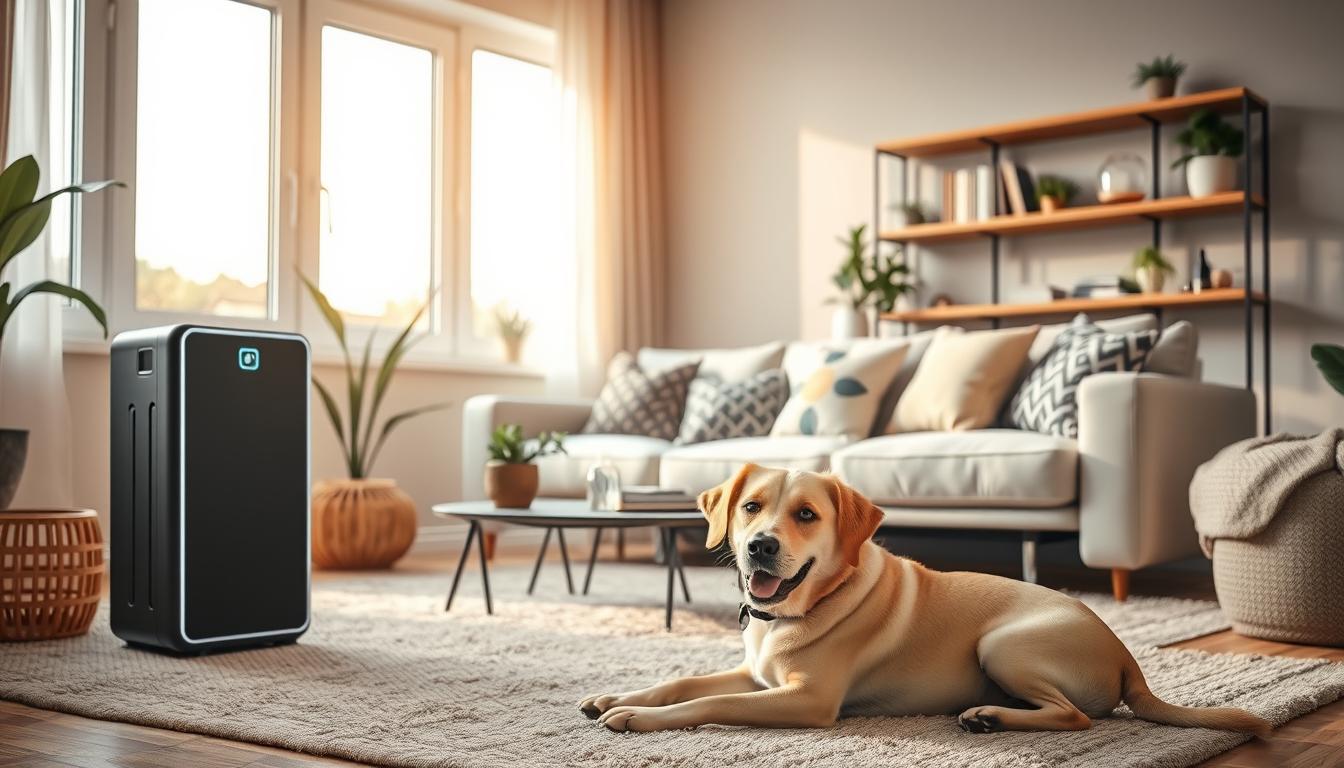
As a pet owner, you want your home to be a safe and healthy place for your furry friends. But, indoor air pollution can be a big worry. This is especially true for pets who spend most of their time inside.
Keeping the air inside clean is key for your health and your pets’. Bad air can make breathing problems, allergies, and other health issues worse.
But don’t worry, there are many pet-friendly air quality solutions out there. These can help make your home air healthier. In this article, we’ll look at some effective ways to improve indoor air quality for pet owners.
Key Takeaways
- Understanding the importance of indoor air quality for pet owners
- Identifying common indoor air pollutants that affect pets
- Exploring pet-friendly air quality solutions for a healthier home
- Learning simple ways to improve indoor air quality
- Creating a comfortable and healthy space for you and your pets
The Impact of Pets on Indoor Air Quality
Pets add joy and companionship to our lives. But, they also bring airborne pollutants that can harm indoor air quality. It’s important for pet owners to know how their pets affect the air they breathe.
Common Air Pollutants from Different Pets
Different pets introduce various pollutants into our homes. Knowing these pollutants is the first step to reducing their impact.
Dog-Specific Concerns
Dogs can pollute indoor air with their dander, fur, and dirt. Regular grooming can help cut down on airborne dog dander and fur.
Cat Dander and Litter Dust
Cats also pollute indoor air, mainly through their dander and litter dust. Cat litter can release fine particles into the air when disturbed.
Birds and Exotic Pets
Birds and exotic pets pollute indoor air through their feathers, droppings, or cage dust. Keeping their environments clean is key to better air quality.
| Pet Type | Common Pollutants | Mitigation Strategies |
|---|---|---|
| Dogs | Dander, fur, dirt | Regular grooming, frequent vacuuming |
| Cats | Dander, litter dust | Regular litter box cleaning, HEPA filters |
| Birds and Exotic Pets | Feathers, droppings, cage dust | Regular cage cleaning, dust-reducing bedding |
How Pet Dander Affects Respiratory Health
Pet dander can worsen respiratory issues like asthma and allergies. When dander is inhaled, it can trigger allergic reactions.
Pet Odors and Volatile Organic Compounds
Pets can release volatile organic compounds (VOCs) through their urine, feces, and grooming products. These VOCs can cause bad odors and harm indoor air quality.
Understanding Air Quality Measurements for Pet Homes
The air in homes with pets can be affected by many factors. It’s crucial for pet owners to know how to measure and improve it. Pollutants from pets can harm indoor air quality.
Key Air Quality Indicators for Pet Owners
Pet owners need to watch several air quality indicators. These include particulate matter (PM), volatile organic compounds (VOCs), and nitrogen dioxide (NO2). High levels can worsen breathing problems and other health issues.
Using Air Quality Monitors in Pet Households
Air quality monitors give real-time data on pollutants in the home. They help pet owners find and fix pollution sources. Choose a monitor that tracks multiple pollutants and shows data clearly.
Seasonal Variations in Pet-Related Air Quality
Seasons can change indoor air quality in pet homes. In winter, sealed homes trap pollutants. Summer brings pollen and humidity, affecting air quality. Knowing these changes helps pet owners keep air quality good all year.
| Season | Common Air Quality Issues | Mitigation Strategies |
|---|---|---|
| Winter | Concentrated pollutants due to sealed homes | Regular ventilation, air purifier use |
| Summer | Increased pollen, humidity | Air conditioning, dehumidifier use |
Health Implications of Poor Air Quality for Pets and Owners
The air we share with our pets can become a health hazard when it’s filled with pollutants. This leads to various health issues. Poor indoor air quality can affect the health of both pets and their owners in several ways.
Respiratory Issues in Dogs and Cats
Poor air quality can make respiratory problems in dogs and cats worse. This can lead to conditions like asthma or chronic bronchitis. Pet owners should be aware of the signs of respiratory distress in their pets, such as coughing, wheezing, or difficulty breathing.
Human Allergies and Asthma Triggers
Indoor air pollutants can also trigger allergies and asthma in humans. Pet dander, dust mites, and mold are common allergens that can circulate in the air. Using air purifiers and maintaining a clean home can help reduce these allergens.
Cross-Species Sensitivities
There’s a lesser-known aspect of indoor air quality: cross-species sensitivities. This occurs when pets react to human products or when humans react to pet-related allergens.
When Pets Are Sensitive to Human Products
Some pets may develop sensitivities to certain human products, such as cleaning supplies or fragrances. Choosing pet-friendly household products can help minimize these risks.
When Humans React to Pet-Related Allergens
Conversely, humans can react to allergens produced by pets, such as dander or saliva. Regular grooming and using HEPA filters can help reduce the presence of these allergens.
Understanding these health implications is crucial for maintaining a healthy environment for both pets and their owners. By being aware of the potential issues and taking steps to mitigate them, we can create a healthier home for everyone.
Comprehensive Pet-Friendly Air Quality Solutions
Improving air quality in your home is key for a healthy living space. Pet owners must use both quick fixes and long-term plans. This ensures good air quality and keeps pets safe.
Immediate vs. Long-Term Strategies
Quick fixes include air purifiers and opening windows. But, lasting changes are needed to cut down on pet dander and smells. HEPA filters are great at catching pet dander and allergens.
The Environmental Protection Agency (EPA) says, “air purifiers can cut down indoor air pollution.”
“Indoor air pollution can be 2-5 times higher than outdoor levels.” – EPA
Balancing Effectiveness with Pet Safety
Choosing air quality solutions means finding a balance. Some air purifiers make ozone, which is bad for pets. It’s important to pick ozone-free air purifiers for pet safety.
| Air Quality Solution | Effectiveness | Pet Safety |
|---|---|---|
| HEPA Air Purifiers | High | Safe |
| Ozone-Emitting Purifiers | Variable | Unsafe |
Creating a Whole-Home Approach
A whole-home strategy means using many air quality solutions. This includes central air filtration systems and safe cleaning products. Regular upkeep, like vacuuming with HEPA-filter vacuums, is also key.
By taking a comprehensive and pet-friendly approach, you can make your home healthier for everyone.
Pet-Friendly Air Purifiers: Features and Benefits
Pet-friendly air purifiers are key to a healthy home for pets and their owners. They remove pet dander, odors, and allergens from the air. This improves the air quality in your home.
HEPA Filtration Technology for Pet Homes
HEPA (High Efficiency Particulate Air) filtration technology is a main feature of good pet air purifiers. HEPA filters catch 99.97% of particles as small as 0.3 microns. This includes pet dander and allergens, helping to reduce allergies and respiratory issues.
Activated Carbon Filters for Pet Odor Control
Many pet air purifiers also have activated carbon filters. These filters trap gases and odors, including pet smells. They absorb VOCs and other odor-causing molecules, making the air smell fresher and cleaner.
Top Air Purifier Models for Different Pet Types
Different pets need different air purifiers. Here are some top picks:
Best Options for Dog Owners
Dog owners should look for air purifiers with strong odor control and high CADR. The Levoit LV-H132 is a great choice. It has true HEPA filtration and a compact design.
Solutions for Cat Households
Cat owners might want air purifiers that are quiet and focus on allergen removal. The Coway AP-1512GA is a top pick. It has a multi-stage filtration system and an eco-mode for quiet operation.
Specialized Units for Bird and Small Animal Owners
For bird and small animal owners, air purifiers with filters for feather dust and fine particles are best. The Winix 5500-2 is a versatile option. It includes a washable pre-filter and advanced odor control.
Placement and Maintenance Guidelines
To get the most out of a pet air purifier, place it in a central area or where pets spend most of their time. Regular maintenance, like filter replacements and cleaning, is also key. This ensures the device works well.
Pet-Safe HVAC Solutions and Filtration Systems
Keeping the air clean and safe for pets is very important. Using pet-safe HVAC solutions is a great way to do this.
Pet-Friendly HVAC Filter Ratings and Types
Choosing the right HVAC filter is key. Filters are rated on the MERV scale, showing how well they catch particles. For pet owners, a MERV rating of 11 to 13 is best. It helps catch pet dander, dust, and allergens well.
Whole-House Air Filtration Options
Whole-house air filtration systems work with your HVAC. They clean the air all over your home. They’re great at removing pet dander, odors, and pollutants. Options include electronic air cleaners and UV light systems.
Smart HVAC Systems with Pet-Specific Features
Smart HVAC systems have cool features for pet owners. They can sense air quality changes and adjust filters. You can also control them from your phone. This keeps your home comfy and healthy for pets, even when you’re away.
Duct Cleaning Considerations for Pet Owners
Duct cleaning is crucial for pet owners. Ducts can fill up with pet dander and hair over time. Clean them every 2-5 years, depending on your pets and how much they shed.
| Filter Type | MERV Rating | Pet Owner Benefits |
|---|---|---|
| Basic Filters | 1-4 | Limited pet dander capture |
| Standard Filters | 5-10 | Moderate pet dander capture |
| High-Efficiency Filters | 11-13 | High pet dander capture, recommended for pet owners |
Natural and Chemical-Free Air Quality Improvements
Pet owners can make their homes healthier without harsh chemicals. This makes the air better for pets and everyone else.
Pet-Safe Plants That Improve Air Quality
Some plants clean the air and are safe for pets. Here are a few:
- Spider plants: They’re easy to care for and clean the air well.
- Prayer plants: They’re beautiful and help purify the air.
- Parlor palms: They’re elegant and safe for homes with pets.
These plants are good for pets and help remove indoor air pollutants.
Natural Deodorizing Methods
Instead of chemical air fresheners, try natural methods.
- Baking soda: It absorbs odors naturally.
- Essential oils (in moderation and pet-safe varieties): They can make your home smell nice.
- Activated charcoal: It traps odors and pollutants well.
DIY Air Fresheners Safe for All Pets
Making your own air fresheners is fun and safe. Here are some ideas:
- Mix water with pet-safe essential oils in a spray bottle.
- Use dried herbs and flowers.
Humidity Control for Better Air Quality
Keeping the right humidity is key for good air quality. Too much or too little can cause problems like mold and dry skin.
| Humidity Level | Effects on Air Quality | Solutions |
|---|---|---|
| Too Low (<30%) | Dry skin, nosebleeds | Humidifier |
| Too High (>60%) | Mold growth, dust mites | Dehumidifier |
| Ideal (30-60%) | Comfortable environment | Monitor and adjust |
Using these natural methods, pet owners can greatly improve their home’s air. This makes a healthier and more comfortable place for pets and people.
Cleaning Strategies to Maintain Air Quality with Pets
Cleaning is key to keeping a healthy home for pets and their owners. Regular cleaning cuts down on pet dander, hair, and smells that harm air quality.
Pet-Friendly Cleaning Products and Ingredients
It’s important to pick the right cleaning products. Go for pet-friendly cleaning products without harsh chemicals or toxins. Baking soda, vinegar, and essential oils are good choices because they’re safe for pets and work well.
Vacuuming Technology for Pet Hair and Dander
Getting the right vacuum is crucial for better air. Look for vacuums with HEPA filters. They catch 99.97% of particles, including pet dander and hair, as small as 0.3 microns.
Managing Pet Bedding, Toys, and Accessories
Wash pet bedding and toys often to cut down on dander and smells. Use safe detergents for your pets’ health and safety.
Cleaning Schedules for Different Pet Types
Cleaning needs change based on your pets. Here’s a simple guide to help you:
| Pet Type | Cleaning Frequency | Special Considerations |
|---|---|---|
| Dogs | Daily vacuuming, weekly mopping | Focus on areas dogs like to hang out in. |
| Cats | Daily litter box cleaning, weekly vacuuming | Use products to control litter box odors. |
| Birds and Small Pets | Weekly cage cleaning, monthly deep cleans | Make sure to ventilate when cleaning cages. |
By following these cleaning tips, pet owners can make their indoor air much healthier. This creates a better environment for everyone at home.
Grooming Practices That Improve Indoor Air Quality
Regular pet grooming does more than keep pets clean. It also keeps your home healthy. By grooming your pets well, you can cut down on pet dander and hair in the air. This makes your indoor air quality better.
Regular Brushing and Bathing Routines
Brushing your pets regularly helps remove loose hair and spreads skin oils. This can lessen dander. Bathing them often also cuts down on dander and dirt they bring home. For pets that shed a lot, using a deshedding tool while brushing can help.
Professional Grooming Services and Benefits
Professional groomers offer more than just cleaning. They can do special treatments to reduce shedding and dander. They also give advice on the best grooming for your pet’s breed.
| Grooming Practice | Benefit |
|---|---|
| Regular Brushing | Reduces loose hair and dander |
| Professional Grooming | Thorough cleaning and reduced shedding |
| Bathing Routines | Minimizes dander and dirt |
Managing Seasonal Shedding Cycles
Some pets shed more in certain seasons. Knowing when your pet sheds helps you groom them more often during these times.
Grooming Tools That Reduce Airborne Pet Hair
Using the right grooming tools, like deshedding rakes and gloves, can cut down airborne pet hair. These tools catch loose hair before it flies around.
Adding these grooming habits to your routine makes your home air healthier. This makes your home more comfortable for you and your pets. Using pet-friendly air quality solutions with these grooming practices can make your home’s air even better.
Technological Innovations in Pet-Friendly Air Quality
Technology is changing how we keep the air clean for pets. Smart devices and advanced filters are making it easier for pet owners to keep the air fresh indoors.
Smart Air Quality Monitors for Pet Owners
Smart air quality monitors give pet owners instant updates on the air. They can spot pollutants like pet dander and VOCs quickly.
App-Controlled Air Purification Systems
App-controlled air purifiers make life easier. Pet owners can adjust settings from anywhere, keeping the air clean even when they’re away.
Wearable Technology for Pets That Affects Air Quality
Wearable tech for pets, like health and air quality tracking collars, is becoming popular. These devices warn owners about air quality issues that might harm their pets.
Future Trends in Pet-Friendly Air Solutions
Future advancements will bring even better air purification systems and smart home integration. These improvements will make pet-friendly indoor air solutions even more effective.
| Innovation | Benefit |
|---|---|
| Smart Air Quality Monitors | Real-time air quality tracking |
| App-Controlled Air Purifiers | Remote adjustment for optimal air quality |
| Wearable Pet Technology | Health and air quality monitoring for pets |
By using these new technologies, pet owners can greatly enhance pet-friendly home air quality. This creates a healthier space for both pets and their owners.
Conclusion: Breathing Easier with Your Furry Friends
It’s important to keep your home air clean for you and your pets. Learning how pets affect indoor air and using pet-friendly solutions can really help. This way, you can breathe better.
There are many ways to improve air quality at home. Using air purifiers and regular pet grooming are good starts. Also, using pet-friendly cleaning products and keeping your home tidy can help a lot.
By focusing on air quality, you can make your home healthier for everyone. Start using these tips now. Your home will feel fresher and cleaner.
Leave a Reply