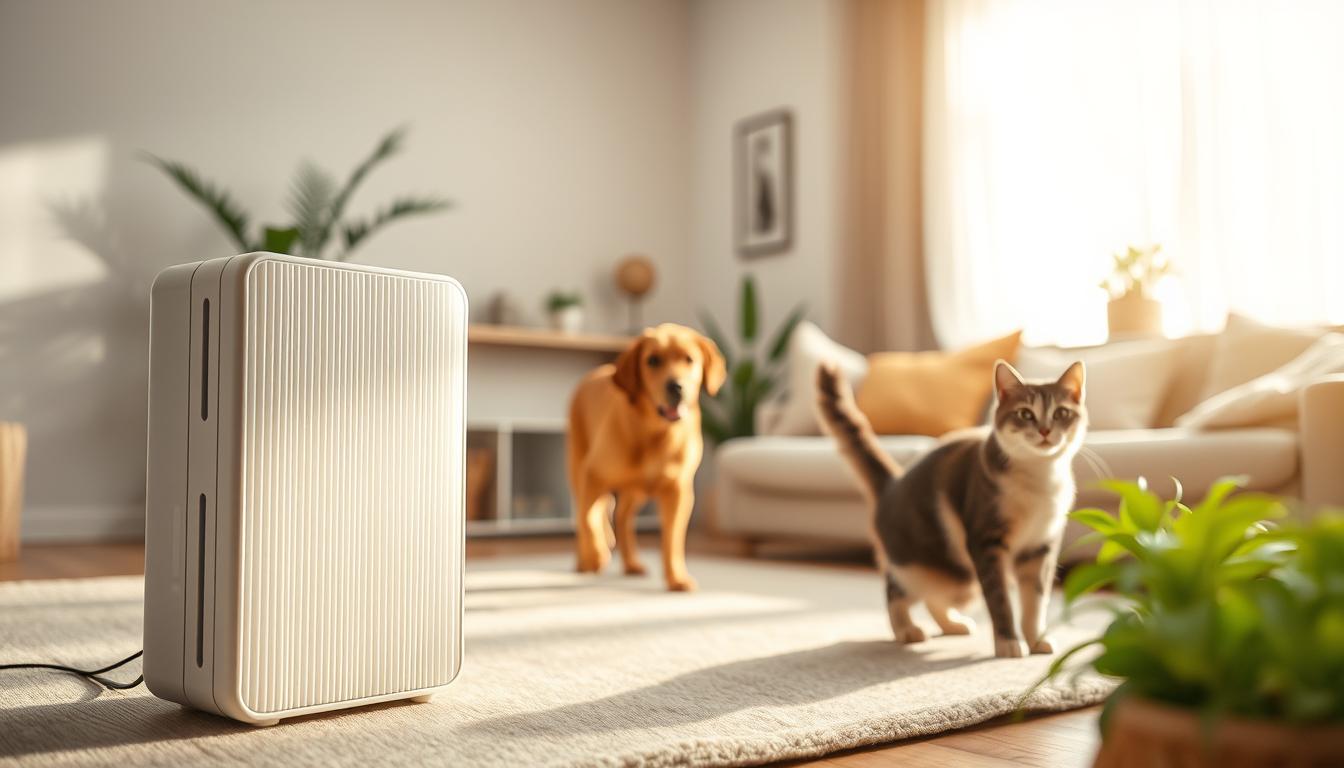
As a pet owner, you want your furry friends to breathe easily and stay healthy. Indoor air pollutants can harm pets, making a clean and safe home essential.
Using pet-safe home air filters is a smart way to keep your pets safe from airborne dangers. These filters cut down on dust, dander, and other harmful particles that can hurt your pet’s breathing.
By picking the best pet-safe air filters, you make a better home for your pets. In this article, we’ll look at the good things about top-rated pet-safe air filters.
Key Takeaways
- Pet-safe home air filters reduce indoor air pollutants.
- They help protect pets from respiratory issues.
- Choosing the right filter is crucial for effectiveness.
- Top-rated filters can significantly improve indoor air quality.
- Pet owners can create a healthier environment for their pets.
Why Air Quality Matters for Your Pets
Indoor air quality is key for a healthy home for pets. Pets breathe in the air, just like us. Bad air can make them sick.
Pet Respiratory Sensitivities
Pets, especially those with breathing problems, are very sensitive to air. Dogs and cats can get sick from bad air. Using indoor air quality improvement filters can help a lot.
Common Indoor Air Pollutants Affecting Pets
Many things in our homes can make air bad for pets. Dust, dander, mold, and VOCs are big culprits. Pet-friendly air filtration can clean the air and help pets feel better.
Signs Your Pet May Be Affected by Poor Air Quality
It’s important to know if your pet is not feeling well because of the air. Look for signs like coughing, sneezing, itchy skin, and being very tired. If you see these, it’s time to clean the air in your home.
| Signs | Possible Causes | Solutions |
|---|---|---|
| Coughing, Sneezing | Dust, Dander, Mold | HEPA Filters, Regular Cleaning |
| Itchy Skin | Allergens, VOCs | Activated Carbon Filters, Reduce VOC Sources |
| Lethargy | Poor Air Quality Overall | Improve Ventilation, Use Air Purifiers |
The Best Pet-Safe Home Air Filters on the Market
Creating a healthy indoor space for your pets starts with the right air filter. There are many options, but knowing what makes an air filter “pet-safe” is key for pet owners.
What Makes an Air Filter “Pet-Safe”
A “pet-safe” air filter catches pet dander, allergens, and odors. This improves your home’s air quality. High-efficiency air filters are great at removing pet-related contaminants.
To be “pet-safe,” an air filter must catch particles as small as 0.3 microns. This includes pet dander and other allergens. Some filters also have special features like odor control and antimicrobial protection.
Different Types of Air Filtration Technologies
There are many air filtration technologies, each with its own benefits. Some common ones are:
- HEPA (High Efficiency Particulate Air) filters
- Activated Carbon filters
- Electrostatic filters
- UV Light air purifiers
Key Features to Look for in Pet-Friendly Filters
When picking an air filter, look for certain key features. These include:
| Feature | Description | Benefit |
|---|---|---|
| High CADR | Clean Air Delivery Rate measures the filter’s efficiency | Faster air cleaning |
| True HEPA | Captures 99.97% of particles as small as 0.3 microns | Effective against pet dander and allergens |
| Activated Carbon | Adsorption technology for odor control | Reduces pet odors |
By looking at these features and choosing the right air filter, pet owners can greatly improve their home’s air quality. This creates a healthier environment for their pets.
HEPA Filters: The Gold Standard for Pet Households
For pet owners, keeping the home clean and healthy is key. HEPA filters are a big help. They catch 99.97% of particles as small as 0.3 microns, like pet dander and dust.
How HEPA Filters Work
HEPA filters use a special network of fibers to catch particles. As air goes through, the fibers trap the particles. This makes the air cleaner and reduces allergens for pets and people.
Benefits for Pet Dander and Allergen Removal
HEPA filters are great for pet owners because they remove pet dander and allergens. This can help:
- Lessen allergy symptoms
- Reduce irritation for pets
- Make the home environment cleaner and healthier
Top HEPA Filter Options for Pet Owners
Pet owners have many good HEPA filter choices. Two top picks are:
Honeywell Pet-Plus Air Purifiers
The Honeywell Pet-Plus Air Purifier is made for pet owners. It has a true HEPA filter to catch pet dander and allergens. It also has extra layers to remove smells and gases.
Levoit Core Series with Pet Mode
The Levoit Core Series air purifier has a special Pet Mode. It’s better at finding and removing pet dander and allergens. It also has a multi-stage filtration system for better air cleaning.
Both of these options are great for improving air quality in homes with pets. They are good choices for anyone wanting a healthier home.
Activated Carbon Filters for Eliminating Pet Odors
Pet odors can be overwhelming. But, there’s a powerful tool to fight them: activated carbon filters. These filters are popular among pet owners for their ability to remove unwanted odors.
The Science Behind Activated Carbon
Activated carbon attracts and traps odor-causing molecules. It neutralizes them. This is called adsorption, where the carbon draws in and holds onto odor particles.
Experts say, “Activated carbon is highly effective at removing gases, odors, and chemicals from the air. It’s a great choice for pet owners.”
Effectiveness Against Pet Odors
Activated carbon filters work well against pet odors. They target the molecular level, capturing VOCs that cause bad smells. This makes the air fresher and cleaner for pets and their owners.
Best Activated Carbon Filter Products
Choosing the best activated carbon filter can be tough. But, there are several top-rated options. Two stand out:
Winix PlasmaWave Series
The Winix PlasmaWave Series is known for its advanced odor-reducing capabilities. It combines activated carbon with PlasmaWave technology to get rid of pet odors effectively.
Bissell air320 Smart Air Purifier
The Bissell air320 Smart Air Purifier has an activated carbon filter. It captures pet dander and odors, offering a complete air cleaning solution.
Both of these products are highly rated for their performance and ability to improve indoor air quality.
Hypoallergenic HVAC Filters for Whole-Home Protection
Hypoallergenic HVAC filters are key to keeping your home clean from allergens and pollutants. They catch pet dander, dust, and pollen, making the air inside better.
Understanding MERV Ratings for Pet Homes
MERV stands for Minimum Efficiency Reporting Value. It shows how well an air filter catches different sizes of particles. For homes with pets, a higher MERV rating is best to fight off pet dander and other allergens.
MERV Rating Guide:
| MERV Rating | Particle Size Captured | Pet-Friendliness |
|---|---|---|
| 1-4 | Large particles | Low |
| 5-8 | Medium particles | Moderate |
| 9-12 | Small particles (including most pet dander) | High |
| 13+ | Very small particles (including smoke and viruses) | Very High |
Installation and Maintenance Tips
Putting in and keeping up with hypoallergenic HVAC filters is important. Make sure the filter fits your HVAC system right. Also, change it when the maker says to.
Top-Rated Hypoallergenic HVAC Filter Brands
Here are some top brands for hypoallergenic HVAC filters:
Filtrete Healthy Living Pet Allergen Reduction Filters
These filters grab 99.97% of particles as small as 0.3 microns. They catch pet dander and allergens well.
Nordic Pure MERV 12 Pleated AC Furnace Filters
With a MERV 12 rating, these filters are great for pet owners. They catch a lot of airborne particles.
Choosing the right hypoallergenic HVAC filter and keeping it up can really help. It makes the air in your home better for pets and people.
Eco-Friendly and Non-Toxic Air Filters for Pet Safety
Pet owners are now looking for eco-friendly air filters to improve indoor air quality. They want to protect their pets and the environment. This has led to a rise in demand for sustainable and non-toxic air filters.
Sustainable Materials in Air Filtration
Eco-friendly air filters use sustainable materials. These materials are often recyclable or biodegradable. This reduces waste and environmental impact.
For example, some filters use recycled materials or bio-based media. This makes them more environmentally friendly.
Avoiding Harmful Chemicals and Additives
Traditional air filters can contain harmful chemicals. These can harm indoor air quality. Eco-friendly air filters, however, avoid these substances.
Look for filters that are certified non-toxic and chemical-free. This ensures clean and safe air for your pets.
Best Eco-Friendly Options for Conscious Pet Parents
Pet owners who care about the environment have great options. Two top choices are:
- Coway Airmega Purifiers
- Blueair Blue Pure Series
Coway Airmega Purifiers
Coway Airmega purifiers are known for their high-performance filtration. They use mechanical and electrostatic filtration to catch pet dander and allergens.
The Blueair Blue Pure Series focuses on sustainability. Their filters are energy-efficient and made from recyclable materials. This makes them perfect for eco-conscious pet owners.
Choosing eco-friendly and non-toxic air filters helps create a healthier home for pets. It also supports a sustainable future.
Portable Air Purifiers for Different Pet Types
Keeping the air clean at home is key for pet owners. Portable air purifiers are a great solution. They work well in homes with many pets or pets that shed a lot.
Solutions for Dog Owners
Dog owners deal with dander and smells. Portable air purifiers with HEPA filters catch dog dander, cutting down on allergens. Some also have activated carbon filters to get rid of dog smells.
Options for Cat Households
Cats spread fine dander that floats in the air. Portable air purifiers with true HEPA filters are best for cat owners. They trap 99.97% of particles, including cat dander, as small as 0.3 microns.
Specialized Filters for Exotic Pets
Exotic pet owners have special air purification needs. For example, owners of small mammals like rabbits or guinea pigs need air purifiers that handle dust and dander well.
Small Animal and Bird Considerations
Small animals and birds need air purifiers that are quiet and gentle. Look for models with adjustable fan speeds.
Reptile and Amphibian Environments
Reptile and amphibian owners must think about their pets’ humidity and temperature needs. Some air purifiers are made for these specific environments.
| Pet Type | Recommended Filter Type | Key Considerations |
|---|---|---|
| Dogs | HEPA with Activated Carbon | Odor control, dander reduction |
| Cats | True HEPA | Dander capture, allergen reduction |
| Small Animals/Birds | HEPA, gentle airflow | Quiet operation, dust reduction |
| Reptiles/Amphibians | Specialized filters | Humidity, temperature tolerance |
Choosing the right portable air purifier for your pet can greatly improve your home’s air quality. This makes a healthier space for you and your pets.
Budget-Friendly Pet-Safe Air Filtration Solutions
Finding the right air filter for your pet doesn’t have to be expensive. There are many affordable choices. This way, pet owners can have clean air without spending too much.
Cost vs. Performance Analysis
Cost and performance often go hand in hand with air filters. But, some cheap options work really well. For example, high-efficiency air filters catch 99.97% of tiny particles, like pet dander and allergens.
Even on a tight budget, you don’t have to give up quality. Here are some important things to think about:
- How long the filter lasts and the cost to replace it
- The air purification technology (like HEPA or Activated Carbon)
- The area it covers and its CADR (Clean Air Delivery Rate)
- Features like removing odors and how quiet it is
DIY Enhancement Options
To get the most out of your air filter, try these DIY tips:
- Regularly vacuum and dust to cut down on pet dander
- Use a pre-filter to make your main filter last longer
- Place your air purifier or filter in a central spot for best airflow
Best Value Air Filters for Pet Owners
Here are some top picks for air purifiers that are great for pet owners:
GermGuardian AC4825 Air Purifier
The GermGuardian AC4825 is a favorite among pet owners. It has a True HEPA filter that catches 99.97% of dust, pollen, and pet dander. It also has an activated carbon filter to get rid of pet smells.
LEVOIT Core 300 Air Purifier
The LEVOIT Core 300 is another great choice. It offers high-efficiency filtration at a good price. It has a three-stage filtration system, including a True HEPA filter, and works well in big rooms.
By looking at these affordable options and DIY tips, pet owners can make their homes healthier and more comfy for their pets.
Maintenance and Replacement Schedules for Pet Homes
Pets can really affect how long air filters last and how often they need to be changed. It’s important to understand this to keep your air clean and your pets healthy.
How Pets Affect Filter Lifespan
Pets shed dander and fur, and sometimes bring in outdoor pollutants. This can make air filters get clogged faster. So, in homes with pets, filters might need to be replaced more often.
Cleaning vs. Replacing Filters
Some filters can be cleaned, but others must be replaced. Always check the manufacturer’s guidelines. HEPA filters, for example, can’t be cleaned and should be replaced every 6-12 months.
Creating a Maintenance Calendar
To keep your air filters in top shape, make a maintenance calendar. Note when you last checked or replaced the filters.
Seasonal Considerations
In spring and fall, when pets shed more, filters might need more frequent checks.
Multi-Pet Household Adjustments
If you have more than one pet, you should replace filters more often. This is because there’s more dander and fur.
| Pet Type | Filter Replacement Frequency |
|---|---|
| Single Pet | Every 6-12 months |
| Multi-Pet Household | Every 3-6 months |
Regular maintenance not only makes the air cleaner but also helps your HVAC system last longer. By keeping up with filter maintenance, you create a healthier home for your pets.
Conclusion: Breathing Easier with Your Furry Friends
As a pet owner, keeping your home’s air quality is key for your pets’ health. This article has shown why pet-safe home air filters are important. It also listed the top choices for you.
Choosing the right air filter can cut down on pet dander, allergens, and smells at home. You can pick from HEPA, activated carbon, or hypoallergenic filters. Remember, keeping these filters clean and replacing them often is crucial.
Getting pet-safe home air filters is a smart move for a healthier home for your pets. It means you’re taking good care of them. Knowing the main points can help you pick the best air filter for your home.
Leave a Reply