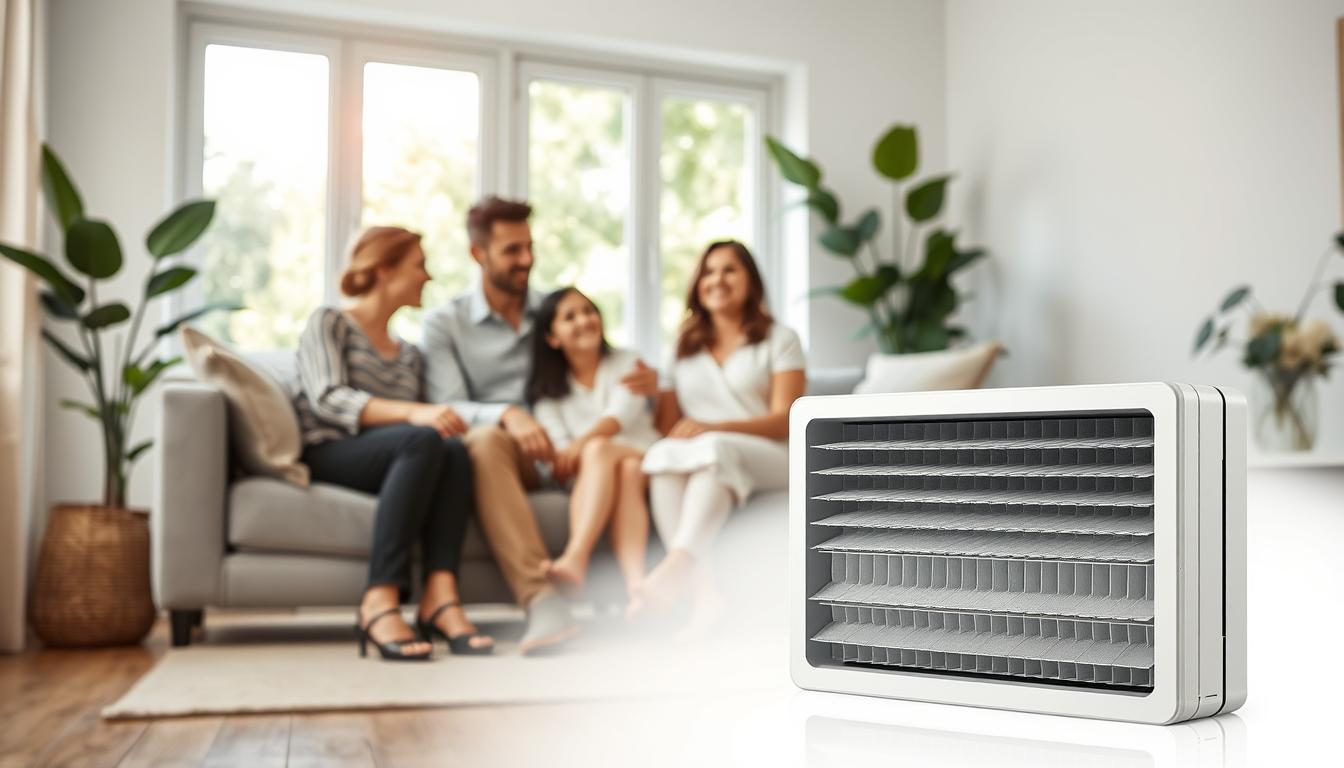
More people are dealing with allergies and respiratory issues. Keeping our homes healthy is now more important than ever. The air inside our homes affects our health a lot. Using the right allergy relief air filters can really help.
Allergy-friendly air filters catch tiny particles like dust and pollen. This makes the air in our homes cleaner. By adding these filters to our homes, we can feel better and live in a healthier place.
Key Takeaways
- Allergy-friendly air filters improve indoor air quality.
- They capture small particles, including dust and pollen.
- Using these filters can alleviate allergy symptoms.
- A healthier home environment is achieved through better air filtration.
- Allergy relief air filters are a crucial component of a healthy home.
The Hidden Dangers of Indoor Air Pollution
Many of us don’t know about the dangers in our home’s air. Indoor air pollution can cause health problems, from mild allergies to serious breathing issues.
Common Indoor Allergens and Their Sources
Indoor allergens come from many places, like dust mites, pet dander, mold spores, and pollen. These can build up in carpets, furniture, bedding, and HVAC systems. Dust mites love warm, humid places and are a big allergen source. Knowing where these come from helps us reduce them.
- Dust mites in bedding and upholstered furniture
- Pet dander from household pets
- Mold spores in damp areas
- Pollen that enters through open windows or on clothing
Health Impacts of Poor Indoor Air Quality
Poor air quality can harm our health, causing respiratory issues, allergies, and more. People with asthma are especially at risk. Symptoms include sneezing, coughing, itchy eyes, and trouble breathing. It’s key to improve indoor air quality to avoid these problems.
- Respiratory problems, including asthma exacerbation
- Allergic reactions such as sneezing and itchy eyes
- Other health issues related to prolonged exposure
How Allergy-Friendly Air Filters Work
Allergy-friendly air filters use advanced technologies to catch many allergens. They help make the air inside better to breathe.
MERV Ratings and What They Mean
MERV stands for Minimum Efficiency Reporting Value. It shows how well an air filter catches different sized particles. HEPA filters for allergies usually have high MERV ratings. This means they are good at removing allergens and other particles from the air.
A higher MERV rating means better filtering. But, it’s important to make sure it works well with your HVAC system. This ensures it performs at its best.
| MERV Rating | Particle Size Captured | Typical Application |
|---|---|---|
| 1-4 | >10 microns | Basic residential use |
| 5-8 | 3-10 microns | Better residential use, commercial |
| 9-12 | 1-3 microns | Superior residential use, hospital |
| 13-16 | High-efficiency filtration, surgical suites |
HEPA Filtration Technology Explained
HEPA filtration is a top-notch technology found in many hypoallergenic HVAC filters. HEPA means High Efficiency Particulate Air. These filters catch 99.97% of particles as small as 0.3 microns.
HEPA filters are great at catching dust, pollen, and other allergens. They help people with allergies and asthma breathe easier.
Electrostatic and Activated Carbon Technologies
Some allergy-friendly air filters also use electrostatic and activated carbon technologies. Electrostatic filters grab particles with a static charge. Activated carbon removes gases, odors, and chemical vapors.
These technologies work with HEPA filtration to tackle more air quality issues. They are key parts of asthma-safe air filters.
Types of Allergy-Friendly Air Filters for Different Needs
Different homes need different allergy-friendly air filters to keep allergens out. There are many options, but knowing the types can help you choose wisely.
HVAC System Filters for Whole-Home Protection
HVAC system filters are great for covering your whole home. They fit into your heating, ventilation, and air conditioning system. This way, all your home’s air is clean and free from allergens.
They work well for big homes or for those with allergies all year.
Standalone Air Purifiers for Targeted Filtration
Standalone air purifiers are flexible and target specific areas. You can put them in rooms where allergens are worst, like bedrooms. They’re perfect for renters or small homes.
Portable Options for Renters and Small Spaces
Portable air purifiers are great for small spaces or rentals. They’re small and can move around, cleaning the air in any room without needing to be installed.
Specialized Filters for Severe Allergies
People with severe allergies might need specialized filters. These filters catch tiny allergens and particles. They use advanced tech like HEPA or electrostatic filtration for better protection.
Knowing about the different allergy-friendly air filters helps you pick the right one. This ensures your home is healthier and more comfortable.
Top-Rated Allergy-Friendly Air Filters on the Market
Allergy sufferers can find relief with the right air filtration system. We’re here to guide you through the top-rated options. Choosing the best allergy-friendly air filter for your home can improve your indoor air quality and health.
Best HVAC Filters for Allergy Sufferers
HVAC filters are key for whole-home protection. Look for filters with a high MERV rating, like the Honeywell FPR 9. It captures 99.97% of particles as small as 0.3 microns. These filters work well with your heating and cooling system, offering allergy relief.
Leading Standalone Air Purifiers
Standalone air purifiers filter specific rooms or areas. The Levoit LV-H132 is a top choice, with a True HEPA filter that captures 99.97% of airborne particles. Its compact design and quiet operation are perfect for bedrooms or living rooms.
Budget-Friendly Options That Don’t Sacrifice Quality
You don’t have to spend a lot to breathe easy. The Filtrete 3M50 is an affordable HVAC filter that captures microscopic allergens. For standalone purifiers, consider the GermGuardian AC4825, which offers HEPA filtration at a budget-friendly price.
Premium Solutions for Maximum Allergen Removal
Premium options like the Dyson Pure Cool Link offer advanced features. These include Wi-Fi connectivity and real-time air quality monitoring. These high-end models ensure maximum allergen removal and can be integrated into your smart home system.
When choosing an allergy-friendly air filter, think about your needs. Consider the size of your space, the severity of your allergies, and your budget. By picking a top-rated filter, you can greatly improve your indoor air quality and breathe easier.
Choosing the Perfect Allergy-Friendly Air Filters for Your Home
Starting a healthier home begins with the right air filter. It must match your allergy needs and home setup. This choice greatly affects the air you breathe and your health.
Assessing Your Specific Allergy Triggers
First, know your enemies: dust, pollen, pet dander, and mold. Identifying your specific allergy triggers is key. This helps pick a filter that fights those allergens well. For example, pet dander allergies need a filter that catches small particles.
Considering Home Size, Layout, and Air Flow
Your home’s size and layout matter for the right air filter. A bigger home needs a stronger filter, while smaller homes might do with a smaller one. Also, think about your home’s air flow. It impacts how well the filter works.
Balancing Initial Cost with Long-term Value
Don’t just look for the cheapest filter. High-quality, hypoallergenic HVAC filters cost more upfront. But, they save you money and improve your life in the long run.
When to Consult an Air Quality Professional
Not sure about the best filter for your home? Or have serious allergies? Talk to an air quality expert. They’ll give you advice tailored to your home and health, ensuring the best allergen-reducing air filtration solution.
Installation and Maintenance to Maximize Effectiveness
To get the most out of your allergy-friendly air filters, proper installation and regular maintenance are key. These filters help improve indoor air quality by cutting down on dust and pollen. But, they only work well if installed correctly and cared for regularly.
Proper Installation Techniques for Different Filter Types
Different allergy-friendly air filters need different installation methods. For example, HEPA filters must be set up to block air from going around them. Always follow the manufacturer’s instructions for installation. HVAC system filters need a tight fit in their housing, while standalone air purifiers just need to be plugged in and turned on. But, make sure they’re in a spot where air can flow well.
Optimal Replacement Schedules by Filter Type
The time when you need to replace allergy-friendly air filters varies. HEPA filters usually need to be swapped out every 6 to 12 months. Electrostatic filters, on the other hand, can be washed and might not need to be replaced as often. Always check the manufacturer’s guidelines for the best replacement schedule to keep your filters working well.
Maintenance Tips for Peak Performance
Keeping your allergy-friendly air filters in top shape is crucial. This means checking them often for dust, cleaning or replacing them as needed, and keeping the area around them clean. By following these tips, you can make sure your filters are doing their job and your indoor air is cleaner.
- Regularly inspect filters for damage or wear.
- Clean the filter housing and surrounding areas.
- Check for and replace filters according to the manufacturer’s schedule.
Effectiveness of Allergy-Friendly Air Filters Against Common Allergens
Allergy-friendly air filters are key for homes with allergy sufferers. They remove many allergens from the air. This improves indoor air quality and lowers allergy risks.
Dust, Dust Mites, and Microscopic Particles
Filters with HEPA technology are great against dust, dust mites, and tiny particles. HEPA filters can catch 99.97% of particles as small as 0.3 microns. They are perfect for homes with allergies.
Pollen and Seasonal Outdoor Allergens
Pollen can get into homes during pollen season, making allergies worse. Allergy-friendly air filters capture pollen and other outdoor allergens. This helps those with seasonal allergies feel better.
Pet Dander and Animal-Related Allergens
Pet owners find allergy-friendly air filters very helpful. These filters trap pet dander and other animal allergens. This makes the air cleaner and easier to breathe for everyone.
Mold Spores, Fungi, and Bacteria
Mold spores, fungi, and bacteria are also caught by these filters. Filters with antimicrobial properties can even reduce these more. This makes homes healthier.
Volatile Organic Compounds (VOCs) and Chemical Irritants
Some filters also capture VOCs and chemical irritants. These can cause allergies and breathing problems. Activated carbon filters are especially good at removing these. They improve indoor air quality.
| Allergen Type | Filter Effectiveness | Recommended Filter Type |
|---|---|---|
| Dust, Dust Mites | High | HEPA |
| Pollen | High | HEPA |
| Pet Dander | High | HEPA |
| Mold Spores, Fungi, Bacteria | High | HEPA with Antimicrobial |
| VOCs, Chemical Irritants | High | Activated Carbon |
Creating a Comprehensive Allergy Relief Strategy at Home
Allergy sufferers can make their homes better by using a complete allergy relief plan. This plan includes several important steps. These steps work together to cut down on allergens and make the air cleaner.
Complementary Cleaning Routines
Cleaning regularly and well is key to lessening allergens at home. Using a HEPA-filter vacuum and damp cloths can catch dust and stop it from flying around. Pay special attention to places where dust builds up, like furniture, blinds, and carpets.
Humidity Control and Moisture Management
Keeping the right humidity levels is important to stop mold and dust mites. Using a dehumidifier in wet spots like basements or bathrooms helps manage moisture. Make sure your home’s humidity stays between 30-50%.
Allergy-Proofing Different Rooms
Each room in your house needs its own allergy-proofing steps. For example, using allergen-proof bedding in bedrooms can cut down on dust mites. In living areas, think about using furniture with covers that can be taken off and washed.
Seasonal Adjustments to Your Filtration Approach
Changing your air filter strategy with the seasons can make it more effective. When pollen is at its highest, replace filters more often or use ones that catch pollen better. In winter, make sure air moves well indoors to fight off allergens.
By adding these steps to your daily life, you can make a detailed allergy relief plan. This plan will greatly improve your home’s air quality.
Technological Innovations in Allergy-Friendly Air Filtration
New technologies are changing how we fight allergies in the air. These advancements make air filters work better and catch more allergens and pollutants.
Smart Air Filters with Air Quality Monitoring
Smart air filters with air quality monitoring are a big step up. They can sense when the air quality changes and adjust themselves. For example, they might turn up the fan when it’s dirty and slow down when it’s clean. This saves energy and makes the filters last longer.
Emerging Filtration Technologies
New technologies like nanofiber filters and photocatalytic oxidation (PCO) filters are promising. Nanofiber filters can catch tiny particles, and PCO filters use UV light to destroy pollutants. These might be more effective and eco-friendly.
Integration with Smart Home Systems
Another cool thing is when air filters connect with smart homes. You can control them from anywhere, get updates on air quality, and even set them to turn on when you’re home. It makes keeping the air clean easier and more convenient.
| Technology | Key Features | Benefits |
|---|---|---|
| Smart Air Filters | Air quality monitoring, adjustable fan speed | Optimized energy use, enhanced allergen capture |
| Nanofiber Filters | High-efficiency particle capture | Improved indoor air quality, reduced allergy symptoms |
| PCO Filters | UV light pollutant breakdown | Sustainable, effective pollutant removal |
These new technologies are making hypoallergenic HVAC filters and allergen-reducing air filtration systems better. They’re also easier to use and fit right into our homes.
Conclusion: Breathing Easier with the Right Air Filtration Strategy
Improving indoor air quality is key for those with allergies. Knowing about different allergy-friendly air filters helps people make better choices. These filters are essential for a healthy home.
There are many options, like HVAC filters for the whole house or air purifiers for specific areas. It’s important to think about what triggers your allergies and the size of your home. This way, you can pick the best filters for your needs.
Using allergy-friendly air filters is part of a bigger plan to improve air quality. This plan also includes regular cleaning, controlling humidity, and adjusting for the seasons. By doing this, you can reduce allergy symptoms and live better. Choosing the right air filters is a big step towards a healthier home.
Leave a Reply