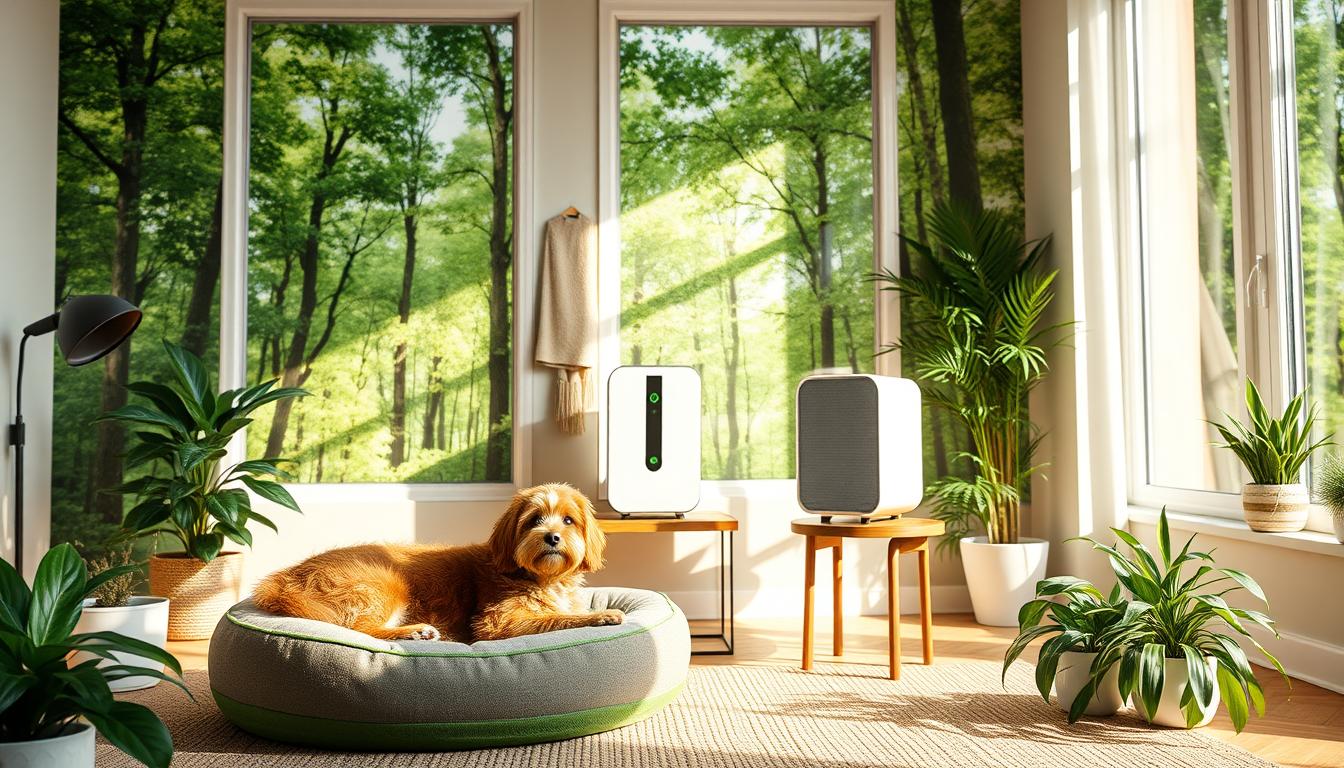
As a pet owner, you want your home to be a safe space for your pets. Indoor air pollution can come from many sources, like furniture and cleaning products. It’s also important to think about the air quality for your pets’ health.
There are many eco-friendly ways to make your home’s air better. Using natural cleaners and opening windows can help a lot. These pet-friendly air quality solutions will help your pets live healthier in your home.
Key Takeaways
- Maintain good indoor air quality for your pet’s health.
- Use natural cleaning products to reduce pollutants.
- Increase ventilation to improve air quality.
- Adopt eco-friendly habits for a healthier home.
- Simple changes can significantly impact your pet’s wellbeing.
Understanding Pet Air Quality Concerns
Pets are more at risk from air pollutants because of their size and habits. This makes air quality very important. Studies show pets, especially those with health issues, can be badly affected by poor indoor air.
Common Indoor Air Pollutants Affecting Pets
Indoor air pollutants can be split into chemical pollutants and particulate matter. Knowing about these is key to keeping pets healthy.
Chemical Pollutants: Cleaning Products and Air Fresheners
Chemical pollutants from cleaners and air fresheners release harmful VOCs. These VOCs can lead to breathing problems and other health issues in pets.
Particulate Matter: Dust, Dander, and Pollen
Particulate matter, like dust, dander, and pollen, can worsen allergies and breathing problems in pets. Using eco-friendly pet air purifiers and regular cleaning can help lower these pollutants.
How Pets Experience Air Quality Differently Than Humans
Pets feel air quality differently than humans because of their unique bodies and behaviors. For example, dogs and cats are more sensitive to certain air pollutants.
Heightened Sensitivity in Dogs and Cats
Dogs and cats are more sensitive to air pollutants because they are closer to the ground and breathe faster than humans. This makes them more exposed to pollutants like dust and VOCs.
Special Considerations for Birds and Small Mammals
Birds and small mammals have delicate lungs, making them very sensitive to air quality. Good ventilation and sustainable pet air care practices are crucial to protect them.
The Impact of Poor Air Quality on Pet Health
Air quality is key to our pets’ health. Poor air can harm them. Pets breathe in the air, just like us, and can get sick from pollutants and allergens.
Respiratory Issues in Dogs and Cats
Dogs and cats are more likely to get respiratory problems from bad air. Inhaling pollutants can cause asthma and chronic bronchitis in them. Keeping their living areas clean and grooming them regularly can help.
Air Quality Concerns for Small Mammals and Birds
Small mammals and birds have delicate lungs. They are more affected by bad air. It’s important to have good air flow and avoid strong smells or fumes.
Signs Your Pet Is Suffering from Poor Air Quality
Pet owners should watch for signs of bad air affecting their pets. Look for coughing, sneezing, or trouble breathing. If you see these, take your pet to the vet.
| Pet Type | Common Air Quality Issues | Prevention Measures |
|---|---|---|
| Dogs and Cats | Asthma, Chronic Bronchitis | Regular Grooming, Clean Living Areas |
| Small Mammals and Birds | Respiratory Distress | Good Ventilation, Minimize Odors/Fumes |
Knowing how bad air affects pets and taking steps can help. Pet owners can make a better environment for their pets.
Eco-Efficient Pet Air Quality: A Holistic Approach
To get eco-efficient pet air quality, you need a big plan. This plan should think about your pets’ health and the planet’s well-being. It makes your pets healthier and helps the planet too.
Balancing Pet Health and Environmental Responsibility
It’s important to find a middle ground. You want your pets to be healthy and also care for the environment. Using eco-friendly products helps a lot. It cuts down on pollution and keeps the air clean.
The Economics of Sustainable Pet Air Care
At first, green pet air care might seem expensive. But, it can save you money in the long run. For example, energy-efficient air purifiers can lower your electricity bills.
| Eco-Friendly Practice | Cost Savings | Environmental Benefit |
|---|---|---|
| Energy-Efficient Air Purifiers | Reduced Electricity Bills | Lower Carbon Emissions |
| Natural Ventilation Strategies | Lower Utility Bills | Reduced Reliance on Mechanical Systems |
Setting Realistic Goals for Your Home
Begin with small steps. Try eco-friendly cleaning products or air-purifying plants. Then, you can make bigger changes like getting a green air purifier.
Natural Ventilation Strategies for Pet-Friendly Homes
Natural ventilation is a simple and green way to better the air in pet homes. It uses the natural flow of air to cut down indoor pollutants. This makes a healthier space for pets.
Creating Cross-Ventilation Systems
Creating a cross-ventilation system is a great method. It means opening windows on opposite sides to let in fresh air and out stale air. Cross-ventilation boosts air quality and saves energy by reducing air conditioning needs.
Seasonal Adjustments for Optimal Airflow
Changing your ventilation with the seasons is key to better air. In hot months, open windows at night and close them during the day. This keeps it cool and improves air flow. In cold months, opening windows briefly brings in fresh air.
Window Treatments That Improve Air Circulation
The right window treatments can also help with ventilation. Sheer curtains or blinds that can be opened or closed control airflow well. Also, wide-open windows or window fans increase air flow, making the home healthier for pets.
Eco-Friendly Pet Air Purifiers Worth the Investment
Eco-friendly pet air purifiers are a great way to make indoor air better for pets and people. They help reduce harm to the environment. This makes pet owners happy to know they’re helping the planet while keeping their pets healthy.
Energy-Efficient Models with HEPA Filtration
Choosing an eco-friendly air purifier means finding one that’s both energy-smart and uses HEPA filters. HEPA filters catch 99.97% of tiny particles like pet dander and pollen. This makes the air much cleaner.
Top Energy Star Rated Options
Energy Star air purifiers use less power but still clean the air well. They come from brands that care about the environment. These purifiers save energy and make the air healthier for everyone.
Noise Considerations for Sensitive Pets
For pets that get easily upset by noise, quiet air purifiers are best. Many eco-friendly models are made to be very quiet. They have special modes for when it’s dark or quiet.
Sustainable Materials and Manufacturing Practices
Good eco-friendly air purifiers use materials that are safe for the planet. They’re made with care for the environment. This means less waste and better air for pets and people.
Placement Strategies for Maximum Effectiveness
Where you put your air purifier matters a lot. Place it where your pets hang out, like their beds or where they play. This way, they breathe cleaner air. Also, make sure air can move freely around the purifier.
Getting an eco-friendly air purifier and placing it right can make your home healthier. It’s a smart choice for pets and the planet.
Houseplants That Improve Air Quality and Are Safe for Pets
Keeping indoor air clean is key for both people and pets. Adding pet-safe houseplants to your home is a great way to do this. Some plants are not just pretty but also clean the air by removing harmful substances.
Top Non-Toxic Air-Purifying Plants
Some plants are safer for pets than others. Here are a few non-toxic options that clean the air:
- Spider Plant: Easy to care for and effective at removing air pollutants.
- Parlor Palm: A stylish addition to any room, it helps remove benzene and trichloroethylene from the air.
- Prayer Plant: Known for its beautiful foliage, it’s also great at purifying the air.
Best Options for Removing Common Toxins
Some plants are better at removing certain toxins. For example:
| Plant | Toxin Removed |
|---|---|
| Spider Plant | Formaldehyde, Xylene |
| Parlor Palm | Benzene, Trichloroethylene |
Plants to Avoid with Specific Pets
While some plants are safe, others can harm pets. For example, Lily plants are toxic to cats, and Sago Palm is toxic to dogs. Always check if a plant is safe before bringing it home.
Strategic Placement for Maximum Benefit
To get the most out of houseplants, place them in areas with poor air flow. This includes corners or near heating vents.
Maintaining Plants Without Chemical Fertilizers
To keep your plants healthy without chemicals, use compost or organic fertilizers. This keeps your plants thriving and your air clean of chemicals.
Green Pet Air Fresheners and Odor Control
Keeping your pets in a clean environment is key for their health. Pet owners often struggle to keep homes smelling fresh with pets around. Luckily, there are eco-friendly ways to manage odors.
Essential Oil Blends Safe for Different Pet Species
Essential oils can make the air fresh, but picking the right ones is important. Lavender and chamomile are usually safe for cats and dogs. But, always check with a vet before adding new scents to your home.
Homemade Deodorizing Sprays and Powders
Making your own deodorizing sprays and powders is fun and effective. Use natural ingredients like baking soda and essential oils. This way, you can keep your home smelling fresh while being safe for your pets and the planet.
Natural Odor Absorbers for Pet Areas
There are natural odor absorbers for pet areas. Activated charcoal is great at absorbing odors without harsh chemicals. It’s a top choice for a green pet air freshener.
By using these methods daily, you can keep your home fresher and healthier for everyone.
Sustainable Cleaning Practices for Better Pet Air Quality
Using sustainable cleaning practices is key to better air quality for pets indoors. By choosing eco-friendly cleaning methods, pet owners can cut down on harmful chemicals and pollutants at home.
Non-Toxic Cleaning Solutions
Switching to non-toxic cleaning solutions is a big step towards a healthier home for pets. Traditional cleaners often have harsh chemicals that can harm your pet’s breathing.
DIY Cleaning Recipes Safe for Pets
Making your own cleaning solutions with natural ingredients like baking soda, vinegar, and lemon juice is a smart choice. These ingredients are safe for pets and good for the environment.
Eco-Certified Commercial Options
If you prefer ready-made cleaners, look for eco-certified ones. These products use safer ingredients and are better for the planet.
Microfiber and Reusable Cleaning Tools
Using microfiber cloths and other reusable tools can greatly reduce the need for chemical cleaners. Microfiber is great at picking up dirt and dust, and it can be washed and used many times.
Steam Cleaning: An Eco-Friendly Deep Clean Option
Steam cleaning is a green way to deep clean surfaces without harsh chemicals. It works well for carpets, upholstery, and pet areas.
| Cleaning Method | Eco-Friendliness | Effectiveness |
|---|---|---|
| Non-Toxic Cleaning Solutions | High | High |
| Microfiber Cloths | High | High |
| Steam Cleaning | High | High |
Eco-Conscious Pet Bedding and Furniture Choices
Eco-conscious pet owners know that the right bedding and furniture are key for good air quality. The materials in pet bedding and furniture greatly affect your home’s air.
Low-VOC Materials and Certifications to Look For
When picking pet bedding and furniture, look for low-VOC materials. Look for Greenguard Gold or Oeko-Tex Standard 100 certifications. Products with these certifications help keep your air clean.
Sustainable Fabrics That Trap Fewer Allergens
Sustainable fabrics like organic cotton, hemp, and bamboo are good for the planet and pets. They breathe well, which means they catch fewer allergens. This helps pets with breathing problems.
Washing and Maintenance Using Eco-Friendly Methods
It’s important to wash pet bedding and furniture often. Use eco-friendly detergents without harsh chemicals. Washing in cold water saves energy and keeps fabrics in better shape.
| Material | VOC Emissions | Allergen Trapping |
|---|---|---|
| Conventional Polyester | High | High |
| Organic Cotton | Low | Low |
| Bamboo Fabric | Low | Low |
By choosing wisely for pet bedding and furniture, owners can make their homes healthier. This improves the air quality for pets.
Environmentally Friendly Pet Air Quality Control Systems
Homeowners are now looking for ways to improve air quality for their pets without harming the environment. This move towards sustainability is good for the planet and makes homes healthier for pets.
Integrated Home Systems That Benefit Pets
Home systems that control air quality can greatly improve indoor spaces for pets. These systems use ventilation, filtration, and purification to offer a complete solution. For example, a good system can reduce allergens and pollutants and keep humidity levels right, making homes more comfortable for pets.
Smart Technology for Monitoring Air Quality
Smart technology is key in modern air quality systems. Devices with sensors can check indoor air quality in real-time. This gives pet owners important information about their home’s air quality. These smart systems can automatically adjust settings based on the data they collect, keeping the air clean and safe for pets.
Balancing Energy Efficiency with Air Purification Needs
Designing eco-friendly air quality systems is a challenge. It’s about finding a balance between energy efficiency and air purification. Modern systems use energy-efficient components and operate in a way that saves energy without sacrificing air quality. Some systems also have features like automatic shut-off or adjustable fan speeds to cut down on energy use.
When looking for environmentally friendly pet air quality systems, consider these features:
- HEPA filtration for effective pollutant removal
- Smart sensors for real-time air quality monitoring
- Energy-efficient design to minimize environmental impact
- Adjustable settings to accommodate different pet needs
Managing Pet Dander and Fur Sustainably
Good pet care is more than just food and a home. It also means managing dander and fur. Eco-friendly practices help reduce allergens at home. This improves sustainable pet air care and air quality.
Regular Grooming Routines Using Eco-Friendly Products
Regular grooming cuts down on pet dander and fur. Eco-friendly grooming products are better for the planet and keep pets clean. Choose shampoos and conditioners without harsh chemicals or artificial scents.
Sustainable Pet Hair Management Tools
Good tools for pet hair can make a big difference. Reusable lint rollers and washable pet beds cut down on waste. They also keep pet hair in check.
Creating a Pet Grooming Station That Contains Allergens
Having a special spot for grooming keeps allergens in one place. Use a grooming table or mat that’s easy to clean. Adding a natural pet air purification system nearby boosts air quality.
These steps help make a healthier home for pets and owners. They follow the rules of sustainable pet air care.
Conclusion: Breathing Easier with Eco-Friendly Pet Air Solutions
Using eco-friendly methods can really help improve the air quality for pets. This makes a big difference for both pets and their owners. By understanding the air quality issues and taking a holistic approach, pet owners can greatly improve their pets’ health.
Making simple changes can make a big difference. For example, using natural ventilation, eco-friendly air purifiers, and green air fresheners can improve indoor air. Also, adding safe houseplants and using sustainable cleaning can make your home healthier.
By focusing on eco-efficient pet air quality, pet owners can ensure a safe and healthy space for their pets. Start with small steps like using non-toxic cleaners or adding air-purifying plants. Every little bit helps in making your home better for pets and the planet.
Leave a Reply