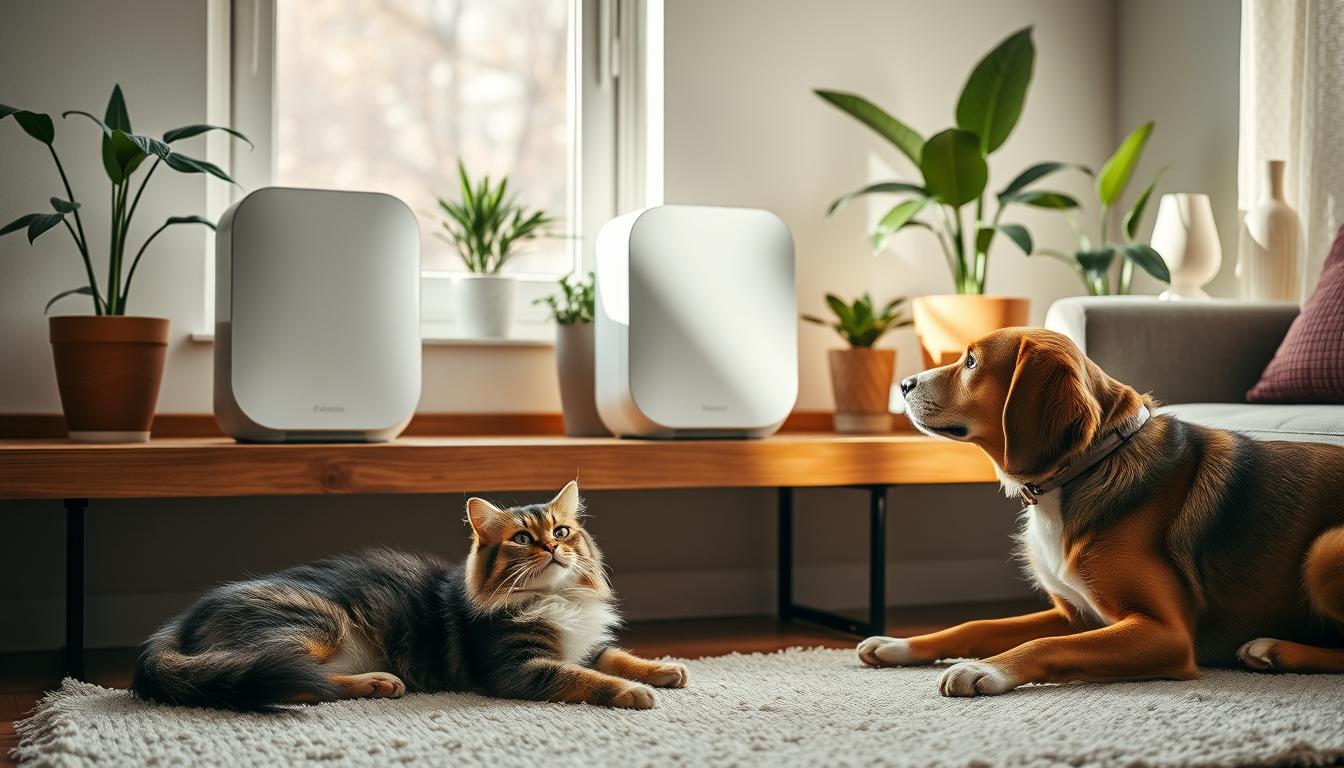
As a pet owner, you want your home to be healthy and comfy for your pets. But, indoor air quality can get bad because of pet dander and hair. That’s why pet-safe air cleaning technology is key. It cleans the air, making your home safer for your pets.
Using non-toxic air purifiers can make your indoor air much better. This lowers the danger from bad air particles. By choosing pet-safe air cleaning, you make a healthier home for you and your pets.
Key Takeaways
- Pet-safe air cleaning technology improves indoor air quality.
- Non-toxic air purifiers reduce airborne pollutants.
- A healthier environment benefits both pets and their owners.
- Pet dander and hair can compromise indoor air quality.
- Investing in pet-safe air cleaning solutions is a proactive step towards a healthier home.
The Hidden Air Quality Concerns in Pet-Friendly Homes
Pet-friendly homes can still have air quality issues that affect both humans and animals. Our homes are filled with love and companionship from our pets. But, pets can also be sources of indoor air pollution.
Common Indoor Air Pollutants in Homes with Pets
Indoor air pollutants in homes with pets include many substances that can harm air quality. These include pet dander and allergens, and odors along with volatile organic compounds (VOCs).
Pet Dander and Allergens
Pet dander, tiny particles from the skin of cats, dogs, and other small animals, is a big problem. These particles can become airborne, causing allergic reactions and respiratory issues in pets and their owners.
Odors and Volatile Organic Compounds
Pet odors and VOCs from accidents, litter boxes, or grooming products can really hurt indoor air quality. These odors are not just unpleasant; they can also mean harmful chemicals are present.
How Poor Air Quality Affects Your Pets’ Health
Poor air quality can seriously harm pets’ health. The effects depend on the pet type and its sensitivities.
Respiratory Issues in Dogs and Cats
Dogs and cats can face respiratory problems due to poor air quality. Pet dander and other pollutants can make asthma worse, causing coughing, wheezing, and breathing trouble.
Impact on Small Pets and Birds
Small pets and birds are very sensitive to air quality issues. Their fast breathing rates and sensitive respiratory systems make clean air essential for their health and happiness.
| Pet Type | Common Air Quality Issues | Health Impacts |
|---|---|---|
| Dogs and Cats | Pet dander, odors | Respiratory issues, allergies |
| Small Pets and Birds | Airborne pollutants, VOCs | Respiratory distress, stress |
Pet-Safe Air Cleaning Technology: What You Need to Know
Keeping pets safe at home means understanding air cleaning systems. These systems can cut down on pet dander, smells, and other harmful stuff. This makes your pets healthier and happier.
The Science Behind Air Purification for Pet Homes
Air purifiers pull in air, filter out bad stuff, and then send clean air back out. For homes with pets, picking the right system is key. HEPA (High Efficiency Particulate Air) filters are great at catching 99.97% of tiny particles, like pet dander.
There are different ways air purifiers work, like mechanical filters, electrostatic attraction, and UV light. Knowing about these can help you choose the best air purifier for your pet-friendly home.
Harmful Technologies and Ingredients to Avoid
Not all air purifiers are safe for pets. Some can make harmful stuff or release bad chemicals. It’s important to know about these dangers to keep your pets safe.
Ozone Generators and Their Risks
Ozone generators make ozone, which can hurt lungs. Ozone can make breathing problems worse in pets. So, it’s best to stay away from these in homes with pets.
Chemical Additives and Fragrances
Some air purifiers use chemicals or fragrances to hide smells. But, these can be bad for pets if they breathe them in. It’s better to choose air purifiers that use natural ways to get rid of smells.
| Technology | Safety for Pets | Effectiveness |
|---|---|---|
| HEPA Filters | Safe | High |
| Ozone Generators | Dangerous | Variable |
| Chemical Additives | Harmful | Temporary |
Types of Pet-Friendly Air Purification Systems
Pets can really affect the air in our homes. Choosing the right air purifier is key. There are many options, so it’s important to know what’s best.
HEPA Filtration Systems
HEPA (High Efficiency Particulate Air) systems are top-notch for pet owners. They catch 99.97% of particles, like pet dander and pollen.
True HEPA vs. HEPA-Type Filters
It’s important to know the difference between True HEPA and HEPA-type filters. True HEPA filters meet strict standards. HEPA-type filters might not filter as well.
Benefits for Pet Owners
HEPA systems are great for pet owners. They cut down on pet dander and allergens. This makes the air cleaner and can help with allergies. Using a HEPA air purifier regularly makes a healthier home for pets and people.
Activated Carbon Filters
Activated carbon filters are also good for air quality. They’re great at removing smells and gases.
Odor Elimination Capabilities
Activated carbon filters are amazing at getting rid of smells. They can handle pet accidents and other odors.
Lifespan and Effectiveness
The life of an activated carbon filter depends on how much it’s used. They usually need to be replaced every 6 to 12 months. How well they work can change based on humidity and pollution.
UV Light Purifiers
UV light purifiers kill germs with ultraviolet light. But, they need to be safe for pets.
Ionic Air Purifiers: Are They Safe for Pets?
Ionic air purifiers release negative ions to trap pollutants. But, some can make ozone, which is bad for pets. Make sure to pick an ozone-free model.
Natural Air Filtration Systems for Pet Owners
Sharing your home with pets? Natural air filtration systems are a great choice. They’re eco-friendly and improve indoor air quality. These systems remove pollutants and odors, making your home healthier for everyone.
Plant-Based Air Purification
Using plants to purify the air is natural and looks good. Some plants absorb pollutants and toxins, enhancing air quality.
Pet-Safe Plants That Clean Air
Not all plants are safe for pets. It’s important to pick non-toxic ones. Here are some safe options:
- Spider plants
- Prayer plants
- Parlor palms
These plants are safe for pets and effective at removing indoor pollutants.
Creating a Plant Purification Strategy
To get the most from plants, follow this strategy:
- Place plants in areas where pets spend time.
- Use a variety of plants to tackle different pollutants.
- Keep plants well-watered, pruned, and repotted as needed.
Non-Electric Air Cleaning Solutions
There are non-electric ways to clean your home’s air. These methods are eco-friendly and save money.
Beeswax Candles and Himalayan Salt Lamps
Beeswax candles and Himalayan salt lamps are popular for natural air cleaning. They:
- Release negative ions to trap pollutants
- Create a cozy atmosphere that boosts well-being
Charcoal and Bamboo Air Purifiers
Charcoal and bamboo air purifiers are another non-electric option. They can be placed in different rooms to absorb odors and moisture.
| Method | Benefits | Considerations |
|---|---|---|
| Plant-Based | Natural, aesthetically pleasing, removes various pollutants | Requires plant care, some plants toxic to pets |
| Beeswax Candles | Releases negative ions, creates warm ambiance | May produce soot if not properly maintained |
| Himalayan Salt Lamps | Attracts moisture and pollutants, calming effect | May require frequent cleaning, hygroscopic |
| Charcoal/Bamboo Purifiers | Effective at odor removal, non-toxic | May require frequent replacement, limited pollutant range |
Top Eco-Friendly Air Purifiers for Pet Households
Finding an air purifier that’s good for pets and the planet can be tough. We want products that clean our air and are kind to the earth. This is key for those who care about sustainability.
Energy-Efficient Models
Looking for an eco-friendly air purifier? Energy efficiency is crucial. ENERGY STAR certified products use less energy but still work well. They’re good for the planet and can lower your bills.
ENERGY STAR Certified Options
ENERGY STAR shows an air purifier is energy-smart. These products meet high energy standards set by the U.S. Environmental Protection Agency. Brands known for eco-friendly products often have ENERGY STAR certified air purifiers.
Smart Features That Save Power
Today’s air purifiers have smart features to save energy. Some adjust fan speed based on air quality. This saves power and makes filters last longer.
Sustainable Materials and Manufacturing
It’s not just about energy. The materials and how they’re made matter too. Sustainable materials and eco-friendly manufacturing lessen environmental harm.
Recyclable Components
Some brands make air purifiers with parts that can be recycled. This cuts down on waste. Look for brands with recycling programs or filters that can be recycled.
Brands With Environmental Commitments
Some brands really care about the planet. They make eco-friendly air purifiers and follow green practices. Choosing these brands supports companies that value the environment.
Addressing Specific Pet Air Quality Concerns
For pet owners, clean air is more than comfort. It’s about a healthier home for their pets. Pets bring in air pollutants like dander, hair, and odors. These can worsen allergies and lower air quality.
Solutions for Pet Dander and Allergies
Pet dander and allergies are big worries for many. Several air purification solutions can help.
Multi-Stage Filtration Systems
Multi-stage filtration systems are great at catching pet dander and allergens. They have a pre-filter, a HEPA filter, and sometimes an activated carbon filter. This combo captures gases and odors too.
Allergy-Specific Features
Some air purifiers have special features for allergies. They might have enhanced HEPA filters or new technologies to catch allergens. These can really cut down on pet dander and other allergens in the air.
Eliminating Pet Odors Safely
Pet odors can stick around in homes with pets. We need specific solutions to get rid of them.
Targeted Odor Elimination Technology
Some air purifiers have tech just for getting rid of pet odors. This tech might include activated carbon filters or other materials that absorb smells.
Natural Deodorizing Methods
There are also natural ways to fight pet odors. Using essential oils or houseplants that clean the air can help. These methods can reduce odors without harsh chemicals.
Managing Fur and Hair in Your Air System
Keeping pet fur and hair out of the air is key. Regular cleaning of air purifiers and HVAC systems helps. This reduces pet hair and dander in the air.
| Solution | Description | Benefits |
|---|---|---|
| Multi-Stage Filtration | Includes pre-filter, HEPA, and activated carbon filters | Captures pet dander, allergens, and odors |
| Allergy-Specific Features | Enhanced HEPA or allergen-capturing technology | Reduces allergens and pet dander |
| Targeted Odor Elimination | Activated carbon or odor-absorbing materials | Eliminates pet odors |
Maintaining Your Pet-Safe Air Cleaning System
To keep your air clean and your pets healthy, regular maintenance is key. A well-functioning air purifier improves air quality and lasts longer.
Cleaning and Filter Replacement Schedules
Regular cleaning and filter replacements are crucial. Filters should be checked monthly. Replace them as the manufacturer suggests, usually every 6 to 12 months.
Impact of Pets on Filter Lifespan
Pets can shorten your air purifier’s filter life. If you have many pets or pets that shed a lot, filters may need to be replaced more often. Monitoring filter condition is essential for good air quality.
Seasonal Maintenance Considerations
Seasonal changes affect air quality and your air purifier’s workload. For example, during pollen season, your air purifier may need more frequent filter checks and cleaning to handle the increased pollen load.
Pet-Specific Maintenance Considerations
Pets can impact air purifiers in various ways, from shedding fur to accidental damage. Knowing these factors helps you maintain your device better.
Protecting Air Purifiers from Pet Damage
To protect your air purifier from pets, place it out of reach or in a pet-inaccessible area. Some pets might be curious about the device or try to play with it, potentially causing damage.
Cleaning Pre-Filters in High-Shedding Homes
In homes with pets that shed a lot, pre-filters can become clogged quickly. Regularly cleaning or replacing these pre-filters is essential to maintain airflow and efficiency.
By following these maintenance tips, you can ensure your pet-safe air cleaning system continues to provide a healthy environment for both you and your pets.
Integrating Chemical-Free Air Cleaning Technology in Your Home
Chemical-free air cleaning is changing how we keep our homes clean, especially for pet owners. It’s important to have the right air cleaning tech for a healthy home.
Placement Tips for Maximum Effectiveness
Getting the most from your air cleaner means placing it right. Think about your home’s layout and where your pets hang out.
Room-by-Room Considerations
Kitchens and bathrooms need strong air cleaners because of moisture and smoke. Bedrooms, on the other hand, do better with quiet units.
Creating Pet-Specific Clean Air Zones
Focus on areas where your pets like to be. Place air purifiers in their beds or near food and water.
Creating a Comprehensive Air Quality Plan
A good air quality plan is more than one air purifier. It needs regular upkeep, monitoring, and might include different cleaning methods.
Combining Multiple Purification Methods
Using HEPA filters, activated carbon, and UV light together can clean better. This combo tackles dust, dander, gases, and bacteria.
Seasonal Air Quality Strategies
Air quality changes with the seasons. In allergy season, you might need to clean more or add extra units for pollen.
By using chemical-free air tech well and planning your air quality, you can make your home healthier for you and your pets.
Conclusion: Breathing Easier with Your Furry Friends
Keeping your home’s air clean is key for your health and your pets’. Learning about pet-safe air cleaning tech helps make your home healthier. This way, you and your pets can breathe easier together.
We’ve looked at how air purification systems are safe for pets. We’ve talked about indoor air pollutants and how to pick the best air purifiers for pets. These steps help make your home a safe haven for your pets.
Choosing pet-safe air cleaning tech improves your home’s air and your pets’ health. Start making your home healthier by picking the right air purifier for your pet-friendly home.
With the right info and tools, you can make your home safe and healthy for your pets. Make smart choices to give your pets a great place to live.
Leave a Reply