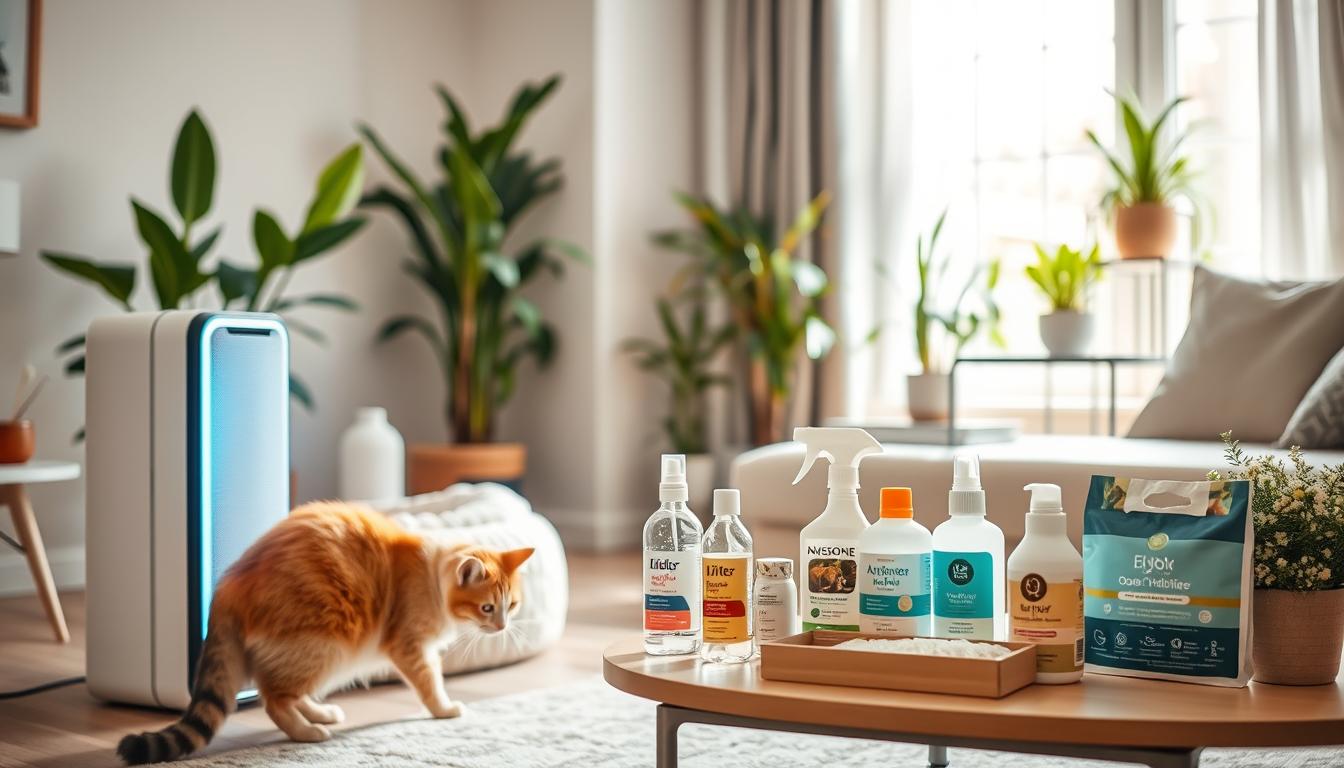
Are you tired of unpleasant cat odors taking over your home? For many cat owners, getting rid of these smells is a big challenge. But, with the right strategies, you can keep your home smelling fresh and clean.
Keeping your home clean and free of odors is not just about comfort. It’s also about creating a healthy space for you and your pets. Simple changes to your daily routine and home care practices can greatly reduce unwanted smells.
In this article, we will explore effective methods for cat odor removal. We will also give you practical tips to keep your home smelling its best.
Key Takeaways
- Understand the sources of cat odors in your home.
- Learn effective cleaning practices to eliminate odors.
- Discover simple changes to your daily routine for a fresher home.
- Explore products designed for cat odor removal.
- Implement long-term strategies for maintaining an odor-free home.
Why Cat Odors Are So Persistent and Powerful
Cat urine has special compounds that make its smell hard to get rid of. Knowing why cat odors last so long is key to controlling them.
The Unique Chemical Composition of Cat Urine
Cat urine has urea, uric acid, and other organic compounds that make it smell so strong. When it dries, the uric acid turns into crystals. These crystals stick around on surfaces, keeping the smell alive. The felinine in cat urine is especially to blame for its unique smell.
- Urea and uric acid are the main culprits of the smell.
- Uric acid crystals can stay on surfaces, releasing a strong odor.
- Felinine is a key part of cat urine that causes its smell.
Common Household Areas Most Affected by Cat Smells
Cat smells can spread all over the house, especially where cats like to hang out. Common spots include:
- Litter boxes and the areas around them.
- Carpets and furniture that cats like to sit on.
- Baseboards and corners where cats mark their territory.
It’s important to clean these spots often to stop cat odors from building up.
Understanding Cat Odors: Beyond Just the Smell
Cat odors are more than just a nuisance; they’re a complex issue. They are rooted in animal behavior and chemistry. To effectively address these odors, it’s crucial to understand the underlying factors.
How Cats Mark Territory Through Scent
Cats use scent marking to communicate with other animals. They have scent glands on their faces, near their whiskers, and on their paws. When cats rub these areas on surfaces, they deposit their scent, claiming territory.
Urine marking is another significant form of scent communication, especially for intact males. This behavior is driven by the cat’s instinct to establish dominance and define its territory.
Why Traditional Cleaning Methods Often Fail
Traditional cleaning methods often fail to eliminate cat odors. They don’t address the root cause of the smell. Cat urine, in particular, contains uric acid, which is difficult to remove with conventional cleaners.
Using a pet odor neutralizer that is specifically designed to break down uric acid crystals is essential. These specialized products enzymatically digest the organic matter. They eliminate the source of the odor rather than just masking it.
Mastering Litter Box Management for Odor Prevention
Proper litter box management is key to stopping cat odors. It includes regular cleaning, the right litter, and placing litter boxes wisely around your home.
Optimal Cleaning Schedules and Techniques
Daily scooping is crucial to stop odors from building up. Also, change the litter every 7-10 days. A litter box with low sides and a non-stick surface makes cleaning simpler.
- Scoop the litter box daily
- Change litter completely every 7-10 days
- Use a litter box with a non-stick surface
Selecting the Best Odor-Controlling Litter Types
The right litter is vital for controlling odors. Clumping litter is great because it traps waste in clumps, making it easy to clean. Other good options include silica gel and natural litters like pine or corn.
Strategic Placement and Number of Litter Boxes
It’s best to have one litter box per cat, plus one more. So, for two cats, you need three litter boxes. Put them in quiet spots where your cat can easily find them.
- One litter box per cat, plus one extra
- Place litter boxes in quiet, accessible locations
Top Commercial Products That Eliminate Cat Odors
The market has many effective products to get rid of cat odors. They meet different needs and work on various surfaces. These products can really help cat owners who face constant smells.
Enzymatic Cleaners: The Science Behind Their Effectiveness
Enzymatic cleaners use enzymes to break down cat urine proteins. This effectively removes the odor source. Products like Nature’s Miracle and Biokleen Bac-Out Stain & Odor Remover are top choices. They digest organic matter, leaving surfaces clean and smell-free.
Best Cat Odor Neutralizers for Different Surfaces
Different surfaces need different solutions. For example, carpets and upholstery do well with Zero Odor Pet Stain & Odor Remover. On the other hand, hard surfaces are best treated with Earthbath Enzyme-Based Stain & Odor Remover. It’s important to pick a product that matches the surface you’re cleaning.
Specialized Cat Odor Sprays and When to Use Them
Cat odor sprays are great for quick odor control. Products like Fresh Wave Odor Removing Spray work on many surfaces. They’re perfect for keeping your home smelling fresh. But, remember to use these sprays as part of a bigger plan to manage odors.
| Product | Surface | Effectiveness |
|---|---|---|
| Nature’s Miracle | Carpets, Upholstery | High |
| Biokleen Bac-Out | All Surfaces | High |
| Zero Odor | Carpets, Upholstery | High |
| Earthbath Enzyme-Based | Hard Surfaces | High |
Natural Cat Odor Solutions That Actually Work
Managing cat odors doesn’t need harsh chemicals. Many natural methods work well. Cat owners want safe and green ways to keep homes smelling good.
Vinegar and Baking Soda: The Dynamic Duo
Vinegar and baking soda are a strong team against cat odors. Vinegar’s acidity breaks down cat urine crystals. Baking soda absorbs the smell.
To use, mix equal parts vinegar and water in a spray bottle. Spray the area, then sprinkle baking soda. Let it sit before cleaning.
Cat-Safe Essential Oil Blends and Applications
Certain essential oils can neutralize cat odors. Lavender, tea tree, and lemon oils are good for this. But, use cat-safe oils and dilute them to avoid harm.
Add a few drops of essential oil to water in a spray bottle. Spray around the house or use in a diffuser.
Activated Charcoal and Other Natural Absorbers
Activated charcoal is great at absorbing smells. Put it in places with cat odors, like near litter boxes or on carpets.
Other natural absorbers are zeolites and bamboo charcoal. Use them in powder or sachets to keep your home fresh.
Using these natural solutions in your cleaning can manage cat odors safely. This way, you avoid harsh chemicals around your family and pets.
Tackling Cat Urine Odor in Challenging Materials
Removing cat urine smell needs knowing what’s in the urine and the right cleaning methods. Cat urine has uric acid, which makes it smell strong and lasts a long time. Each surface needs a special way to get rid of the smell.
Deep-Cleaning Techniques for Carpets and Rugs
Begin by blotting the urine with paper towels on carpets and rugs. Then, use a mix of white vinegar and water. Let it work for 10 minutes before rinsing with cold water and drying.
If the smell is hard to get rid of, try an enzymatic cleaner.
Saving Upholstery and Furniture from Persistent Smells
Upholstery needs a gentle but effective clean. Mix mild detergent with water and gently scrub the area. For really bad smells, use an enzymatic cleaner made for upholstery.
Always test a small, hidden spot first to make sure the cleaner won’t harm the fabric.
Solutions for Hardwood, Tile, and Concrete Surfaces
For hard surfaces like hardwood, tile, and concrete, try baking soda and water. Spread the paste on the area and wait 30 minutes to an hour before rinsing with warm water. For sealed hardwood, vinegar diluted with water works well.
| Surface Type | Recommended Cleaning Solution | Precautions |
|---|---|---|
| Carpets/Rugs | Vinegar and Water or Enzymatic Cleaner | Test for colorfastness |
| Upholstery | Mild Detergent or Enzymatic Cleaner | Test on an inconspicuous area |
| Hardwood/Tile/Concrete | Baking Soda Paste or Vinegar Solution | Avoid using excessive water |
Air Purification Strategies for Cat Owners
Air purification is key to getting rid of cat odors and keeping your home smelling fresh. Cat owners often face the challenge of lingering smells in their homes. Regular cleaning and litter box maintenance are important, but air purification adds an extra layer of protection.
By using effective air purification strategies, cat owners can cut down on odor-causing particles in the air. This leads to a fresher and healthier home environment.
HEPA Filters and Air Purifiers: What Really Works
High Efficiency Particulate Air (HEPA) filters are known for catching 99.97% of particles as small as 0.3 microns. This includes dust, pollen, and allergens. They are also great at removing odor-causing particles from the air.
Air purifiers with HEPA filters are a great addition to any cat owner’s home. They help keep the air clean and reduce smells. When picking an air purifier, look for ones with activated carbon filters too. They help remove more odors.
Cat-Safe Air Freshening Methods for Whole-Home Freshness
Air purifiers deal with odor-causing particles, but cat-safe air freshening methods can make your home smell better. Essential oils can be a nice way to freshen the air. But, it’s important to pick cat-safe essential oils and use them carefully.
Some cat owners also use natural air fresheners like baking soda or open boxes of activated charcoal. These can be placed in hidden spots around the house. They help absorb and neutralize odors, making your home smell fresher.
Preventative Measures for Long-Term Cat Odor Control
Cat owners can cut down on odors by being proactive. Understanding why cats smell and taking steps to stop it keeps your home smelling good. This makes your home better and your cat happier and healthier.
Behavioral Training to Prevent Inappropriate Elimination
Teaching your cat good habits is key to avoiding odors. Cats may pee outside the litter box due to stress, health issues, or not liking the litter box. Positive reinforcement like treats for using the litter box right works well.
Also, make sure your cat’s litter box is clean, quiet, and easy to get to. Regular vet visits can spot health problems that cause odors.
Creating Cat-Friendly Spaces That Minimize Odor Issues
Designing your home for your cat can help a lot. Give them enough litter boxes, scratching posts, and cozy spots. This makes them less stressed and less likely to pee where they shouldn’t.
Choose easy-to-clean materials for your furniture and floors. Also, air purifiers and good air flow help keep your home smelling nice.
Special Challenges: Multiple Cats and Small Living Spaces
Dealing with cat odors gets harder when you have many cats or live in a small place. More cats mean more smells. And small spaces make smells worse because they’re all in one area.
Cat owners need special plans to handle these problems.
Odor Management Strategies for Multi-Cat Households
In homes with many cats, a good plan for smells is key. This includes:
- More litter boxes and cleaning them often
- Using special cat litter that controls odors
- Regular grooming to cut down on hair and dander
Cat behaviorist Jackson Galaxy says, “The secret to managing many cats is a peaceful home. This peace helps keep smells down.”
“A clean and well-maintained litter box is crucial for odor control in multi-cat households.”
| Strategy | Benefit |
|---|---|
| Multiple Litter Boxes | Reduces competition and stress among cats |
| Regular Grooming | Decreases shedding and dander |
| Odor-Controlling Litter | Effectively minimizes unpleasant smells |
Apartment and Small Home Solutions for Cat Owners
Cat owners in small places need smart ways to fight smells. Some good ideas are:
- Using air purifiers with HEPA filters to get rid of smells
- Putting in products that soak up odors, like activated charcoal or baking soda
- Cleaning everything often
By using these ideas, cat owners in tight spaces can keep their homes smelling fresh and clean.
When to Seek Professional Help with Cat Odors
Persistent cat odors can be a sign of a deeper issue, requiring professional intervention. While many cat owners successfully manage odors with DIY methods, some situations demand expert assistance.
Signs of Underlying Health Issues That Cause Odor Problems
Cats with medical conditions such as urinary tract infections, kidney disease, or diabetes may exhibit increased or abnormal urination, leading to persistent odors. If your cat’s odor is accompanied by changes in appetite, litter box behavior, or overall health, consult a veterinarian to rule out underlying health issues. Veterinary guidance is crucial in addressing these problems.
Professional Cleaning Services and When They’re Worth It
For severe or persistent odors, consider hiring professional cleaning services specializing in pet odor removal. These experts use advanced equipment and techniques to eliminate odors at their source. They can be particularly helpful for deep-seated odors in carpets, upholstery, and hardwood floors.
By identifying when to seek professional help, cat owners can effectively tackle persistent odor issues and maintain a fresh, clean home.
Daily and Weekly Routines to Maintain a Fresh-Smelling Home
Daily and weekly routines are key to keeping your home smelling fresh. Simple habits in your daily and weekly plans can stop cat odors from sticking around.
Quick Daily Habits That Prevent Odor Buildup
Adding a few quick daily habits can cut down cat odors at home. These include:
- Scooping the litter box daily
- Wiping down surfaces with a damp cloth
- Using an air purifier to remove odor particles from the air
Just a few minutes each day can make your home smell fresher.
Effective Weekly Deep-Cleaning Schedules
Weekly deep-cleaning is also important for a fresh home. Here are some tasks to consider:
| Task | Frequency |
|---|---|
| Change litter box litter completely | Weekly |
| Wash cat bedding | Every 2 weeks |
| Vacuum and mop floors | Weekly |
Conclusion
Cat owners can conquer cat odors and keep their homes clean by following certain steps. Proper litter box management and using enzymatic cleaners are key. Natural odor solutions and regular cleaning also help a lot.
It’s important to stick to daily cleaning habits and deep clean weekly. If you have many cats or live in a small space, you need to adjust your cleaning plan. This way, you can make your home a nice place for both you and your cats.
Getting rid of cat odors is possible with the right approach. By using the tips given, you can have a cleaner, fresher home. Keeping your home clean is about more than just getting rid of smells. It’s about making a healthy and comfortable space for everyone.
Leave a Reply