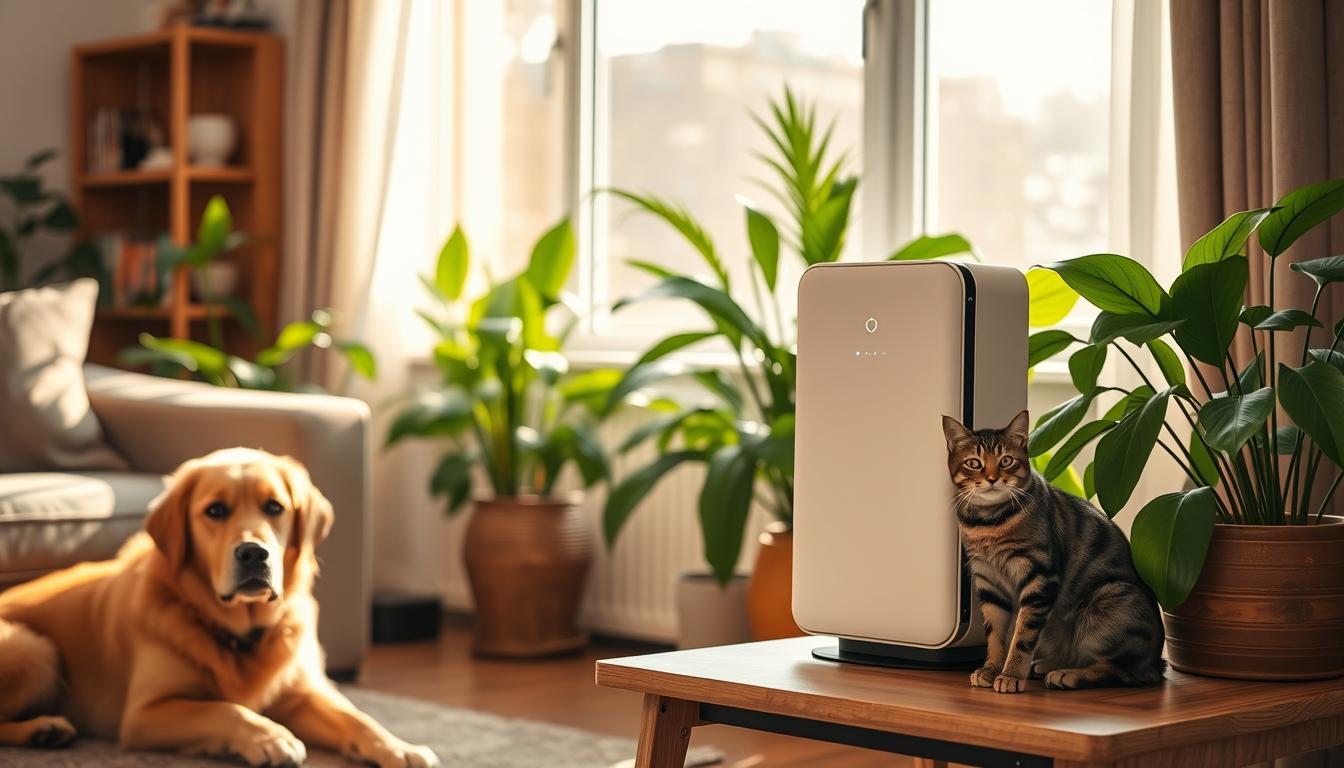
As a pet owner, you want the best for your furry friend. The air they breathe is key to their health and happiness.
Indoor air pollution can harm your companion’s health. It can lead to breathing problems and other health issues. We’ll look at innovative solutions to make your pet’s air better.
Key Takeaways
- Understanding the importance of air quality for pets.
- Identifying common indoor air pollutants affecting pets.
- Exploring pet-friendly air purifiers as a solution.
- Learning how to create a healthier environment for your pet.
- Discovering the benefits of innovative pet air quality solutions.
The Hidden Dangers of Poor Air Quality for Pets
Keeping the air clean indoors is key for pets’ health. They face many pollutants every day. These can cause anything from mild discomfort to serious health problems.
Many things can pollute the air in homes. This includes cleaning products, pet dander, and outside pollutants that get inside. Knowing what these pollutants are and how they affect pets is the first step to fixing the problem.
Common Indoor Air Pollutants Affecting Pets
There are two main types of indoor air pollutants. These are chemical contaminants and particulate matter. Both can harm pets’ health.
Chemical Contaminants in the Home
Chemicals like VOCs from cleaners and pesticides are bad for pets. They can cause breathing problems, allergies, and other health issues.
Particulate Matter and Pet Health
Things like pet dander, dust, and pollen can make breathing hard for pets. They can also carry other pollutants, making air quality worse.
How Air Quality Impacts Different Types of Pets
Each pet reacts differently to air pollutants. This means we need to find ways to clean the air that fit each pet’s needs.
Special Considerations for Birds and Small Mammals
Birds and small mammals are very sensitive to toxins in the air. Even a little bit of pollution can hurt their health a lot.
Cats and Dogs: Breed-Specific Sensitivities
Cats and dogs have their own sensitivities to air. Some breeds, like Pugs and Bulldogs, have trouble breathing because of their faces. This makes them more vulnerable to bad air.
Knowing what each pet needs helps us make their living space healthier. We can use advanced pet air filtration systems and cutting-edge pet odor eliminators to clean the air for them.
Recognizing Air Quality Issues Through Your Pet’s Behavior
The air quality in your home can affect your pet’s behavior and health. It’s important to watch for any changes. Pets often show subtle signs when air quality is poor. Knowing these signs can help you take action.
Physical Symptoms of Poor Air Quality Exposure
Poor air quality can cause physical symptoms in pets. These symptoms can be mild or severe. They often involve respiratory and skin issues.
Respiratory Signs to Watch For
Respiratory problems are common in pets exposed to poor air quality. Look for coughing, wheezing, or labored breathing. If your pet shows these signs, check your home’s air quality.
Skin and Coat Reactions
Pets may also react to poor air quality with skin and coat issues. Look for itching, redness, or irritation. These symptoms can be uncomfortable and may need air quality changes.
Behavioral Changes That Signal Air Quality Problems
Pets can also show behavioral changes due to poor air quality. These changes can be subtle but important to notice.
Activity Level Alterations
Changes in your pet’s activity level can signal air quality issues. If your pet is less active or more restless, it might be due to poor air quality.
Changes in Sleeping Patterns and Locations
Pets may also change their sleep patterns or locations due to poor air quality. If your pet sleeps more or less, or in different spots, it could be a sign of air quality problems.
By recognizing these physical and behavioral changes, you can improve your home’s air quality. This will help create a healthier environment for your pet. Consider using top-rated pet-friendly air quality devices or modern pet air purifying technology to address air quality issues.
Innovative Pet Air Quality Solutions for Modern Homes
Modern homes now have advanced pet air quality solutions. These solutions help keep the air clean for pets. Pet owners can choose from a variety of products to improve their home’s air quality.
Breakthrough Technologies in Pet Air Quality Management
Advanced technologies have greatly improved pet air quality management. Two key advancements are IoT-connected air quality systems and new air purification trends for pets.
IoT-Connected Air Quality Systems
IoT-connected air quality systems are a big step forward. They use sensors to check the air quality in real-time. This gives pet owners the information they need to make their pets’ environment better.
Emerging Trends in Pet-Focused Air Purification
The field of pet-focused air purification is growing fast. New air purifiers are being made to remove pet dander and odors. These purifiers have special filters and technologies to catch pet pollutants.
Research-Backed Benefits of Improved Air Quality for Pets
Improving air quality greatly benefits pets’ health and wellbeing. Studies show that cleaner air can make pets live longer and healthier. It also means fewer vet visits and health problems.
Longevity and Quality of Life Improvements
Pets in cleaner air environments live longer and healthier. Cleaner air helps their respiratory systems, improving their overall health.
Reduction in Veterinary Visits and Health Issues
Reducing air pollutants helps pets avoid respiratory problems and other health issues. This means fewer vet visits and lower healthcare costs.
| Benefits of Improved Air Quality | Description | Impact on Pets |
|---|---|---|
| Longevity | Cleaner air reduces strain on respiratory systems | Longer lifespan |
| Quality of Life | Reduced exposure to pollutants | Improved overall wellbeing |
| Reduced Veterinary Visits | Fewer respiratory and health issues | Lower healthcare costs |
Selecting the Ideal Pet-Friendly Air Purifier
Finding the right air purifier for your pet can be tricky. Pet owners need to think beyond basic features. They should look at key factors that affect their pet’s comfort and health.
Essential Features for Pet Households
When picking an air purifier for your pet, consider a few important features. Look at the type of filter, the clean air delivery rate (CADR), and features like odor control and allergen removal.
Noise Levels and Pet Comfort Considerations
The noise level of the air purifier is crucial. Pets can be sensitive to noise. Choose a model that is quiet. For example, the Levoit LV-H132 is quiet and works well in small rooms.
Coverage Area and Placement Strategies
Think about the coverage area of the air purifier. Make sure it can handle the room where your pet spends most of its time. Place it in a central spot for best results. Avoid placing it near obstacles or in corners where airflow might be blocked.
Comparing Top-Rated Pet-Specific Air Purifiers
There are many air purifiers made for pet owners. Look at both affordable and premium models with advanced features.
Budget-Friendly Options with Effective Performance
If you’re on a tight budget, there are good air purifiers that won’t cost a lot. The GermGuardian AC4825 is a great value with HEPA filtration and odor control. It’s a good choice for pet owners who want to improve their pet’s air quality without spending a lot.
Premium Models with Advanced Features
If you’re ready to invest in the latest tech, premium air purifiers have cool features. The Dyson Pure Cool Link is a top pick. It purifies the air, acts as a fan, and can be controlled with a smartphone app.
By looking at these factors and comparing models, pet owners can find the perfect air purifier. It will meet their needs and improve their pet’s air quality.
Advanced Pet Air Filtration Systems: Beyond Basic Purifiers
Advanced pet air filtration systems go beyond basic air purifiers. They are designed to handle pet dander, hair, and odors. This makes them a great choice for pet owners looking to improve their home’s air quality.
Multi-Stage Filtration Technologies for Pet Dander and Hair
At the core of these systems are multi-stage filtration technologies. They use different filters to catch a wide range of pollutants in the air.
HEPA Filtration Effectiveness for Pet Allergens
HEPA (High Efficiency Particulate Air) filters are top-notch at catching pet allergens. They can remove 99.97% of particles as small as 0.3 microns. This significantly cuts down on airborne allergens.
Activated Carbon and Pet Odor Neutralization
Activated carbon filters are key in getting rid of pet odors. They absorb VOCs and other molecules that cause smells. This keeps the air in your home smelling fresher.
Whole-Home Solutions vs. Room-Specific Approaches
Pet owners have two main choices for advanced air filtration systems: whole-home solutions and room-specific approaches. Each has its own benefits and fits different needs and spaces.
HVAC Integration Options for Pet Owners
Whole-home solutions integrate with your home’s HVAC system. This ensures that the whole house gets cleaner air.
Targeted Filtration for Pet-Specific Areas
Room-specific approaches focus on areas where pets spend most of their time. This targeted approach is great for homes with many pets or where pets are kept in certain areas.
The table below compares whole-home and room-specific filtration systems:
| Feature | Whole-Home Solutions | Room-Specific Approaches |
|---|---|---|
| Installation | Integrated with HVAC system | Standalone units |
| Coverage | Entire home | Specific rooms or areas |
| Maintenance | Centralized filter maintenance | Individual unit maintenance |
| Cost | Generally higher upfront cost | Variable cost depending on unit size and number |
Understanding the different options helps pet owners choose the best system for their home and pets.
Cutting-Edge Pet Odor Elimination Technologies
Pet owners often face the challenge of unpleasant odors from their pets. But now, there are advanced technologies to get rid of these smells. These new solutions aim to remove pet odors at their source. This makes homes fresher and healthier for pets and their owners.
Molecular Odor Neutralizers vs. Traditional Methods
Old methods to get rid of odors often use fragrances or masking agents. These can only hide smells temporarily. On the other hand, molecular odor neutralizers break down and remove odor-causing molecules. This method is more effective and lasts longer.
How Photocatalytic Oxidation Works Against Pet Odors
Photocatalytic oxidation (PCO) uses light to activate a catalyst, like titanium dioxide. It breaks down organic compounds, including pet odors. This process turns odor-causing molecules into harmless substances like carbon dioxide and water, effectively removing the smell.
Enzymatic Cleaners and Air Treatment Systems
Enzymatic cleaners have natural enzymes that digest organic matter, including pet dander and odors. When used in air systems, these enzymes break down and eliminate airborne odor-causing particles. This leaves the air smelling fresh and clean.
Pet-Safe Chemical-Free Odor Solutions
For pet owners worried about the safety and environmental impact of odor solutions, there are now safe, chemical-free options. These technologies focus on the health and wellbeing of pets while getting rid of unwanted odors.
Natural Mineral-Based Technologies
Natural mineral-based technologies use minerals like zeolite or activated charcoal to absorb and neutralize odors. These minerals are non-toxic and eco-friendly. They are a safe choice for homes with pets.
UV Light and Ozone-Free Purification Methods
Advanced air purification systems use UV light technology without ozone. This is a safe and effective way to eliminate pet odors. These systems break down odor-causing molecules with UV light, ensuring a fresh indoor environment.
By using these cutting-edge pet odor elimination technologies, pet owners can have a cleaner, fresher home. This is healthier for both pets and their human family members.
Smart Monitoring Systems for Continuous Pet Air Quality Control
As a pet owner, you want your furry friend to breathe easily. Smart monitoring systems help with this. They keep air quality under control, so you can act fast if it changes.
Real-Time Air Quality Sensors for Pet Owners
Real-time air quality sensors are key in these systems. They spot even small air quality changes. This gives pet owners quick feedback to act on.
App-Based Monitoring and Alert Systems
Many pet air purifiers have apps for monitoring and alerts. You can check your home’s air quality from anywhere. And get alerts for big changes, keeping you updated on your pet’s air.
Interpreting Air Quality Data for Pet Health
It’s important to understand air quality sensor data. It shows health risks for your pet. For example, if it finds a lot of particles, turn on your air purifier.
Automated Responses to Air Quality Changes
Automated responses are a big step in pet care tech. These systems adjust air purifiers or vents based on data. This keeps the air quality perfect for your pet.
Smart Home Integration with Pet-Focused Devices
Smart home integration makes things work together smoothly. For example, your air purifier can start when your thermostat sees more humidity. Or when your sensor finds pollutants.
Scheduling and Optimization for Pet Routines
Smart systems can plan air quality for your pet’s routines. They can boost air cleaning when your pet is active. Or when you’re not home.
Using these advanced technologies, pet owners can make a healthier space for their pets. This improves their wellbeing and life quality.
Natural Supplements to Technological Air Quality Solutions
Technology has changed how we manage air quality, but natural solutions like air-purifying plants are also important. They help improve indoor air quality for pets. By using both tech and nature, pet owners can make their homes healthier.
Pet-Safe Air-Purifying Plants and Placement Strategies
Some plants clean the air by removing toxins and pollutants. These plants are great for pet-friendly homes. It’s important to pick plants that are safe for pets.
Top 5 Plants That Remove Pet-Related Toxins
- Spider Plant: It’s good at cleaning the air and is easy to take care of.
- Peace Lily: It purifies the air and reduces toxins.
- Snake Plant: This plant is easy to care for and works well indoors.
- Dracaena: It removes harmful chemicals, but keep it away from pets.
- Bamboo Palm: It adds a tropical look and cleans the air.
To keep air-purifying plants safe for pets, place them where pets can’t reach. Some plants can be toxic if pets eat them. So, it’s important to pick safe plants and watch how pets interact with them.
Non-Technological Air Quality Improvement Methods
There are ways to improve indoor air quality without technology. These include ventilation and cleaning routines. These methods help create a healthier home environment.
Ventilation Strategies for Pet Homes
Good ventilation is essential for air quality. Open windows when you can. Use fans to move the air around. This helps lower indoor pollutant levels.
Cleaning Routines That Support Air Quality
Cleaning regularly can greatly improve indoor air quality. Use cleaning products that are safe for pets. Vacuum often to cut down on pet dander and hair. This makes your home cleaner and healthier for your pets.
Conclusion: Creating a Comprehensive Air Quality Plan for Your Pet’s Wellbeing
Creating a good air quality plan for your pet means using technology and natural supplements. It’s about finding the right mix for your pet’s needs. With innovative pet air quality solutions, you can make the air better for your pet. This improves their health and happiness.
Think about using best pet air quality solutions like advanced air purifiers and smart systems. Also, consider natural plants that clean the air. These tools help get rid of bad smells and keep the air clean.
By using the tips from this article, you can make your pet’s air better. This is good for your pet and makes your home healthier for everyone.
Leave a Reply