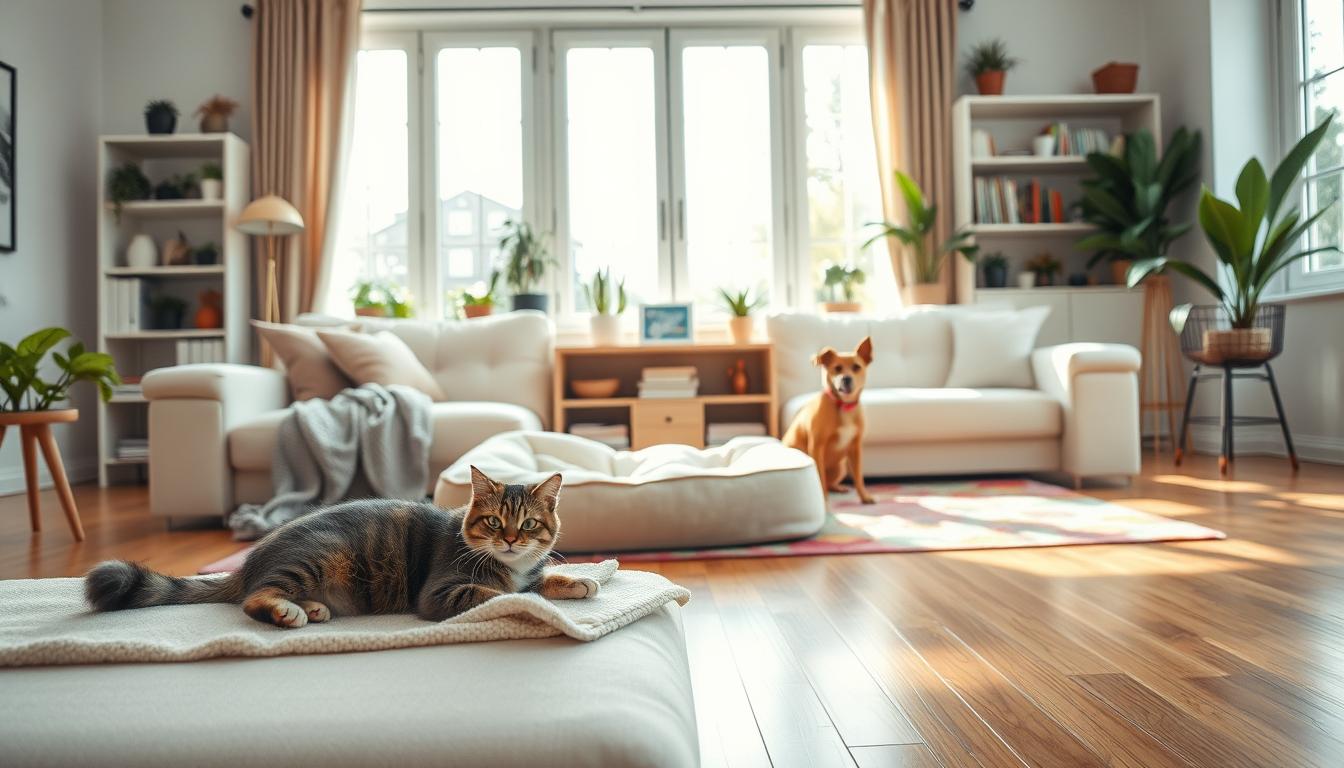
Keeping a fresh and clean home is tough for pet owners. Pets add joy and friendship but also unwanted smells.
To have a pet-friendly home without bad smells, you need to work a bit. A clean home is not just nicer; it’s also better for your health and your pets’.
With good pet odor control, your home can smell great. This makes life better for you, your family, and your pets.
Key Takeaways
- Understand the sources of pet odors in your home.
- Learn effective strategies for controlling pet odors.
- Create a healthier living environment for you and your pets.
- Discover products and techniques for maintaining a fresh home.
- Implement habits that keep your home smelling clean and fresh.
Understanding the Sources of Pet Odors
Knowing where pet odors come from is key to keeping our homes clean and welcoming. Pets, no matter their type, can bring different smells into our homes.
Common Causes of Pet Smells
Pet odors can come from many places, like their fur, dander, waste, and even their bedding. Dander and fur often settle on furniture and carpets, causing smells. Also, pet waste can spread bad smells if not thrown away right.
How Different Pets Create Different Odor Challenges
Each pet has its own smell problems. Dogs can track in dirt and moisture, while cats shed dander and hair. Small pets, like rabbits or guinea pigs, can have cage smells if not cleaned well.
Dog-Specific Odor Issues
Dogs often get dirty, leading to a wet dog smell. Their beds and where they sleep can also smell if not cleaned often.
Cat-Related Smell Concerns
Cats are clean animals but their litter boxes can be smelly. If not cleaned daily and changed often, litter boxes can smell bad.
Small Pet Odor Considerations
Small pets, like hamsters or gerbils, need their cages cleaned often to stop waste and smell buildup. Their bedding, like wood shavings, can hold and spread smells.
| Pet Type | Common Odor Sources | Odor Control Measures |
|---|---|---|
| Dogs | Wet fur, dirty bedding | Regular grooming, washing bedding |
| Cats | Litter box, dander | Daily litter box scooping, regular dander removal |
| Small Pets | Cage waste, dirty bedding | Frequent cage cleaning, changing bedding |
The Science Behind Pet Odors
It’s important to know how pet odors work to keep your home smelling good. Pet smells come from different biological and chemical processes.
Bacterial Growth and Pet Waste
Bacteria in pet waste are a big reason for pet odors. They grow in moist places, breaking down waste and making bad smells. It’s key to clean up pet waste often and throw it away right.
Dander, Fur, and Skin Oils
Pet dander, fur, and oils also make smells. When pets shed, these particles fly around and land on things. They can then break down and smell bad. Keeping your pet clean helps keep your home smelling better.
Pheromones and Marking Behaviors
Cats, especially, use pheromones to mark their territory. These strong chemical signals can stick around and smell bad. It’s important to understand and manage these behaviors to keep your home smelling fresh.
| Odor Cause | Management Strategy |
|---|---|
| Bacterial Growth | Regular cleaning and proper waste disposal |
| Dander and Fur | Regular grooming and vacuuming |
| Pheromones | Behavioral training and odor neutralizers |
Knowing how pet odors work helps you keep your home smelling nice. Using a pet odor neutralizer is a smart way to do this.
Essential Supplies for Achieving Odor-Free Pet Living
Pet owners need the right tools to keep their homes smelling fresh. The right supplies can help manage pet odors well.
Pet-Safe Cleaning Products
It’s important to use cleaning products that are safe for pets. These products are non-toxic and gentle on surfaces. They remove dirt and odors effectively. Look for pet-safe odor solutions made for pet households.
Odor Neutralizers vs. Air Fresheners
Knowing the difference between odor neutralizers and air fresheners is crucial. Odor neutralizers break down and eliminate odor-causing molecules. Air fresheners just mask odors with fragrances. For clean pet living, use products that neutralize odors.
Must-Have Tools for Pet Odor Management
Along with the right cleaning products, you’ll need some essential tools. These include:
- Enzyme-based cleaners for pet accidents
- Activated charcoal for odor absorption
- HEPA air purifiers for reducing pet dander and odors
Using these tools in your cleaning routine can help you achieve odor-free pet living. Your home will be fresher and cleaner.
Creating an Odor Control Routine
Creating a regular routine for odor control is essential for a clean home with pets. Simple tasks every day, week, and month can greatly reduce pet odors. This makes your home a happier place for you and your pets.
Daily Maintenance Tasks
Daily tasks are vital for controlling pet odors. This includes:
- Quick pick-ups of pet waste
- Wiping down surfaces that come into contact with pets
- Using a pet-safe cleaner for high-traffic areas
Weekly Deep Cleaning Schedule
Set aside time each week for deeper cleaning. This includes:
- Vacuuming and mopping floors, especially areas where pets frequent
- Cleaning pet bedding and toys
- Washing litter boxes thoroughly
Consistency is key to stop odors from building up.
Monthly Odor Prevention Measures
Every month, take steps to prevent odors. This can include:
- Deep cleaning carpets and upholstered furniture
- Using an odor-neutralizing spray on fabrics
- Checking and replacing air filters to improve air quality
By sticking to this routine, you can keep your home fresh and pet-friendly with less odor.
Pet Hygiene: The Foundation of a Fresh Home
Good hygiene is key to a pleasant home with pets. Keeping your home clean and fresh is important for your pet’s health and happiness. By focusing on pet hygiene, you can cut down on unwanted odors and make your home more enjoyable for everyone.
Bathing Schedules for Different Pets
Different pets need different bathing schedules. Dogs usually need to be bathed every 1-3 months. Cats might only need a bath every few months unless they get dirty. Using the right shampoo for your pet’s skin is important to avoid irritation and keep them smelling fresh.
Between-Bath Freshening Techniques
There are ways to keep your pet smelling fresh between baths. Regular brushing not only reduces shedding but also keeps their coat healthy and smelling good. You can also use pet-safe wipes or dry shampoos for quick clean-ups without water.
Dental Care for Fresher Pet Breath
Dental care is vital for pet hygiene. Regular tooth brushing and professional dental cleanings can greatly reduce bad breath. Dental chews or toys can also help keep your pet’s teeth clean.
Grooming Practices That Reduce Odors
Regular grooming is crucial for reducing pet odors. This includes bathing, brushing, trimming nails, cleaning ears, and checking for skin issues. By adding these to your pet care routine, you can keep your pet smelling fresh and clean.
By following these hygiene practices, you can eliminate pet smells and keep your home clean pet living. Regular attention to your pet’s hygiene needs is essential for a fresher home.
Tackling Specific Pet Odor Zones in Your Home
A fresh home starts with tackling pet odors in key areas. Different rooms face unique challenges with pet smells. Focusing on specific zones helps create an effective odor management plan.
Living Room and Furniture Solutions
The living room is a hub for family activities, including pets. To keep it fresh:
- Use pet-safe cleaning products on furniture and carpets.
- Regularly vacuum and dust to remove dander and fur.
- Consider using odor-neutralizing sprays on upholstery.
Bedroom Odor Management
Pet beds and human bedding can harbor odors. To keep your bedroom smelling fresh:
- Wash pet bedding regularly.
- Use a fabric refresher on your own bedding if your pet sleeps on it.
- Consider a pet-safe air purifier to reduce dander and odors.
Kitchen and Dining Area Strategies
The kitchen and dining areas can be prone to pet odors. Especially if your pet eats or is fed here. To manage odors:
- Clean food and water bowls daily.
- Wipe down surfaces with a pet-safe cleaner.
- Regularly sweep and mop floors.
Entryway and Mudroom Tactics
Entryways and mudrooms can track in dirt and odors from outside. To keep these areas fresh:
- Place mats at entrances to catch dirt and moisture.
- Regularly clean pet collars, leashes, and other gear.
- Use an odor absorber or deodorizer in these areas.
By tackling pet odors in these specific zones, you can achieve a smell-free pet environment. Enjoy odor-free pet living.
Effective Litter Box and Cage Management
Keeping a home clean and smell-free is key when you have pets. This is especially true for cat and small animal owners. They need to manage litter boxes and cages well to get rid of pet smells and keep their homes smelling fresh.
Optimal Cleaning Frequency
Cleaning regularly is vital for controlling odors. For litter boxes, it’s important to scoop out solid waste every day. Changing the litter completely every 7-10 days is also recommended. Cages need to be cleaned at least once a week. Make sure to sanitize food and water dishes every day.
Best Litter Types for Odor Control
The right litter can make a big difference in controlling odors. Clumping litters are great because they form clumps around waste, making it easy to scoop. Natural litters, like pine or corn, are good at absorbing smells. Look for litters with antimicrobial properties to fight off bacteria.
| Litter Type | Odor Control | Clumping Ability |
|---|---|---|
| Clay Litter | Good | Excellent |
| Silica Gel Litter | Excellent | Poor |
| Pine Litter | Good | Fair |
Strategic Placement for Minimal Odor Impact
Putting litter boxes and cages in well-ventilated areas helps keep odors down. Don’t place them near where you live or air vents. This prevents odors from spreading.
Accessories That Enhance Odor Control
Litter box liners and odor-absorbing filters can help control smells. For cages, adding a layer of odor-absorbing material at the bottom keeps things fresh.
Carpet, Flooring, and Upholstery: Winning the Battle Against Pet Smells
Pet owners often face the challenge of pet smells on carpets, flooring, and upholstery. But, there are ways to win this battle. To achieve clean pet living, it’s important to focus on these areas.
Deep Cleaning Techniques
Regular deep cleaning is key. Use a pet odor neutralizer to get rid of smells, not just hide them. For carpets and upholstery, steam cleaning or professional cleaning services are good options.
Dealing with Set-In Stains and Odors
For stubborn stains and odors, mix white vinegar and water. Let it sit, then blot. Keep repeating until the smell is gone. This way, you can say goodbye to no more pet odors.
Pet-Friendly Flooring Options
When picking flooring, go for pet-friendly choices like hardwood or tile. They’re easy to clean and don’t hold onto smells as much.
Preventative Treatments and Protectors
Use protectors on your carpets and upholstery. They make cleaning easier and prevent stains.
| Surface | Cleaning Method | Preventative Measure |
|---|---|---|
| Carpets | Steam Cleaning | Stain Protector |
| Hardwood Flooring | Mopping | Polyurethane Coating |
| Upholstery | Spot Cleaning | Scotchgard |
By using these methods, you can keep your home smelling fresh. Enjoy clean pet living with these tips.
Emergency Odor Control: Handling Accidents and Incidents
When a pet accident happens, act fast to get rid of the smell. This helps keep your home smell-free. Quick action and the right cleaning methods are crucial.
Immediate Response to Pet Accidents
Start by cleaning up the mess right away. Use paper towels or a clean cloth to blot the spill. Don’t rub it, as this can make the smell worse. For tough stains, try a mix of white vinegar and water. It’s a safe and effective pet-safe odor solution.
Removing Urine Odors from Various Surfaces
Urine smells can be hard to get rid of, especially on carpets and furniture. Mix baking soda, white vinegar, and mild detergent to tackle these odors. Apply the mix, wait a few minutes, and then blot it dry.
Dealing with Skunk Spray and Other Extreme Odors
Skunk spray is infamous for its strong smell. To tackle it, use a mix of hydrogen peroxide, baking soda, and dish soap. Apply it, wait a bit, and then rinse well. For other strong smells, find the source and use a targeted pet-safe odor solution.
When to Call Professional Cleaners
Even with our best efforts, some pet smells can linger. If this happens, it might be time to call professional cleaners. They have the tools and know-how to make your home smell fresh again, ensuring a smell-free pet environment.
Being ready for accidents and knowing how to clean up is key. This way, you can keep your home smelling good, even with pets. The main thing is to act fast and use the right cleaning products.
Natural and DIY Solutions for Pet Odor Elimination
Getting rid of pet odors doesn’t need harsh chemicals. Natural and DIY methods work well. Many pet owners choose eco-friendly options. These are better for the planet and safer for pets.
Homemade Pet-Safe Cleaning Solutions
Making your own cleaners is easy. Mix baking soda, white vinegar, and warm water for a safe cleaner. It’s cheap and free from bad chemicals.
Natural Odor Absorbers
Natural items are great at removing smells. Activated charcoal is top for absorbing odors. Put it in smelly spots to cut down on bad smells.
Essential Oils That Are Safe Around Pets
Some essential oils are safe for pets when used right. Lavender and chamomile can calm and neutralize smells. But, always check with a vet before using them.
Eco-Friendly Odor Management Strategies
Going green helps a lot. Here are some tips:
- Wash your pet’s bedding often
- Use green laundry soap
- Add air-purifying plants
Using these natural and DIY methods, pet owners can have a cleaner home. They won’t have to worry about harsh chemicals harming their pets.
Conclusion: Enjoying Life with Your Pets in a Fresh, Clean Home
Getting a fresh pet-friendly home is possible. Knowing where pet odors come from and using good strategies can help. You can say goodbye to bad smells and hello to a cleaner home.
Using the right ways to control pet odors, your home can be free from them. Regular cleaning, keeping pets clean, and using safe cleaning products help a lot. By focusing on areas with bad smells and managing litter boxes well, your home stays fresh.
Adding these tips to your daily life will lead to a clean and comfy home for you and your pets. No more bad smells means a happier home for all. With effort and the right steps, you can have a fresh, pet-friendly home that you and your pets will love.
Leave a Reply