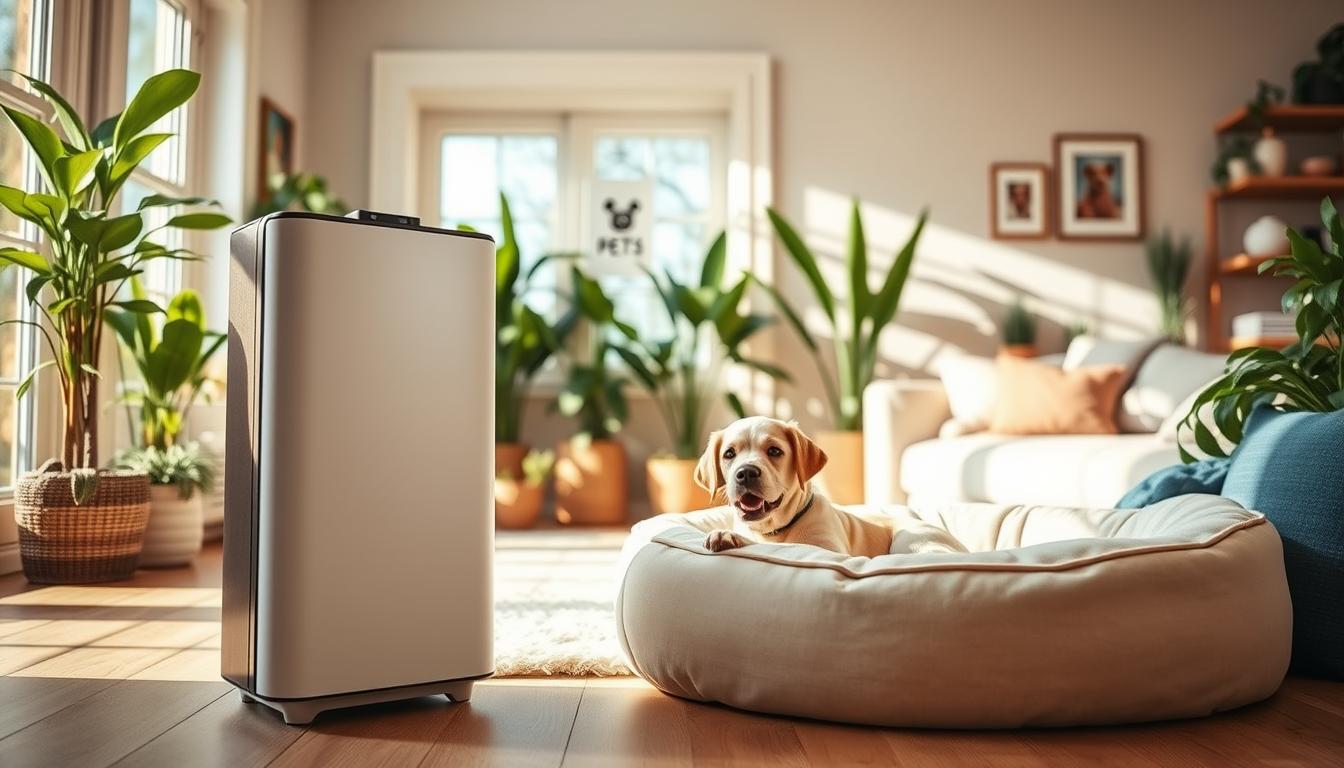
Keeping the air clean in your home is key for both pets and their owners. Pets add joy and companionship but also bring allergens like dander and odors. It’s important to keep the air quality high.
If you have pets, finding the right air purifiers safe for pets is crucial. Luckily, there are pet-friendly air purification systems that can help. They improve the health of your whole family.
This guide will show you why pet-friendly home air filtration is important. It will help you make choices to keep your home healthier.
Key Takeaways
- Understanding the impact of pet dander and odors on indoor air quality.
- Exploring the benefits of using air purifiers designed for pet owners.
- Identifying key features in pet-friendly air purification systems.
- Learning how to maintain a healthier indoor environment for both pets and owners.
- Discovering tips for choosing the right air filtration system for your home.
The Impact of Pets on Indoor Air Quality
Pets add joy and companionship to our homes. But, they also bring airborne pollutants that can harm indoor air quality. This is a worry for pet owners who want a healthy home for their family and pets.
Common Air Pollutants from Pets
Pets carry airborne contaminants like dander, fur, and hair. These particles can spread in the air, making it poor quality. Pets can also bring outdoor pollutants on their fur or paws, making indoor air worse.
- Dander: Tiny skin particles that can cause allergic reactions
- Fur and Hair: Can become airborne and circulate in the air
- Pet Odors: Can be a sign of poor air quality and hygiene
Health Implications for Family Members
Airborne pollutants from pets can harm family members, especially those with breathing problems or allergies. Pet dander, for example, can cause allergic reactions. These can range from mild to severe breathing issues.
Key health concerns include:
- Respiratory issues, such as asthma or chronic coughing
- Allergic reactions, including sneezing, itching, or skin rashes
- Increased risk of respiratory infections
How Poor Air Quality Affects Your Pets
Pets are not just sources of air pollutants; they can also suffer from poor air quality. Pets with health issues can have breathing problems due to airborne contaminants. Keeping indoor air quality good is key for pets’ and owners’ health.
Using a pet-safe air filter or the best air purifier for pet owners can greatly improve indoor air. These devices catch pet dander, fur, and other pollutants. This reduces the chance of allergies and breathing problems.
Understanding Pet-Related Air Quality Challenges
Pets add joy to our lives but also bring air quality challenges. They can increase air pollutants, affecting both humans and pets.
Pet Dander and Allergens
Pet dander is made of tiny scales from cats, dogs, and other animals. It can become airborne and circulate in homes. This can trigger allergies and worsen respiratory conditions like asthma. Regular grooming can help, but it’s not enough.
Pet Odors and Their Sources
Pet odors come from fur, feces, and urine. These odors are not just unpleasant; they can also indicate VOCs that harm indoor air quality. Using pet-friendly cleaning products and cleaning pet areas regularly can help reduce these odors.
Fur, Hair, and Skin Particles
Fur, hair, and skin particles from pets can pollute indoor air. They can carry allergens and bacteria, making air quality worse.
Litter Box and Cage Contaminants
Litter boxes and cages can pollute indoor air with dust, bacteria, and VOCs. Keeping these areas clean is key to preventing air pollution.
| Source of Pollution | Impact on Air Quality | Mitigation Strategies |
|---|---|---|
| Pet Dander | Triggers allergies and respiratory issues | Regular grooming, HEPA filters |
| Pet Odors | Indicates VOCs, unpleasant smell | Pet-friendly cleaning products, regular cleaning |
| Fur, Hair, Skin Particles | Contributes to air pollution, carries allergens | Regular vacuuming, air purifiers |
| Litter Box/Cage Contaminants | Dust, bacteria, VOCs | Regular cleaning, proper ventilation |
Understanding these challenges is the first step to a healthier home for pets and owners. By tackling these air quality issues, we can improve our families’ wellbeing.
Pet-Friendly Air Purification Systems: Types and Technologies
Air purification systems are a must for pet owners. They help keep the air clean, reducing allergens and pet smells. This makes homes healthier for everyone.
HEPA Filtration Systems are top-notch for pet owners. They catch 99.97% of particles as small as 0.3 microns. This makes them a great choice for pet owners.
HEPA Filtration Systems
HEPA filters work by pushing air through a fine mesh. This traps harmful particles, keeping them from getting back into the air. It’s perfect for pet owners, as it reduces allergens and improves air quality.
Activated Carbon Filters
Activated Carbon Filters are great at removing gases and smells. They’re perfect for getting rid of pet odors and cooking smells. They also remove VOCs.
UV Light Purifiers
UV Light Purifiers kill bacteria and viruses with ultraviolet light. They work well against biological contaminants. But, they’re often used with HEPA filters for better air cleaning.
Ionic and Plasma Air Purifiers
Ionic and Plasma Air Purifiers release charged particles to trap contaminants. It’s important to pick models that don’t make ozone. Ozone can harm humans and pets.
Knowing about different air purification systems helps pet owners choose better. This improves air quality in their homes. It makes a healthier space for both pets and people.
Essential Features to Look for in Pet-Friendly Air Purifiers
Finding the right air purifier is key for pet-friendly homes. What features should you look for? Several important factors can make a big difference in how well an air purifier works and how easy it is to use.
Filter Efficiency and CADR Ratings
A HEPA filter is essential for catching pet dander and allergens. The Clean Air Delivery Rate (CADR) shows how well a purifier cleans the air. Make sure the CADR matches your room’s size.
Noise Levels and Operation Modes
Quiet operation is important in homes with pets, especially if they are noise-sensitive. Modern air purifiers often have silent or night modes. These are great for pets and owners alike.
Coverage Area and Placement Options
Think about the air purifier’s coverage area and if it fits your room. Also, consider how it can be placed, like wall mounting or being portable. This can affect its efficiency and convenience.
Smart Features and Controls
Smart air purifiers have cool features like Wi-Fi connectivity. This lets you check and control air quality from anywhere. These features make using an air purifier more enjoyable and keep your home’s air clean.
By looking at these key features, you can find the best air purifier for pet owners. It will meet your needs and improve your home’s air quality.
Selecting the Right Air Purifier for Different Pets
Finding the right air purifier for homes with pets is more than just a simple choice. It requires careful thought. Each pet can affect indoor air quality in unique ways. Knowing these differences is key to making a good choice.
Best Options for Dog Owners
Dog owners often deal with dander, fur, and smells. HEPA filtration systems are great at catching pet dander and fur. This helps reduce allergy problems. Also, air purifiers with activated carbon filters can get rid of pet smells, making your home smell better.
Ideal Solutions for Cat Households
Cats groom themselves, which can spread allergens in the air. For cat owners, air purifiers with high CADR ratings and True HEPA filters are best. These systems can grab the tiny particles from cat dander, making the air cleaner.
Air Purifiers for Bird and Small Animal Owners
Birds and small animals like rabbits or guinea pigs also affect indoor air quality. They do this through dust and feather particles. For these owners, air purifiers with washable pre-filters are helpful. They catch big particles and save money on maintenance.
Multi-Pet Household Considerations
Households with many pets face bigger air quality challenges. Multi-stage air purification systems are best. They use HEPA filters, activated carbon, and sometimes UV light. These systems handle many air pollutants, from dander and fur to smells and bacteria.
By thinking about your pets’ specific needs, you can pick an air purifier that really improves your home’s air. This makes a healthier space for you and your pets.
Top-Rated Pet-Friendly Air Purification Systems for 2023
Pets are a big part of many families today. This makes finding good air purifiers more important than ever in 2023. Many air purifiers now exist to help keep homes clean and healthy for pets and their owners.
Best Overall Systems for Pet Owners
The best air purifiers for pet owners remove dander, odors, and allergens well. They are also easy to keep clean. The Levoit LV-H132 is a top pick. It has a True HEPA filter and an activated carbon filter for smells.
The Dyson Pure Cool Link is another great choice. It cleans the air and cools your space. Its filters catch 99.97% of particles as small as 0.3 microns.
Budget-Friendly Options
If you’re looking to save money, there are still good air purifiers out there. The GermGuardian AC4825 is a favorite. It has a HEPA filter and UV-C light to kill germs and smells, all for less.
The LEVOIT LV600HH is another affordable choice. It covers large areas and has a dual filter system, perfect for bigger rooms.
Premium Solutions for Multiple Pets
For homes with many pets, there are high-end air purifiers. The AirMega 400S by Winix is a top pick. It has a washable True HEPA filter and PlasmaWave tech to get rid of pet smells.
The Molekule Air Mini+ is another premium choice. It uses PECO tech to destroy pollutants at a molecular level, great for homes with many pets.
Specialized Purifiers for Specific Pet Issues
Some air purifiers tackle specific pet problems, like allergies or strong smells. The Aurora Air Purifier by IQAir is great for severe allergies. It has a multi-stage filter system.
The Blueair Classic 405 is good for pet owners with strong smells. It has a high-efficiency filter and activated carbon to handle odors.
| Air Purifier Model | Key Features | Coverage Area | Price |
|---|---|---|---|
| Levoit LV-H132 | True HEPA, Activated Carbon | 129 sq. ft. | $99 |
| Dyson Pure Cool Link | HEPA, Activated Carbon, Cooling Fan | 290 sq. ft. | $299 |
| GermGuardian AC4825 | HEPA, UV-C Light | 167 sq. ft. | $79 |
| Winix AirMega 400S | Washable True HEPA, PlasmaWave | 360 sq. ft. | $199 |
Optimal Placement and Maintenance of Air Purifiers
Air purifiers can greatly improve indoor air quality. But, their success depends on where and how well they are cared for, especially in homes with pets. Knowing the best ways to place and maintain them is key.
Strategic Locations in Pet-Friendly Homes
Choosing the right spot for your air purifier is important. For pet owners, place it where pets hang out, like living rooms or bedrooms. Make sure it’s not blocked by walls or furniture for good airflow.
Filter Replacement Schedules
Changing the filter regularly is crucial for your air purifier’s performance. Check the manufacturer’s advice for when to replace it. Usually, it’s every 6 to 12 months.
Cleaning and Maintenance Tips
Don’t forget to clean the air purifier’s outside and pre-filter too. Use a soft cloth and mild cleaners to keep it in good shape.
Maximizing Efficiency Through Proper Use
To get the best from your air purifier, keep it running all the time on the right setting. Some models have smart features that adjust fan speed based on air quality.
Health Benefits of Improved Air Quality
Improving indoor air quality greatly benefits both humans and pets. Air purifiers reduce pollutants and allergens. This makes the home environment healthier for everyone.
Reduced Allergies and Respiratory Issues
One key advantage of clean air is less allergies and breathing problems. Air purifiers with HEPA filters catch 99.97% of particles, including pet dander. This greatly reduces allergy symptoms and breathing issues for family members.
Benefits for Pets’ Respiratory Health
Cleaner air also helps pets. Just like humans, pets can get breathing problems from bad air. Air purifiers remove irritants, improving pets’ breathing and comfort. This may also lower the risk of respiratory diseases.
Improved Sleep and Overall Wellbeing
Clean air also means better sleep and overall health. When air is free from pollutants, breathing is easier. This leads to better sleep and a more peaceful home for both people and pets. The table below shows the main health benefits of clean indoor air.
| Health Benefit | Human Health | Pet Health |
|---|---|---|
| Reduced Allergies | Decreased allergy symptoms | Less irritation |
| Respiratory Health | Fewer respiratory issues | Improved breathing |
| Sleep Quality | Better sleep | More restful |
Complementary Strategies to Enhance Air Quality
To make homes healthier for pets and their owners, we need more than just air purifiers. These tools are important but not the only solution.
Regular Home Cleaning Practices
Cleaning regularly is key to reducing pet dander and hair. Frequent vacuuming with a HEPA-filter vacuum can cut down on pet hair and dander. Also, dusting with a damp cloth helps keep particles from flying around.
Don’t forget to wash your pet’s bedding and toys often. Hot water and a mild detergent can get rid of allergens and bad smells.
Pet Grooming Routines
Regular grooming is good for your pet’s health and the air in your home. Brushing your pet often can stop hair from spreading everywhere. For pets that can handle it, baths can also cut down on dander and smells.
Ventilation Improvements
Good ventilation is key to getting rid of stale air and bringing in fresh air. Opening windows when it’s nice outside can really help. Also, using exhaust fans in kitchens and bathrooms can remove moisture and pollutants.
Pet-Safe Plants That Improve Air Quality
Some indoor plants are safe for pets and can also clean the air. Plants like Spider Plants and Prayer Plants are safe and can purify the air. Adding these plants to your home can make it look good and improve the air quality.
By using these strategies, pet owners can make their homes healthier. This creates a better environment for both pets and their owners.
Conclusion: Breathing Easier in Your Pet-Friendly Home
Creating a healthy indoor environment is key for you and your pets. Understanding how pets affect indoor air quality is important. Using effective air purification can greatly improve the air you breathe.
Getting a good air purifier for pet owners can cut down on allergens and odors. Look at filter efficiency, noise levels, and coverage area when picking one. This ensures it fits well in your pet-friendly home.
Combining air purification with regular cleaning, pet grooming, and better ventilation keeps the air fresh. This benefits your family’s health and your pets’, making your home happier and healthier for all.
With the right steps and solutions, you can have a pet-friendly home with better air quality. This makes your living space comfortable for you and your pets to thrive.
Leave a Reply